Long Fermented Sourdough Bread: Deeper Flavor, Better Digestion
A long fermented sourdough bread recipe with a 24-48 hour cold ferment that develops a deeper tang and a softer crumb. Mostly hands-off — just patience.
By Maya Ellison · Reviewed by Maya Ellison · Updated August 30, 2026 · 3 min read
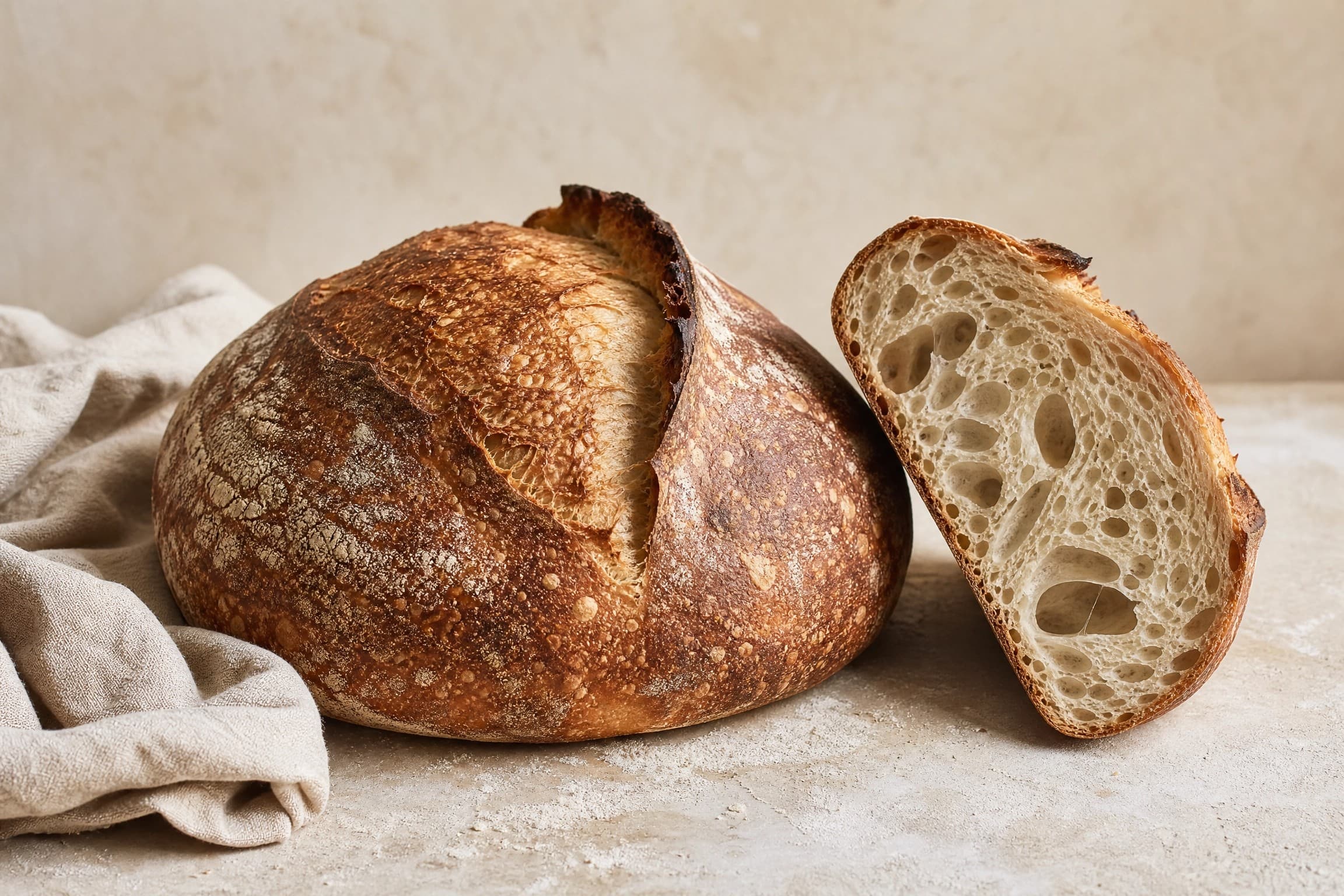
This long fermented sourdough bread recipe trades a little extra patience for a loaf you can really taste: deeper tang, a softer, more open crumb and the genuine benefits of a slow, cold fermentation. The best part is that almost all of the time is hands-off — bulk ferment, then leave the dough in the fridge for a day or two, and the wild yeast and bacteria do the work.
This is a true sourdough with no commercial yeast at all. The key is keeping the starter amount low so the fermentation runs long and slow.
Why long fermentation matters
True sourdough rises because of the wild yeast and lactic-acid bacteria living in your starter. The yeast produce the gas that lifts the dough; the bacteria break down proteins and starches. Give them more time and they do more of everything: more tang, a softer texture and, for many people, a loaf that's easier to digest.
A long, cold fermentation also keeps the nutrients more available and can produce a lower, gentler blood-sugar response than fast bread. All of that comes from patience — a lot of it is simply letting good microbes do their job. For the full picture of what's happening, the nutrition guide and disclaimer are worth a read.
The long fermented method, step by step
The process mirrors a classic sourdough bake but with two big differences: a low starter amount and a long cold retard.
Feed your starter first. Take 20 g of active starter and feed it a few hours before you start, so it's bubbly and at peak strength.
Autolyse. Stir the water and starter together, add the flour and salt, and rest for an hour. The flour fully hydrates and the gluten starts to develop before fermentation begins — more detail in the autolyse guide.
Build structure with folds. Bring the dough into a ball, then run 4-6 sets of stretch-and-folds (~15 minutes apart). The dough starts loose and tightens as gluten develops.
Bulk ferment until just under double. With a low starter percentage this takes longer — that's the point. You want the dough soft, jiggly and full of bubbles and no further, because it will keep fermenting in the fridge.
Shape and cold retard. Shape into a tight boule or batard, set it seam-up in a floured banneton (shaping help) and refrigerate 24-48 hours at 3°C or colder. This is the heart of long fermentation.
Bake from cold. Score the cold dough and bake covered in a hot Dutch oven, then uncovered to finish the crust.
Temperature is the lever
Temperature controls how long everything takes. A warm kitchen ferments the bulk fast; a cool one slowly. And the fridge temperature determines how long the cold ferment can safely run — at 3°C or colder you get the full 24-48 hours; a warmer fridge will over-ferment the dough and it can collapse. Read dough temperature to dial this in for your kitchen.
Is a longer ferment always better?
No. There's a ceiling. Push bulk fermentation too far and the dough turns soupy; push the cold ferment past ~72 hours and the bacteria eat so much gluten that the loaf flattens as it bakes. The skill of long fermented bread is finding the point where the flavor is deep but the gluten network is still intact — the difference between great bread and a sad puddle.
For a quicker, same-day loaf, the same-day sourdough guide and high-hydration guide cover that end of the spectrum.
Storage
Because long fermented bread keeps well, store it cut-side down on the board for 3-4 days or in a bread box. It toasts beautifully. For longer keeping, slice and freeze in a sealed bag for up to 3 months. Don't cut it too soon after baking — the 4-6 hour cool is what protects the crumb.
Ingredients
Weights in grams are the source of truth; cup measures are approximate.
- 500 g bread flour
- 350 g water
- 20 g active sourdough starter (fed a few hours before)
- 10 g fine sea salt
- Rice flour, for the banneton
Method
Feed your starter: take 20 g of active starter and feed it at a 1:1:1 ratio a few hours before you build the dough, so it's strong and bubbly.
Autolyse: stir the water and starter together in a large bowl, then add the flour and salt and mix to a shaggy dough. Cover and rest 1 hour — this lets the flour hydrate.
Form the dough: bring it into a smooth ball with 20-30 light stretches from the outside edge to the centre. Rest, covered, 30 minutes.
Stretch and fold: do 4-6 sets of stretch-and-folds, 4 stretches per set, about 15 minutes apart. The dough will be fairly loose at first and tighten as you go.
Bulk ferment: cover and leave at room temperature until the dough is just under double — soft, jiggly and full of bubbles. A small amount of starter means this takes longer, which is exactly what you want for a long ferment.
Shape: dust your counter lightly with rice flour, ease the dough out, and shape into a tight boule or batard. Place seam-side up into a well-floured banneton (or a bowl lined with a floured tea towel).
Cold ferment: cover the banneton loosely and refrigerate for 24-48 hours at 3°C or colder. This cold retard is the key to the long fermentation — it deepens flavor and eases structure.
Preheat a Dutch oven to 450°F (230°C) for about an hour with the pot inside. Keep the dough in the fridge until the last minute.
Turn the cold dough onto parchment, dust and score with a lame or razor blade. Lower into the hot Dutch oven with the baking paper handles.
Bake covered at 450°F (230°C) for 30 minutes, then uncovered at 410°F (210°C) for 10-15 minutes until deeply browned.
Remove from the pot immediately and cool on a wire rack for at least 4-6 hours before slicing — a hot knife crushes the open crumb.
Frequently asked questions
Why only 20 g of starter for a long ferment?
A small amount of starter means the dough ferments slowly, which is the whole point. Less starter = longer rise and more time for flavor to develop. If you want a faster, same-day loaf, use a larger amount of starter instead — see the [high-hydration guide](/guides/high-hydration-sourdough) for that path.
How long should you ferment sourdough bread?
Bulk fermentation is typically 6-8 hours at room temperature, then a 24-48 hour cold ferment in the fridge. Try not to push the cold ferment past about 72 hours, because over time the bacteria break down the gluten to the point the loaf loses structure and can collapse.
Can sourdough ferment too long?
Yes. Bulk ferment it too long and the dough turns soupy and won't shape. Leave it in the fridge too long and the gluten breaks down so the loaf flattens as it bakes. The balance — deep flavor without losing the gluten network — is what separates great long-fermented bread from a puddle.
Is long fermented sourdough bread gluten free?
No. Wheat flour still contains gluten, so long fermented bread isn't suitable for anyone with celiac disease. Many people with mild sensitivities find a long, slow ferment easier to tolerate because the bacteria partially break down gluten proteins, but that is not the same as gluten free. This is general information, not medical advice — see the [disclaimer](/disclaimer).
Can I use whole wheat flour for this?
Yes — up to about 50% whole wheat adds complexity and works well with a long ferment. Higher whole wheat swaps in more bran, which needs a little more water and a careful eye on bulk time. For a fully whole-grain version, the [whole wheat sourdough recipe](/whole-wheat-sourdough-bread-recipe) is a great starting point.
Is long fermented bread better for you?
The long ferment gives the bacteria more time to work, which lowers the phytic acid and can produce a gentler blood-sugar response than fast commercial bread. It also makes the crumb softer and more digestible for many people. It's still bread with real calories — the [nutrition guide](/guides/sourdough-bread-nutrition) has the honest numbers.
Can I leave it at room temperature instead of the fridge?
You can, but a room-temperature ferment is far less predictable and finishes much faster. The fridge's cold, controlled environment is what lets a long ferment run 24-48 hours safely. If you don't have reliable fridge space, aim for a shorter ferment and check the dough often.