Dough Temperature: Why It Matters and How to Control It
The dough temperature chart and formula every sourdough baker needs: target 75-78°F, calculate water temperature and fix cold or hot kitchens.
By Maya Ellison · Reviewed by Maya Ellison · Updated August 18, 2026 · 5 min read
Quick answer
Sourdough is alive and like every living thing it has a temperature it likes. The dough temperature chart below is the baker's way of making that preference exact: flour wants to be measured, water wants to be controlled and the final dough temperature is the number that makes the whole schedule predictable. This guide explains the target, the formula and how to hit it in a home kitchen that's never 74°F on its own.
Why dough temperature matters
Nearly everything in sourdough is temperature-dependent. Yeast and bacteria ferment faster when warm, slower when cool; gluten absorbs water differently at different temperatures; and every recipe time assumes a dough sitting somewhere near 75-78°F (24-26°C). Two identical formulas — same flour, same water, same starter — can produce a dense loaf and an open loaf purely because one mixed 5 degrees warmer. Temperature isn't one variable among many; it's the variable.
The dough temperature chart
| Final dough temp | What to expect |
|---|---|
| Below 68°F / 20°C | Fermentation crawls; bulk can take 12+ hours; dough risks under-proofing |
| 70°F / 21°C | Slow and tame; good for overnight schedules |
| 74-76°F / 23-24°C | The sweet spot for most bakes: steady, predictable rise |
| 77-78°F / 25-26°C | Brisk fermentation; slightly more sour, faster bulk |
| Above 80°F / 27°C | Fermentation races; risk of over-proofing and a sharp, acidic crumb |
| Above 85°F / 29°C | Danger zone — dough can liquefy during a long bulk |
Most bakers can't keep their whole kitchen at 76°F and that's fine. The fix is to make the water the temperature you control, which is exactly what the formula does.
The desired dough temperature formula
The classic formula balances four inputs — flour, water, air and friction — against a target final dough temperature. In a home kitchen where mixing is gentle, friction is usually near zero, so it becomes:
Water temp = (Target final dough temp × 4) − (flour temp + air temp)
For a target of 76°F with flour at 70°F and air at 72°F:
Water temp = 304 − (70 + 72) = 162°F
Wait — that's without accounting for the bowl and the heat lost to the environment. In practice, home bakers pull the target back a few degrees to account for friction losses and most aim for water a little cooler than the raw formula suggests. The point is the method: measure the variables you can't change and use water to fix the rest.
How to control temperature at the mix stage
- Weigh the flour and let it sit out so it's at room temperature before mixing — chilled flour straight from the pantry throws the whole calculation off.
- Measure the air with any thermometer. This is your room's contribution.
- Pick your water temperature from the formula, then heat or cool the water to match. Warm water from a kettle at the right reading is the single easiest lever in the whole loaf.
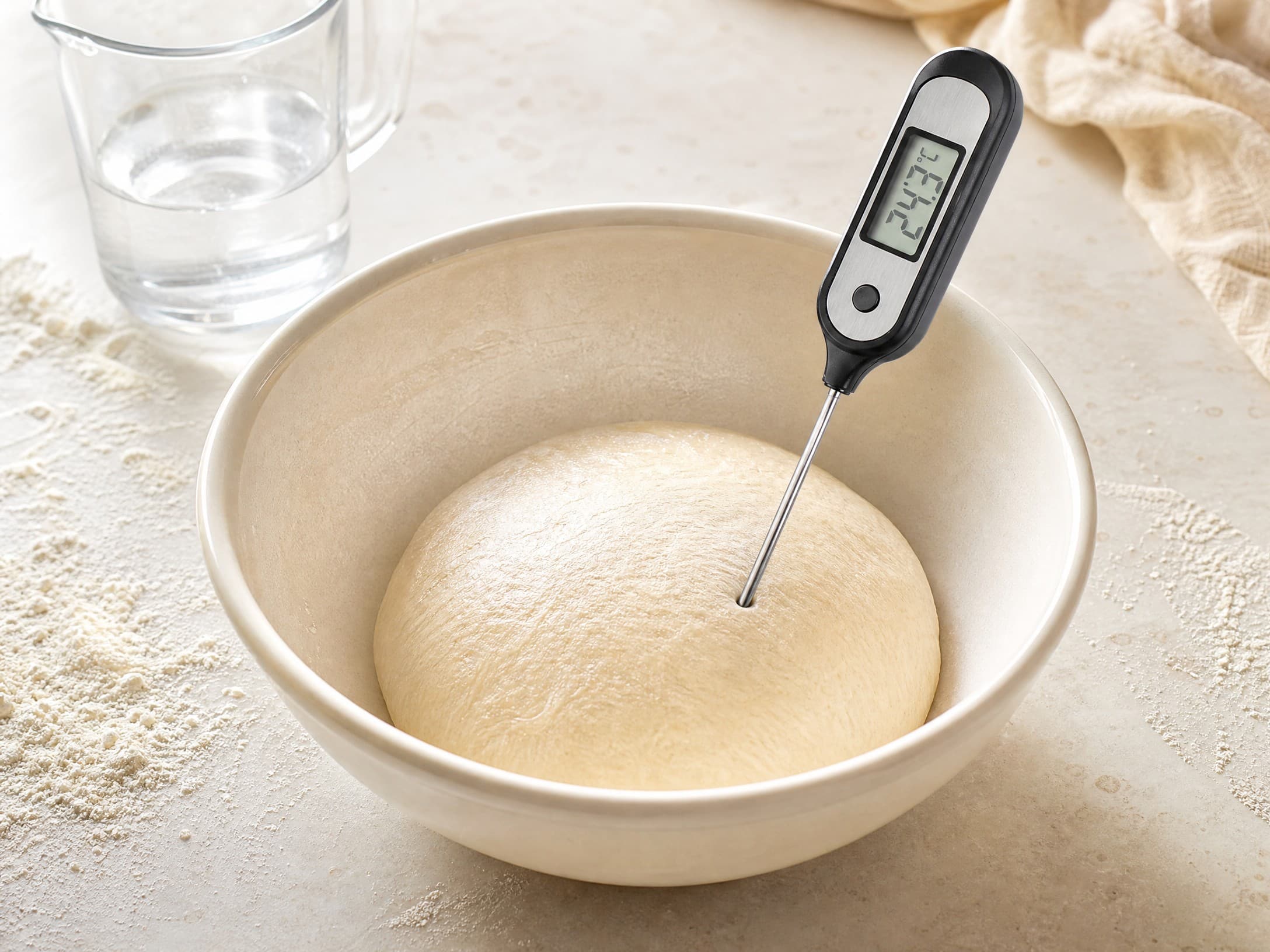
- Mix, then check. Right after mixing, probe the center of the dough. If it's a degree or two off target, note it — next bake, adjust the water temperature in the opposite direction by a couple of degrees.
Fixing a cold kitchen
Cold homes are the real culprit behind "why does my bread always take forever?" When the room sits at 65°F (18°C), the dough fights your whole schedule. Practical fixes:
- Warmer water at the mix — the biggest lever and free.
- A warm fermentation spot — top of the fridge, the oven with only the light on, or a microwave with a bowl of just-boiled water (door ajar) all hold 75-80°F (24-27°C).
- Longer everything. Cold dough isn't failing; it's just slow. Extend the bulk and proof and you'll still get a good loaf — it just takes its time.
Fixing a hot kitchen
Heat is harder than cold because you can't make the room cooler easily, but the same logic applies in reverse:
- Use cold water at the mix to pull the dough down into range.
- Shorter bulk, earlier fridge. Above 80°F (27°C), move the dough to the fridge partway through bulk to keep fermentation from racing past the peak.
- Scale back the levain. A 15% instead of 20% starter slows the rise and buys you control in a fast kitchen.
Common mistakes
- Measuring flour straight from the fridge. It can be 15 degrees cold, which the formula can't predict. Let flour warm to room temperature first.
- Chasing a number, never measuring. The formula is worthless if you don't check the real dough temperature afterward. Probe and record it for a few bakes.
- Friction disappearing. Hand-mixing is low friction, but a stand mixer adds real heat, especially on high speed. Mix on low and account for a slightly hotter dough, or use the fridge to bring it back down.
- Ignoring the starter. A starter from the fridge is cold and slows the dough far more than a few degrees of water can fix. Use a starter that's at peak and at room temperature when you mix.
Get the temperature right and the whole bake becomes repeatable — the sourdough bread recipe assumes this 75-78°F window and the beginner's guide to sourdough shows how it plays out across a full schedule. A strong sourdough starter at peak and a stable dough temperature are the two pillars everything else rests on.
Frequently asked questions
What is the best dough temperature for sourdough?
75-78°F (24-26°C) final dough temperature is the sweet spot for most home bakes. Below about 70°F (21°C) fermentation slows markedly and times stretch; above about 80°F (27°C) it accelerates and can turn acidic or double too fast to handle.
How do I warm up dough that is already mixed and too cold?
Move it somewhere warm — the top of the fridge, near a radiator, or the oven with only the light on — and leave it longer. You cannot safely reheat fermented dough, so fix the temperature at the mix stage going forward. A cold dough is not ruined; it just needs a longer, warmer bulk.
Do I really need a thermometer for bread dough?
No and plenty of great loaves are made by feel. A cheap instant-read thermometer just makes you repeatable: the same final dough temperature, bake after bake, gives you the same schedule. Once you learn your kitchen's seasonal temperature swing, you'll use the formula less — but the first dozen bakes it earns its place.
Is my final dough temperature always going to equal what the formula predicts?
No — friction from mixing and the bowl itself add or steal a little heat. The formula gets you close; measure the actual dough right after mixing and note the difference. Over a few bakes you'll learn your kitchen's correction factor and can dial the formula in.