Baking Sourdough Bread in a Dutch Oven
How to bake sourdough bread in a Dutch oven: preheat to 450–500°F, bake 20–25 minutes covered, then 20–25 uncovered, plus cast iron care and mistakes.
By Maya Ellison · Reviewed by Maya Ellison · Updated August 18, 2026 · 4 min read
Quick answer
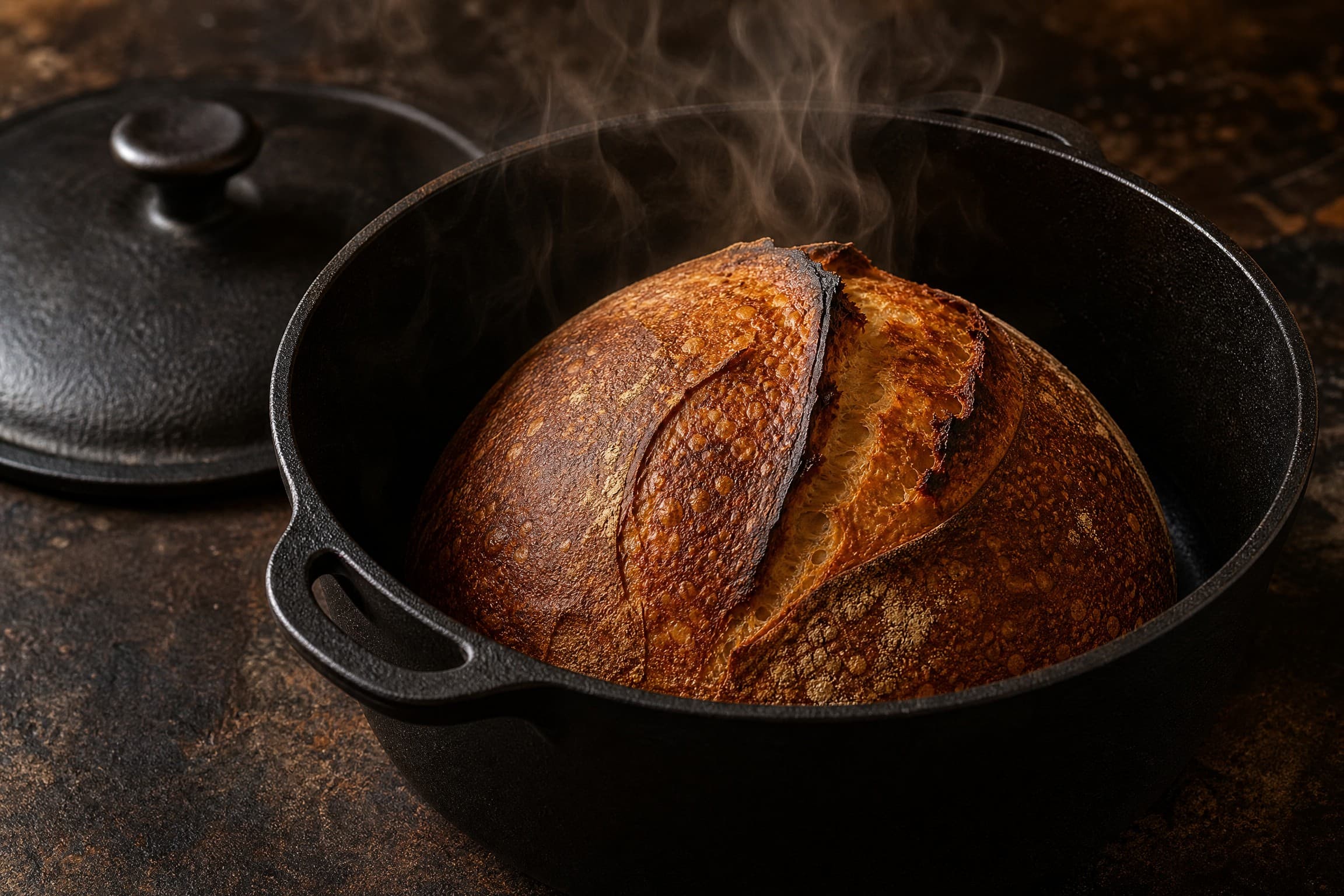
Few things in the sourdough kitchen pay off as instantly as the Dutch oven. If you bake your first loaf in one, you will wonder what all the dense, pale loaves of your past were about. The pot is not magic — it just does two things a home oven cannot do on its own: trap the loaf's own steam and radiate heat from every side at once.
Why a Dutch oven works so well
Professional bread ovens have one feature home ovens lack: steam injection. When a raw loaf hits 400°F+, the water inside it erupts into steam and that wet atmosphere keeps the developing crust soft and elastic for the first minutes of the bake — the window when the dough springs up. A Dutch oven provides that same humid microclimate with its lid on. The moisture escaping the loaf cannot escape the pot, so the crust stays pliable and the loaf doubles before the crust sets.
The second trick is even heat. Thick cast iron walls hold a reservoir of heat and radiate it evenly from the bottom, the sides and the lid. No hot spots, no lopsided loaves — the dough cooks the way its oven meant it to. And because a heavy pot holds so much heat, opening the oven door for those 20 seconds doesn't crash the temperature mid-spring.
Baking bread in a cast iron Dutch oven, step by step
- Preheat the empty pot, with the lid on, for 30–60 minutes at 450–500°F (230–260°C). Long preheating is not optional — the pot needs to soak up heat so it doesn't go cold when the loaf lands.
- While the pot heats, proof the shaped loaf on a square of parchment large enough to lift the loaf with. This is easier than grappling with a hot pot.
- When the dough is proofed, remove the pot and set it on a heat-safe surface with the lid off. Unfold the parchment corners and lower the loaf in, parchment and all.
- Score the top immediately — one confident slash or a few parallel cuts, about 1/2 inch (1.25 cm) deep — then put the lid on and close the oven door fast. Every second with the lid off is steam you are giving away.
- Bake covered, then uncovered (times below).
Keep the bench scraper and a lame or razor near the oven for this minute of chaos. The whole drop-and-score routine should take under a minute.
Lid on, lid off: timing the bake
The bake is two acts:
| Stage | Time | What is happening |
|---|---|---|
| Covered | 20–25 minutes at 450–475°F | steam trapped, oven spring, crust stays soft |
| Uncovered | 20–25 minutes at 450°F | moisture escapes, crust sets and deepens |
Nudge the temperatures to taste. Pale crusts get longer or hotter uncovered time; dark bottoms get a sheet pan on the rack below the pot. For a truly deep, crackly crust, let the uncovered phase run the full 25 minutes — the surface should look almost mahogany before it comes out. If you use an instant-read thermometer, the loaf is done around 205–210°F (96–99°C) inside.
Cast iron care between bakes
A Dutch oven wants surprisingly little from you. Let it cool completely before any water touches it — thermal shock is the real enemy of cast iron. Then rinse with warm water and scrub gently with a soft brush; a little dish soap is fine on modern seasoning and essential on enameled pots, so don't be precious about it. The cardinal sins are the dishwasher, overnight soaking and metal scouring pads.
Dry the pot on a warm burner until every trace of water has hissed off, then rub a thin film of neutral cooking oil over the bare iron with a paper towel — inside and out, including the underside of the lid. Less is more: a rubbed-in, invisible film seasons the iron; a visible pool of oil goes tacky. Store it with the lid slightly ajar so the seasoning stays dry.
No Dutch oven? Alternatives that work
The steaming trick is the part that matters and several setups deliver it without a classic pot:
- Combo cooker. The shallow skillet half works as a lid and gives you an easier target to drop the loaf into — no deep walls to aim over.
- Deep, square cast iron bread baker. Same physics and often easier loading than a round pot.
- Bread cloche or covered ceramic baker. Soaks up water before the bake, releasing steam around the loaf; needs a long preheat, but the crust is outstanding.
- Baking steel or stone plus a steam pan. Put a shallow pan of water or a handful of ice cubes in the bottom of the oven when the loaf goes in. Slightly weaker steam means slightly less spring, but the crust still crackles.
Whatever you use, the recipe itself is unchanged — the classic sourdough bread recipe gives you the dough and this page gives you the vessel. When a bake goes sideways, flat or pale, the sourdough troubleshooting guide sorts the oven problem from the dough problem. And if you are still building your first loaf start to finish, the beginner's guide to sourdough walks every stage in order.
Frequently asked questions
Do I preheat the Dutch oven with the lid on or off?
Lid on, empty. The pot needs its full heat reservoir — lid included — so the loaf meets burning-hot iron from the moment it lands. Thirty to sixty minutes at 450–500°F (230–260°C) is the standard preheat.
What temperature should a Dutch oven be for bread?
450–500°F (230–260°C) works and about 475°F (245°C) is the sweet spot for most home ovens: hot enough for strong oven spring, not so hot that the bottom crust burns before the top colors. Drop to 450°F if your pot darkens the bottom too fast.
Do I need parchment paper for Dutch oven baking?
Not strictly — a well-floured banneton release and a confident flip work fine. But parchment makes it effortless: the loaf lifts in, scores cleanly and pulls out without sticking. Use a sheet you have trimmed to fit and drop the loaf in slowly so hot air doesn't blast your arm.
Why is my Dutch oven bread pale on top or burned on the bottom?
Pale top usually means the uncovered phase was too short or the oven too cool — give the crust its full 20–25 uncovered minutes. A burned bottom means the pot is too close to the heating element; an empty baking sheet on the rack below the pot diffuses the heat.
Should the dough go into the Dutch oven straight from the fridge?
It can and cold dough is actually easier to score because the skin is firm. Just be gentle: cold dough is fragile, so place it carefully and close the lid fast. Expect the same bake times — the covered phase absorbs the extra chill.
Can you bake sourdough without a Dutch oven?
Yes. A Dutch oven's only real job is to trap steam, and any covered, oven-safe vessel does that. A combo cooker, a covered ceramic cloche, a deep bread baker, or a baking stone with a pan of ice cubes all work — the dough recipe is identical, only the vessel changes. See the alternatives list above for the specifics.