Extra Sour Sourdough Bread Recipe (Big, Bold Tang)
An extra sour sourdough bread recipe with big, bold tangy flavor — no citric acid needed. Achieved with a low starter percentage and a long cold ferment.
By Maya Ellison · Reviewed by Maya Ellison · Updated August 30, 2026 · 3 min read
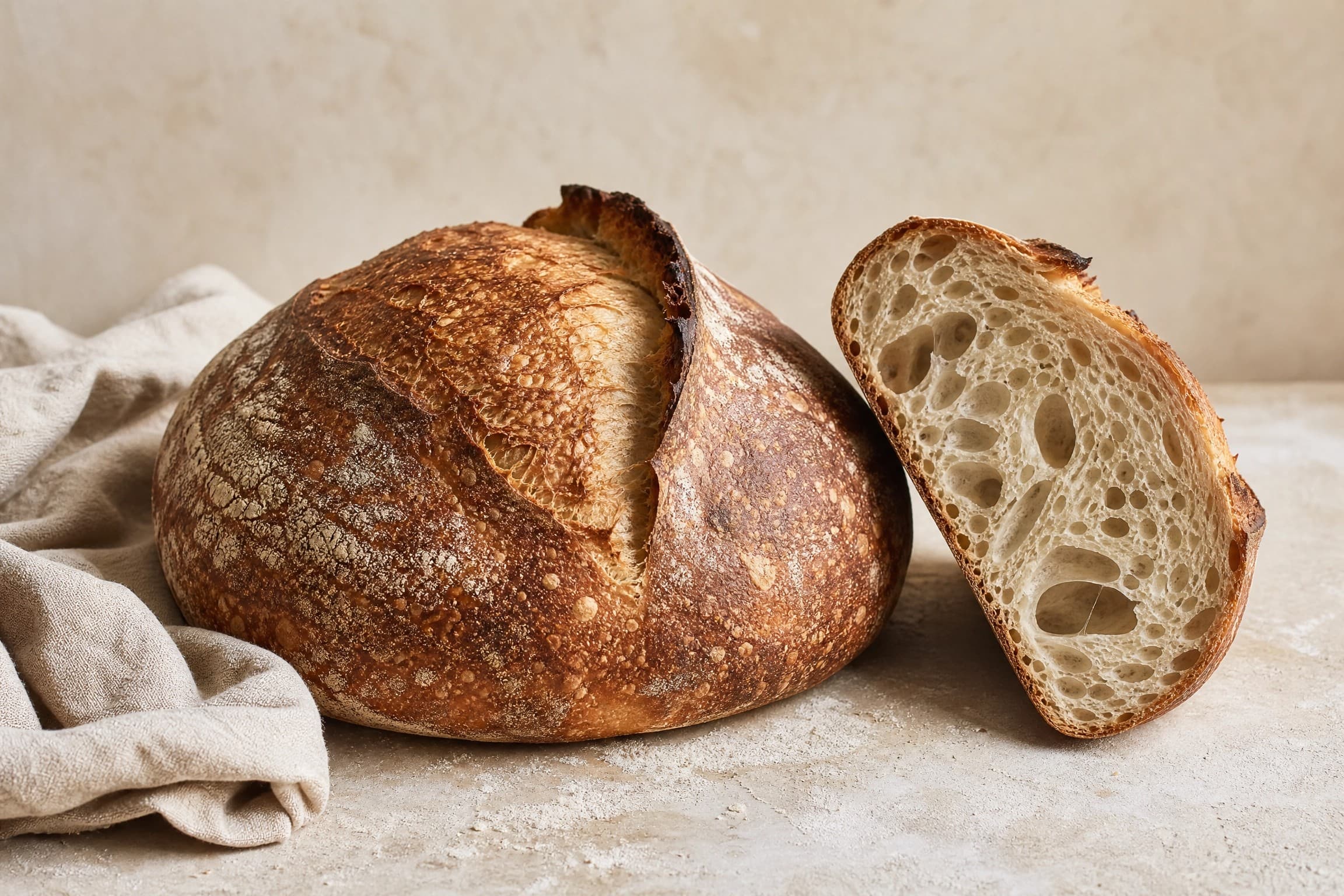
If you love that deep, mouth-watering tang in sourdough, this extra sour sourdough bread recipe is the one. It's big, bold and genuinely sour — the kind of loaf that makes a modest piece of toast feel like an event. And the best part: it uses just flour, water, salt and your starter. No citric acid, no shortcuts, nothing but honest fermentation.
The whole trick is giving the bacteria time and a bit of cold. This recipe keeps the starter amount tiny and the cold ferment long, and the tang develops all on its own.
What makes sourdough sour
Sourdough's tang comes from two acids produced during fermentation: lactic acid (the mild, yogurt-like tang) and acetic acid (the sharp, vinegary tang that defines "sour" sourdough). To make a loaf extra sour, you want the acetic-acid producers to win.
Acetic-acid bacteria thrive in cooler temperatures and drier conditions. So this recipe gives them exactly that: a low starter percentage (so fermentation runs slow and long) and a 24-48 hour cold ferment (cool and slow). Each hour in the fridge tips the balance further toward acetic acid and away from the milder lactic acid.
Why this recipe is extra sour
Three deliberate choices do the work:
- A tiny amount of starter (20 g). This slows the rise dramatically, stretching the fermentation window so the bacteria have hours longer to build acid.
- A long bulk ferment. Because there's so little starter, bulk fermentation takes a while — and every extra hour is more flavor.
- A 24-48 hour cold ferment. This is the big one. The fridge slows the yeast but lets the acetic-acid bacteria keep working, so tang accumulates while the dough stays shapeable.
Skip any of these and you'll slide back toward a mild, everyday sourdough. Do all of them and you get the bold tang you're after.
The method, step by step
The process mirrors a classic loaf — autolyse, folds, bulk ferment, shape, bake — with the ferment pushed long and cold. A Dutch oven and a proper shape give you the oven spring you want even after the extended cold ferment.
The critical detail is temperature control. During bulk ferment, keep an eye on it in a warm kitchen — the dough can finish faster than you expect. And set your fridge to 4°C (39°F) or colder for the cold ferment; anything warmer risks over-fermenting the gluten and a flat, collapsed loaf. Dough temperature covers getting this right for your own kitchen.
Is it too sour for everyone?
That's the beauty of baking your own — you control the dial. Give the loaf the full 48-hour cold ferment and you'll have a pronounced tang. Dial it back to 24 hours if you want extra sour but a touch milder, or ramp it up to the very edge of 72 hours if you can't get enough. And if you ever want to go the other way — a milder, softer loaf — the long fermented sourdough bread and basic sourdough bread are gentler on the palate.
Storage
Extra sour sourdough keeps exceptionally well — the acidity helps it stay fresh. Store it cut-side down on the board or in a bread box for 4-5 days, and it toasts beautifully. For longer, slice and freeze up to 3 months; the tang holds up perfectly after thawing.
Ingredients
Weights in grams are the source of truth; cup measures are approximate.
- 500 g bread flour
- 360 g water
- 20 g active sourdough starter (fed a few hours before)
- 10 g fine sea salt
- Rice flour, for the banneton
Method
Feed your starter: take 20 g of active starter and feed it at 1:1:1 a few hours before so it's bubbly and strong enough to leaven.
Autolyse: mix the water and starter together, add the flour and salt, and rest 1 hour to fully hydrate the flour.
Form the dough: work around the bowl stretching the edges over the centre 20-30 times into a smooth ball, then rest 30 minutes covered.
Stretch and fold: do 4-6 sets, 4 stretches per set, about 15 minutes apart, until the dough is strong and elastic.
Bulk ferment: cover and leave at room temperature until just under double — soft, jiggly and full of bubbles. The low starter amount makes this slow, which is exactly what you want for maximum tang.
Shape: ease the dough onto a lightly floured surface and shape into a tight boule or batard. Place seam-side up into a floured banneton.
Cold ferment: cover loosely and refrigerate 24-48 hours at 4°C (39°F) or colder. This long cold retard is the key to the extra sour flavor — give it the full 48 hours if you can.
Bake: preheat a Dutch oven to 450°F (230°C) for about an hour. Turn the cold dough onto parchment, dust and score.
Lower into the hot pot, cover, and bake 30 minutes. Uncover and bake 10-15 minutes more until deeply browned.
Cool on a wire rack at least 4-6 hours before slicing.
Frequently asked questions
How do you make sourdough bread extra sour?
Extra sour sourdough comes from giving the acetic-acid-producing bacteria more time and cooler conditions. The biggest levers: use a small amount of starter (20 g) so the dough ferments slowly, ferment longer, and — most importantly — cold-ferment the shaped loaf for 24-48 hours in the fridge. Cooler temperatures favor the tangy acetic acid over milder lactic acid. For even more techniques — whole-grain flour, a stiff starter and stirring in the hooch — the [long fermented sourdough bread](/long-fermented-sourdough-bread) recipe walks through the broader slow-fermentation toolkit.
Is this sourdough recipe really extra sour?
Yes for a home sourdough — the low starter amount plus the full 48-hour cold ferment gives a pronounced, lingering tang that clearly reads as 'extra sour.' It won't be as puckering as adding citric acid, but it's a natural, deep sourness built entirely from fermentation. That's the honest trade-off for no added extras.
Does this recipe need citric acid or vinegar?
No — this recipe gets its sourness purely from the long, cold fermentation, so there's no citric acid or vinegar involved. Some recipes add citric acid to shortcut the tang, but the flavor here develops naturally and tastes cleaner for it.
How long can I cold ferment it for?
Aim for 24-48 hours. Beyond about 72 hours the lactic-acid bacteria can break down so much gluten that the loaf flattens as it bakes. The full 48 hours gives the deepest flavor; if you're in a hurry, 24 hours still delivers a good tang. Keep the fridge at 4°C (39°F) or colder so it doesn't over-ferment.
Why only 20 g of starter?
Less starter means the dough rises more slowly, giving the bacteria more time to produce flavor before the yeast finishes rising it. It's the same trick used in the [long fermented sourdough bread](/long-fermented-sourdough-bread) — slow fermentation is what builds tang.
What's the difference between this and regular sourdough bread?
A regular loaf uses more starter and ferments faster, which produces a mild tang. This extra sour recipe uses a tiny amount of starter and a long cold retard, which pushes the acetic-acid bacteria to dominate and gives the big, bold sour flavor. The ingredients are identical — the difference is purely time, temperature and starter amount.
Can I use all-purpose flour for an extra sour loaf?
Not ideally. All-purpose flour isn't strong enough to hold up through the long fermentation this recipe needs. Bread flour's higher protein content keeps the gluten network intact during the extended cold ferment, which is why it's recommended here — it's the same principle as any long-fermented loaf.