How to Shape a Sourdough Batard (The Easiest Technique)
Learn to shape a sourdough batard — the easy way. An oblong loaf that's perfect for sandwiches, with a full recipe and the simplest shaping steps for a gorgeous open crumb.
By Maya Ellison · Reviewed by Maya Ellison · Updated August 30, 2026 · 3 min read
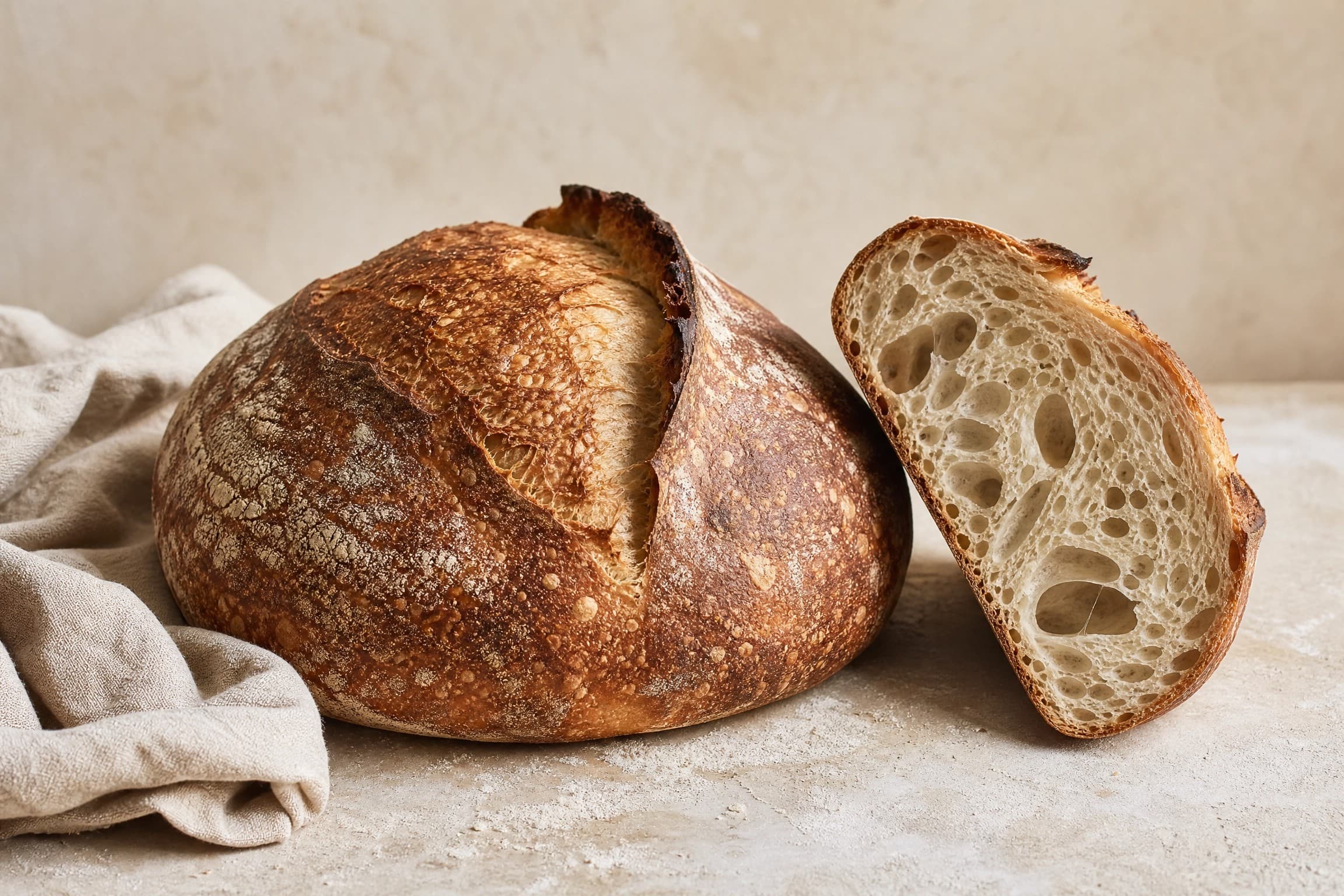
Once you've mastered a round sourdough boule, a batard is the natural next step — and it quickly becomes a favorite. A sourdough batard is simply an oblong or oval loaf, proofed in a longer basket and baked with a smooth, crusty skin. It's easier to slice into even, sandwich-sized pieces, and it looks genuinely impressive on the table.
The good news: the dough is exactly the same as a boule. The only real difference is how you shape it. This page shows you the easiest batard-shaping technique, then walks you through a full loaf from mixing to a crackling, golden bake.
The easiest batard shaping technique
The secret to a tidy batard is less about strength and more about following a calm, choreographed sequence. Do it in this order and you'll get a clean, oblong loaf with a tight surface every time.
- Flip it sticky-side up. Turn the fermenting dough out onto a lightly rice-floured bench, smooth side down. Wet side up.
- Ease it into a rectangle. Gently press or ease the dough outward into a rough rectangle, with the short side facing you.
- Fold the top down. Flip the top third of the rectangle down over itself.
- Fold the sides in. Take the right side and fold it in, then the left side. This builds the structure and shapes the end points.
- Roll it up. Starting at the bottom, roll the dough upward, building surface tension as you go. When you reach the top, leave the seam underneath.
- Tighten it. Cup your hands on the back of the dough and gently pull it toward you without lifting it off the counter. This smooths and tightens the skin.
- Into the banneton. Flip the shaped batard seam-side up into a floured oval banneton. Pinch the seam together once more if needed.
Done, that's the whole technique. Handle the dough gently throughout — you want to keep every bubble from your bulk ferment.
A full sourdough batard recipe
Follow the standard sourdough skeleton — autolyse, folds, bulk ferment, cold proof — and just swap in the batard shaping above. You can also tap the shaping guide for the broader principles and dough temperature to keep the timing on track.
Autolyse the flour with the water and starter for an hour, then strengthen with 4-6 sets of stretch-and-folds. Bulk ferment until just under double, shape into the batard, and cold-proof in an oval banneton for 8-36 hours.
Bake from cold in a preheated Dutch oven at 450°F (230°C), covered for 30 minutes then uncovered to color the crust. Cool fully before cutting.
Baked without a Dutch oven?
You can absolutely bake a batard free-form on a stone or tray with a pan of water in the oven for steam. You won't get quite the same dramatic spring, but you'll still get a lovely crusty loaf. The convection bake guide has more on oven setups.
Serving and storage
Slice the batard on the diagonal for the longest, most sandwich-worthy pieces. It keeps 3-4 days in a bread box and toasts beautifully. For longer, slice and freeze — it thaws and toasts back like new.
Ingredients
Weights in grams are the source of truth; cup measures are approximate.
- 500 g bread flour
- 350 g water
- 100 g active sourdough starter (fed a few hours before)
- 10 g fine sea salt
- Rice flour, for shaping and the banneton
Method
Autolyse: mix the water and starter, add flour and salt, and rest 1 hour to fully hydrate the flour.
Form the dough: stretch the edges over the centre 20-30 times to a smooth, glossy ball, then rest 30 minutes covered.
Stretch and fold: do 4-6 sets of stretch-and-folds, 4 stretches per set, about 15 minutes apart, to build structure and strength.
Bulk ferment: cover and leave at room temperature until just under double, soft and jiggly with bubbles under the surface.
Shape the batard: lightly dust your bench with rice flour. Flip the dough out so the sticky side is up. Gently ease it into a rough rectangle with the short side facing you. Fold the top third down, then fold each side in toward the centre to build structure. Roll the dough up from the bottom to create surface tension, and tuck the ends to taper them into the classic pointed batard.
Tighten: with clean, dry hands, cup the back of the dough and gently pull it toward you — without lifting it — to tighten the surface.
Final proof: place the batard seam-side up into a floured oval banneton, cover, and refrigerate at least 8 hours (up to 36 for deeper flavor).
Bake: preheat a Dutch oven to 450°F (230°C) for an hour. Tip the cold dough onto parchment, dust with rice flour and score a long diagonal cut down the centre.
Lower the dough into the hot pot, cover, and bake 30 minutes. Uncover and bake 10-15 minutes more until deeply browned.
Cool on a wire rack at least 4-6 hours before slicing.
Frequently asked questions
What is a sourdough batard?
A batard is simply an oblong or oval loaf — bigger than a baguette but longer than a round boule. Its shape makes it a manageable size for sandwiches, easy to slice evenly, and it bakes a lovely open crumb. It's usually proofed in an oval banneton.
Do I need an oval banneton to make a batard?
Not strictly. You can proof a batard on a floured couche or in a towel-lined dish shaped into a rough oval, then bake it free-form. An oval banneton just makes it neater. If you bake in a loaf pan instead, shape the dough narrower to fit — the same technique applies.
What's the difference between a batard and a boule?
Shape, mostly. A boule is round and proofed in a round basket; a batard is oval and proofed in an oval basket. The dough is identical — shaping is what changes. Batards slice into long, even, sandwich-friendly pieces, which is why many bakers prefer them.
How do I stop my batard from sticking when shaping?
Use rice flour, not wheat flour — it has no gluten, so it acts as a dry barrier and won't gum into the dough. Keep the dusting light, work with clean, dry hands, and handle the dough as little as possible so you keep the air bubbles intact.
Why do I shape the batard with the sticky side up?
Because the smooth side down grips the bench and creates the tension you need. Flipping the dough so the wet, sticky side is up means the taut surface underneath gives you good structure as you roll it together, and the seam ends up cleanly underneath.
How do I get a good ear on my batard?
The ear comes from a tight surface and a deep score. Bake the loaf with good surface tension, then score a single long, confident diagonal cut off-centre — about 1/4 inch deep. The [scoring guide](/guides/sourdough-scoring-designs) walks through the details.
How long should I ferment a batard?
Bulk ferment at room temperature until just under double — typically 6-8 hours depending on your kitchen — then cold-proof in the fridge for 8-36 hours. The cold retard deepens flavor and makes the dough easier to score. [See the long-fermented method](/long-fermented-sourdough-bread) if you want maximum flavor.