Convection Bake vs Bake: Which for Sourdough?
Convection bake vs bake for sourdough: how the fan changes crust and rise, when to use convection, temperature and time adjustments, and when to switch it off.
By Maya Ellison · Reviewed by Maya Ellison · Updated August 29, 2026 · 3 min read
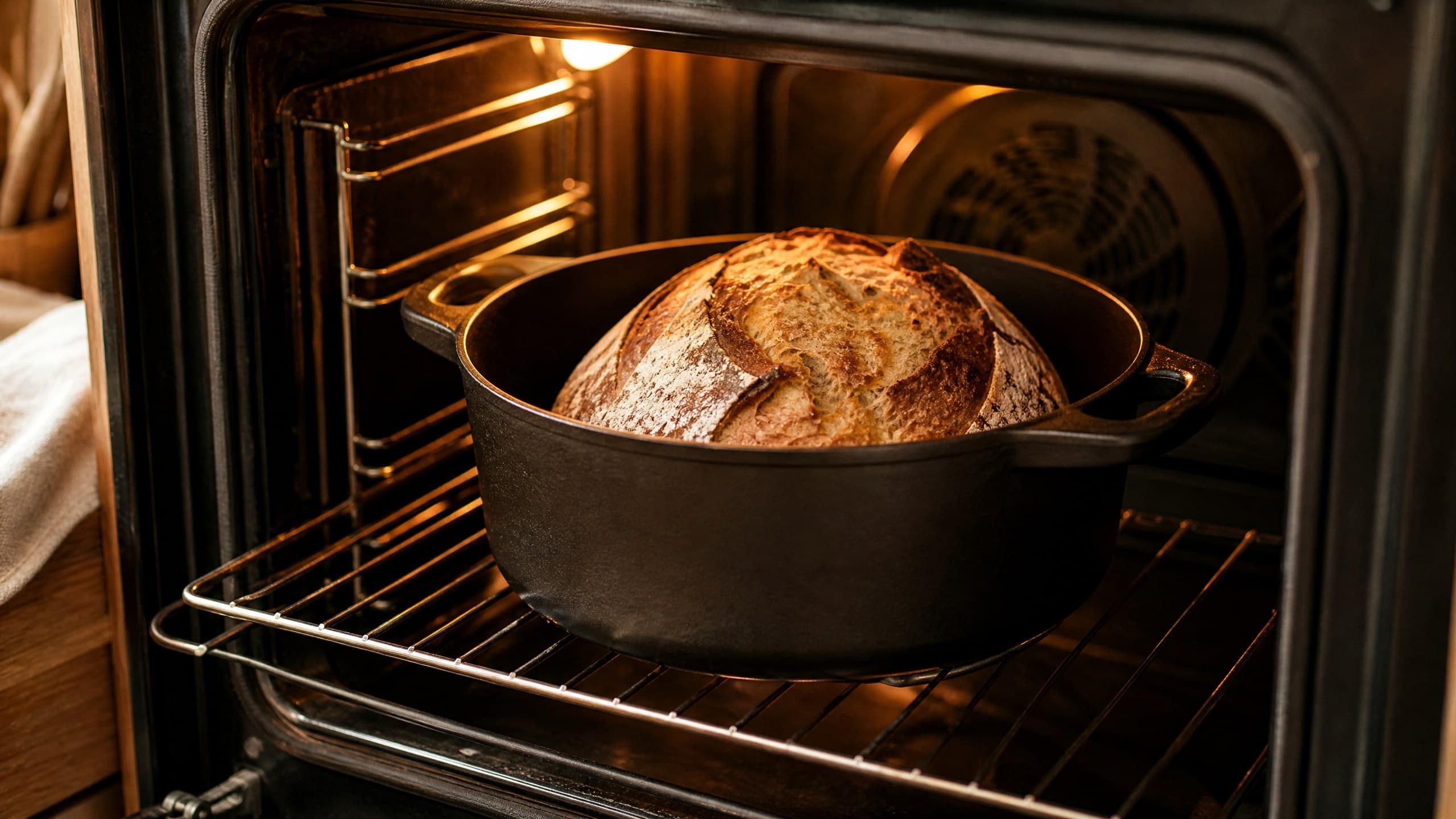
Quick answer
The convection bake vs bake question comes up the moment you realize your oven has more than one setting. The short version: the fan changes the surface of your loaf, not the soul of it. Here's how to choose and how to adjust so convection helps instead of harms.
Convection vs bake: what's actually different
Conventional bake heats from the bottom and top with still air. Convection (often labeled "Convection Bake" or "Fan Assisted") adds a fan that circulates that hot air around the loaf.
That circulation does two things:
- It removes moisture from the crust faster. Moving air carries water vapor away, so the surface dries and browns sooner.
- It evens out hot spots. A still oven has cool corners; a fan drags heat into them, so the bake is more uniform.
The inside of the loaf barely notices the fan. What changes is the skin — and for sourdough, the skin is everything in the first 20 minutes.
When to use convection for bread
Use convection when your goal is a darker, crisper, more crackly crust — the kind you get from a good bakery. The fan sets the crust quickly, which locks in oven spring and gives you that thin, snappy shell.
Convection also shines when:
- You're baking with steam (a Dutch oven, pan of water, or ice cubes). The steam protects the crumb while the fan crisps the surface.
- You're baking two loaves at once and want even browning across both racks.
- Your conventional oven runs cool on one side and your crust comes out uneven.
Temperature and timing adjustments
This is the part people skip, and it's why convection gets a bad name. A fan oven browns the surface faster than the air temperature implies, so you must compensate:
| Setting | Conventional | Convection |
|---|---|---|
| Temperature | 450°F (232°C) | 425°F (218°C) |
| First check | At recipe time | 5–10 min early |
| Steam | First 20 min | First 20 min (more important) |
Drop the temperature about 25°F (15°C) and start testing doneness early. Your loaf is done when it reads 205–210°F (96–99°C) in the center and sounds hollow when tapped on the base.
When to avoid convection
Switch convection off when:
- The crust colors before the crumb sets. If you pull the loaf and the inside is gummy, the fan won. Finish on conventional.
- You want a soft, delicate crust for a sandwich loaf or a long, gentle cold proof that you don't want to rush.
- You're baking very small or thin items (crackers, flatbreads) where the fan blows them around or dries them unevenly.
A good pattern for uneven ovens: convection for the first 20 minutes to set the crust, then conventional to finish the crumb without scorching.
Steam management with the fan
Convection's only real enemy is a dry oven. Because the fan pulls moisture off the loaf, steam matters more, not less, when you run convection. Trap it with a Dutch oven lid, or add a pan of boiling water and a few ice cubes at the start. Remove the steam source after 15–20 minutes so the fan can then crisp what it softened.
The fan is a tool, not a verdict. Match it to the crust you want, adjust the heat, and your loaf tells you which setting won.
Frequently asked questions
Is convection better for sourdough bread?
It's better for crust, not always for the crumb. The fan accelerates surface drying, which gives a thinner, crisper, more evenly browned crust and helps a loaf spring. But it also steals moisture faster, so without steam your crust can set and crack before the oven spring finishes. Use convection when you want that bold bakery crust and you're baking with steam; use conventional when you want a softer, slower bake.
What temperature do you bake sourdough in a convection oven?
Take the conventional temperature in your recipe and subtract about 25°F (15°C). So a 450°F (232°C) conventional bake becomes roughly 425°F (218°C) convection. Fan ovens run hotter at the surface even when the air reads the same, and that's why the reduction matters more than the displayed number suggests.
Does convection dry out sourdough?
Yes, that's the trade-off. Moving air evaporates surface moisture quickly, which is great for crust but can leave the crumb drier if you over-bake. Keep steam in the oven for the first 15–20 minutes and don't extend the bake longer than needed. If your loaves come out pale and gummy, you probably need more steam, not less fan.
Should I use convection for the whole bake or just the start?
Many bakers use convection for the crust-setting phase, then switch to conventional to finish the crumb without over-browning. If your oven browns unevenly, convection for the first 20 minutes followed by conventional for the remainder is a reliable pattern. Match it to your oven's personality — some run hot on the fan side and do better with convection only at the end.