Roasted Garlic Sourdough Bread Recipe (Soft, Sweetly Savory)
A roasted garlic sourdough bread recipe with soft caramelized cloves folded through a tangy open crumb. Mellow, sweet and garlicky — not sharp.
By Maya Ellison · Reviewed by Maya Ellison · Updated August 30, 2026 · 3 min read
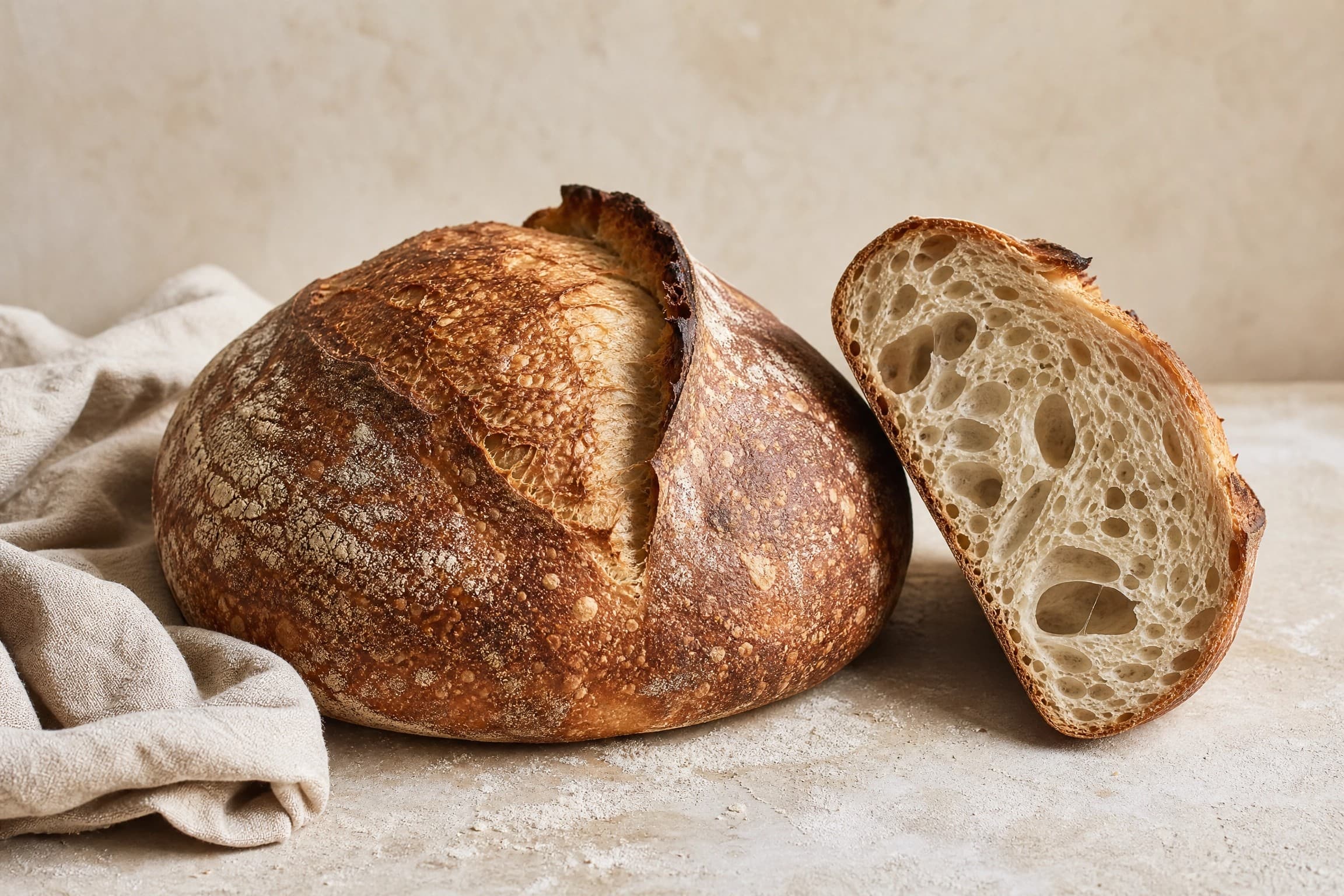
Roasted garlic and tangy sourdough are a match that's hard to oversell. The question is whether you want a sharp, aggressive garlic — and for bread, you really don't. This roasted garlic sourdough bread recipe roasts whole heads first so the cloves turn sweetly caramelized, then folds them gently through an open, tangy crumb. The result is mellow, savory and dangerously easy to keep slicing.
It's a slightly fancier bake, but built on the same skeleton as a classic sourdough loaf: autolyse, folds, bulk ferment, cold retard, Dutch oven. You're just adding one gorgeous extra ingredient.
Roast the garlic first
This is the step that makes or breaks the loaf, so don't skip it. Halve the heads across the equator, drizzle the cut faces with olive oil, wrap them in foil and roast at 400°F (200°C) for 35-45 minutes — until the cloves are fully soft and deeply caramelized.
Raw garlic in dough is harsh and pungent, and it ferments unpredictably during a long proof because the acid in the dough changes it. Roasting neutralises that entirely: the sugars caramelize and the cloves soften into something sweet. Cool the heads completely, then squeeze the cloves out — the skins come away easily and you're left with only the good stuff.
Building a garlic-studded dough
Follow a standard sourdough timeline but add the garlic at the right moment. After the second or third set of stretch-and-folds, press the roasted cloves in small pieces across the dough and fold them in with a gentle envelope fold. Small pieces distribute evenly without tearing the gluten network, which is what keeps the crumb open. The high-hydration guide and shaping guide are worth a look if you want more control.
A long, cold retarded loaf handles inclusions especially well. The long fermented sourdough bread method works perfectly here — just add the garlic during the folds. The slow cold ferment lets the mellow garlic flavor mingle through the whole crumb rather than sitting in isolated pockets.
Bake it like a classic loaf
Score the cold dough and bake covered in a hot Dutch oven for the oven spring, then uncovered to finish the crust — deep brown, crisp, with those sweet roasted flecks showing through the cut. Let it cool fully before slicing; garlic-studded crumb is soft and makes a mess if you rush it.
How to serve it
This loaf is quietly versatile. It's magnificent toasted under poached eggs, torn beside a bowl of soup or stew, or paired with roasted vegetables and soft cheese. And because the garlic stays sweet under heat, it makes a next-level grilled cheese. For the buttery, toasted garlic-bread style instead, the sourdough garlic bread page has that covered.
Storage
The roasted cloves keep the crumb moist, so the loaf stays good for 3-4 days in a bread box. Slice and freeze what you won't eat in that window — it toasts back beautifully. Don't refrigerate the whole loaf; it will dry out faster.
Ingredients
Weights in grams are the source of truth; cup measures are approximate.
- 2 heads of garlic
- 1 tbsp olive oil
- 500 g bread flour
- 350 g water
- 100 g active sourdough starter (fed a few hours before)
- 10 g fine sea salt
- Rice flour, for the banneton
Method
Roast the garlic: about 1 hour into your autolyse, halve the heads of garlic across the equator, drizzle cut faces with olive oil, wrap in foil and roast at 400°F (200°C) for 35-45 minutes, until the cloves are truly soft and caramelized. Let cool completely, then squeeze the soft cloves out.
Feed your starter: take 100 g of active starter and feed it a few hours before mixing so it's bubbly and strong.
Autolyse: stir the water and starter together, add the flour and salt and mix to a shaggy dough. Cover and rest 1 hour.
Form the dough: bring it into a smooth ball with 20-30 light stretches, then rest 30 minutes covered.
Stretch and fold: do 4-6 sets of stretch-and-folds, 4 stretches per set, about 15 minutes apart.
Add the garlic: after the second or third fold, press the roasted garlic cloves in small pieces across the dough and fold them in with a gentle envelope fold. Keep the pieces fairly small so they distribute without tearing the gluten.
Bulk ferment: cover and leave at room temperature until the dough is just under double, soft, jiggly and full of bubbles.
Shape: with lightly oiled or wet hands, ease the dough out and shape into a tight boule or batard. Place seam-side up into a floured banneton.
Cold ferment: cover loosely and refrigerate 12-24 hours at 3°C or colder.
Preheat a Dutch oven to 450°F (230°C) for about an hour with the pot inside.
Turn the cold dough onto parchment, dust and score. Lower into the hot Dutch oven.
Bake covered at 450°F (230°C) for 30 minutes, then uncovered at 410°F (210°C) for 10-15 minutes until deeply browned. Cool completely on a rack before slicing.
Frequently asked questions
Do I need to cook the garlic before adding it to the dough?
Yes — always roast the garlic first. Raw garlic has a harsh, pungent bite and, because it's acidic from the dough, it also ferments unpredictably during a long proof. Roasting completely changes it: the sugars caramelize and the cloves soften into something mellow and sweet, which is what makes this loaf great.
Why do you squeeze the roasted garlic out of the skin?
Roasted cloves slide out of their skins easily, and leaving the skins in would give you bitter, papery flecks through the crumb. Squeeze the heads and fold only the soft, caramelized flesh into the dough.
Does the garlic affect the rise?
It can if it's added too early or in big chunks. Large pieces of soft garlic can tear the gluten network and weigh down the dough. Fold the garlic in small pieces after the main folds and you keep a good, open crumb.
How much garlic is too much?
Two heads is plenty for a single loaf and keeps the garlic sweet rather than overpowering. If you love garlic, you can stretch toward three, but be careful — more moisture from the garlic can soften the dough noticeably and make shaping harder.
Can I use garlic confit instead of roasted garlic?
Absolutely. Garlic confit — cloves gently poached in oil — is the richer, even milder cousin and folds in just as well. If you use confit, ease back on any oil you add to the dough, since the confit cloves bring their own.
Is this the same as sourdough garlic bread?
Not quite. This is a garlic-studded loaf: roasted cloves baked *inside* the crumb. A classic sourdough garlic bread is usually a flatbread or a loaf brushed with garlic butter and toasted. If you want that buttery, toasty version, see the [sourdough garlic bread](/sourdough-garlic-bread) page.
What pairs well with roasted garlic sourdough?
Its mellow, savory profile is endlessly versatile — great toasted under poached eggs, paired with soups and stews, or torn with roasted vegetables and soft cheese. It also makes superb grilled cheese because the garlic stays sweet under heat.