Sourdough Sandwich Rolls (Soft Hoagie Buns)
Soft sourdough sandwich rolls for hoagies and subs: 6 puffy buns from a 55% hydration dough with oil and a pinch of sugar, proofed until marshmallow-soft.
By Maya Ellison · Reviewed by Maya Ellison · Updated September 9, 2026 · 2 min read
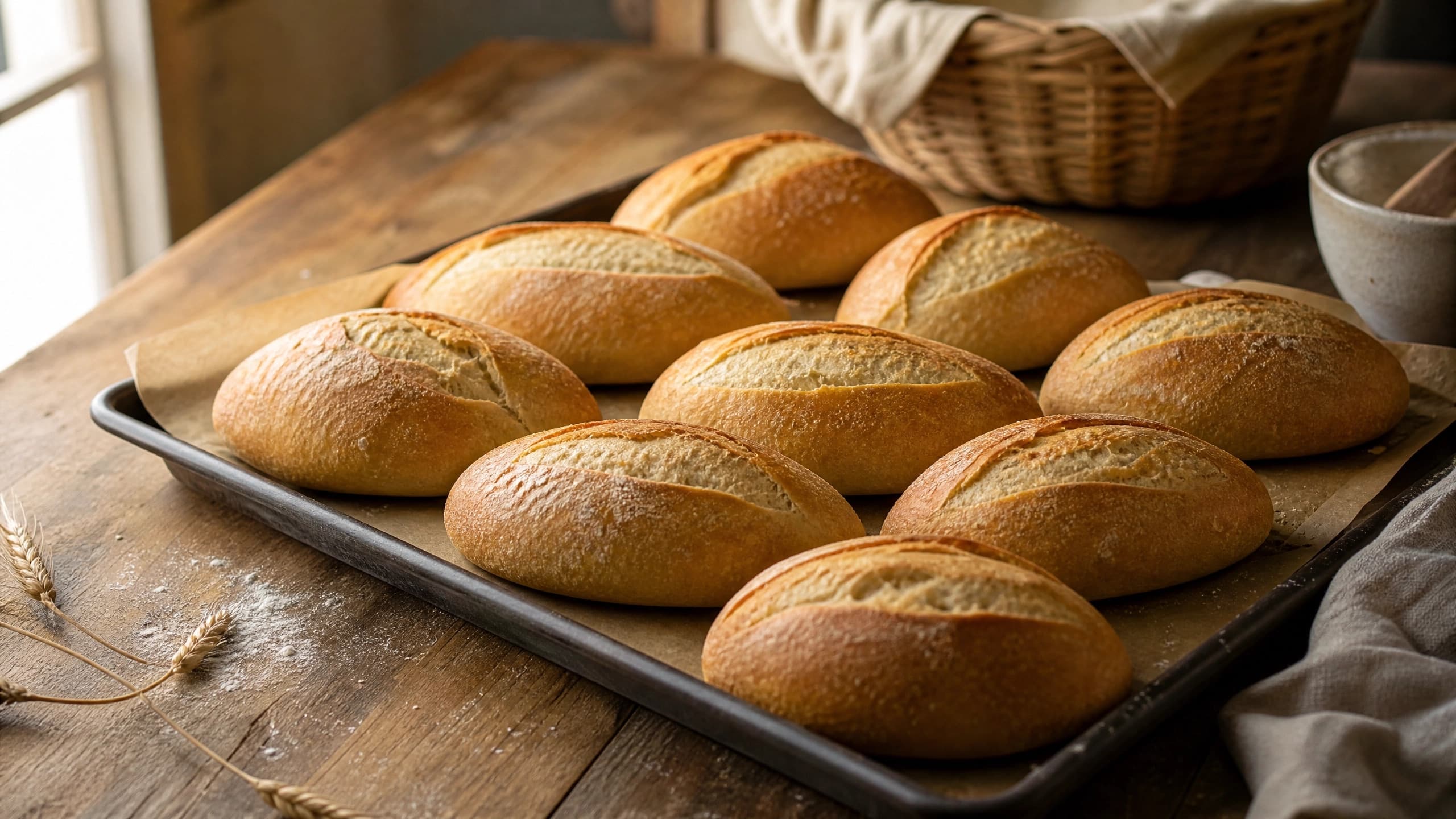
Soft sourdough sandwich rolls — hoagie-style, deli-grade, sub-worthy — start from a surprisingly modest sweet-spot dough: 55% hydration, a little oil, a pinch of sugar and a patient sponge. What they deliver is the roll that makes the sandwich: a tender, open-ish crumb, a mild tang, and a crust that chews instead of cracks. Unlike lean dough, this one proofs warm and fast, and the entire job after mixing is two quiet hours of puffy patience. If you're new to the technique, the dough poke test guide and proofing guide are the two pages to read alongside this recipe.
Why the low hydration works
Sandwich rolls have to hold their shape blunt against a knife and a pile of filling. At 55% hydration the dough is tight enough to shape into clean logs that keep their taper, yet still moist enough to bake up soft. The oil and sugar are the softeners — they tenderize the crumb the way fat always does — and the sourdough brings the tang and the keeping time.
The schedule, the short version
Mix in 20 minutes, knead in five, bulk 3 hours, shape and proof 2-3 more, bake 25. Altogether about 7 hours from bowl to cooling rack — with the entire hands-on time under an hour. Plan the bulk for the afternoon and the bake for dinner; or shape at night, cold-ferment, and bake first thing.
The two hours that make or break the rolls
Big loaves forgive proofing mistakes; small ones don't. These rolls bake so fast that your only chance to add volume is the final proof. If the shaped rolls go in under-proofed, the crumb bakes up tight and gummy in the middle — the exact complaint that sinks a deli roll. Proof until marshmallow-soft, then bake without delay.
Baking and resting
Egg wash for gloss, three diagonal slashes for the classic deli look, 400°F for about 25 minutes, then a full cool-down on the rack. Cooling is not optional: a hot roll reads as gummy even when the bake was perfect, so give the crumb time to set before you load it with mortadella.
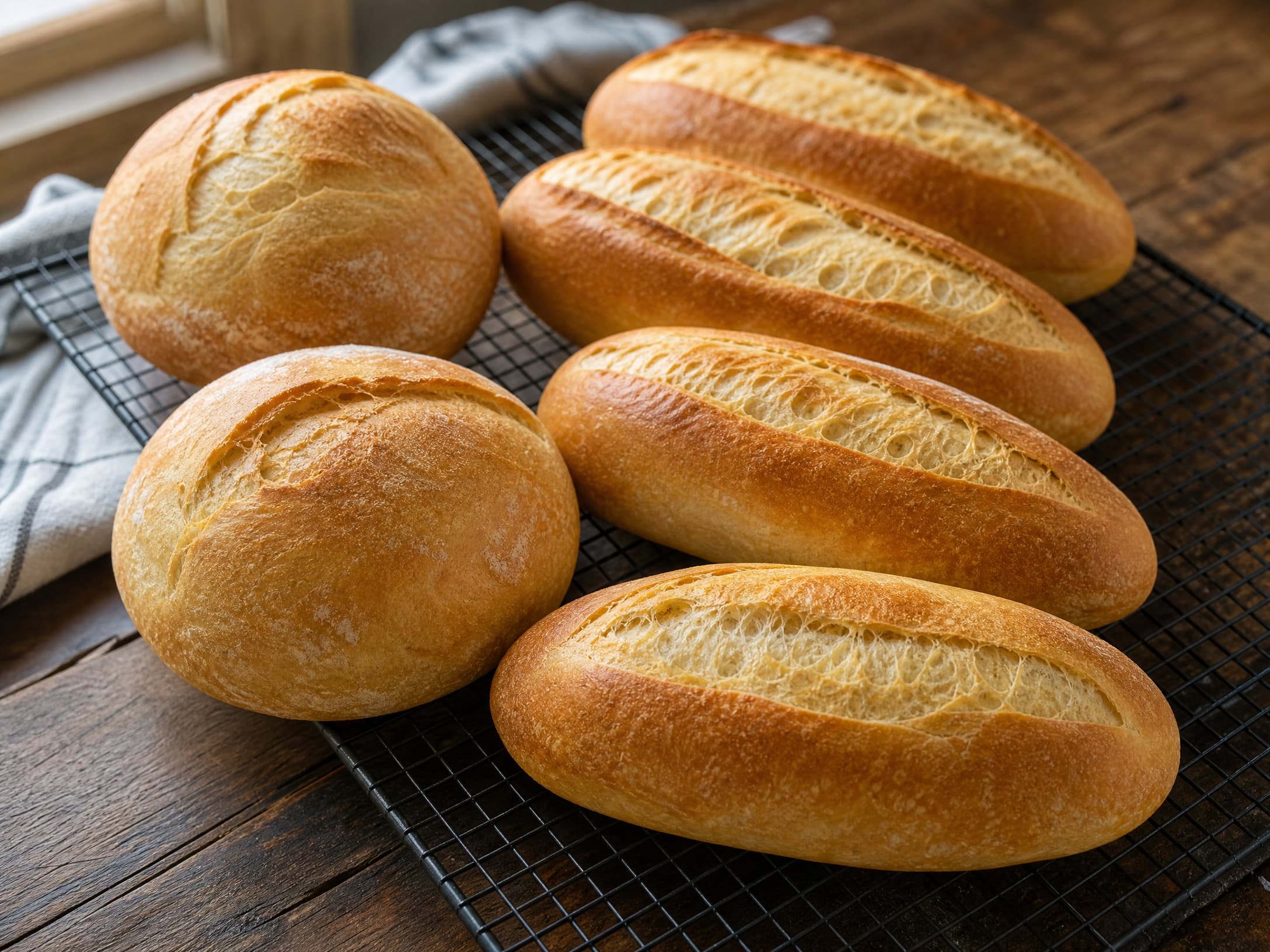
Fill them like a Philly roast pork or a classic Italian hoagie — or keep them simple with sourdough garlic bread on the side. The same gentle, tender-crumb thinking runs through the soft sourdough sandwich bread and the sourdough hot dog buns if you want the whole soft-bun set.
Ingredients
Weights in grams are the source of truth; cup measures are approximate.
- 500 g bread flour (about 4 cups)
- 275 g water at room temperature (about 1 1/8 cups)
- 100 g active sourdough starter (about 1/3 cup), fed to peak
- 30 g olive oil or melted butter (about 2 tablespoons), plus more for the pan
- 15 g sugar (about 1 tablespoon)
- 10 g fine sea salt (about 2 teaspoons)
- 1 egg + 1 teaspoon water, for the egg wash (optional, for gloss)
Method
Mix: stir the water, starter, sugar and salt together, then add the oil and flour. Mix to a shaggy dough, cover and rest 30 minutes — the flour hydrates and the dough turns workable.
Knead: in a stand mixer with the dough hook on medium, knead 4-5 minutes until smooth and elastic, with a slightly tacky but not sticky feel. By hand, knead 8-10 minutes instead.
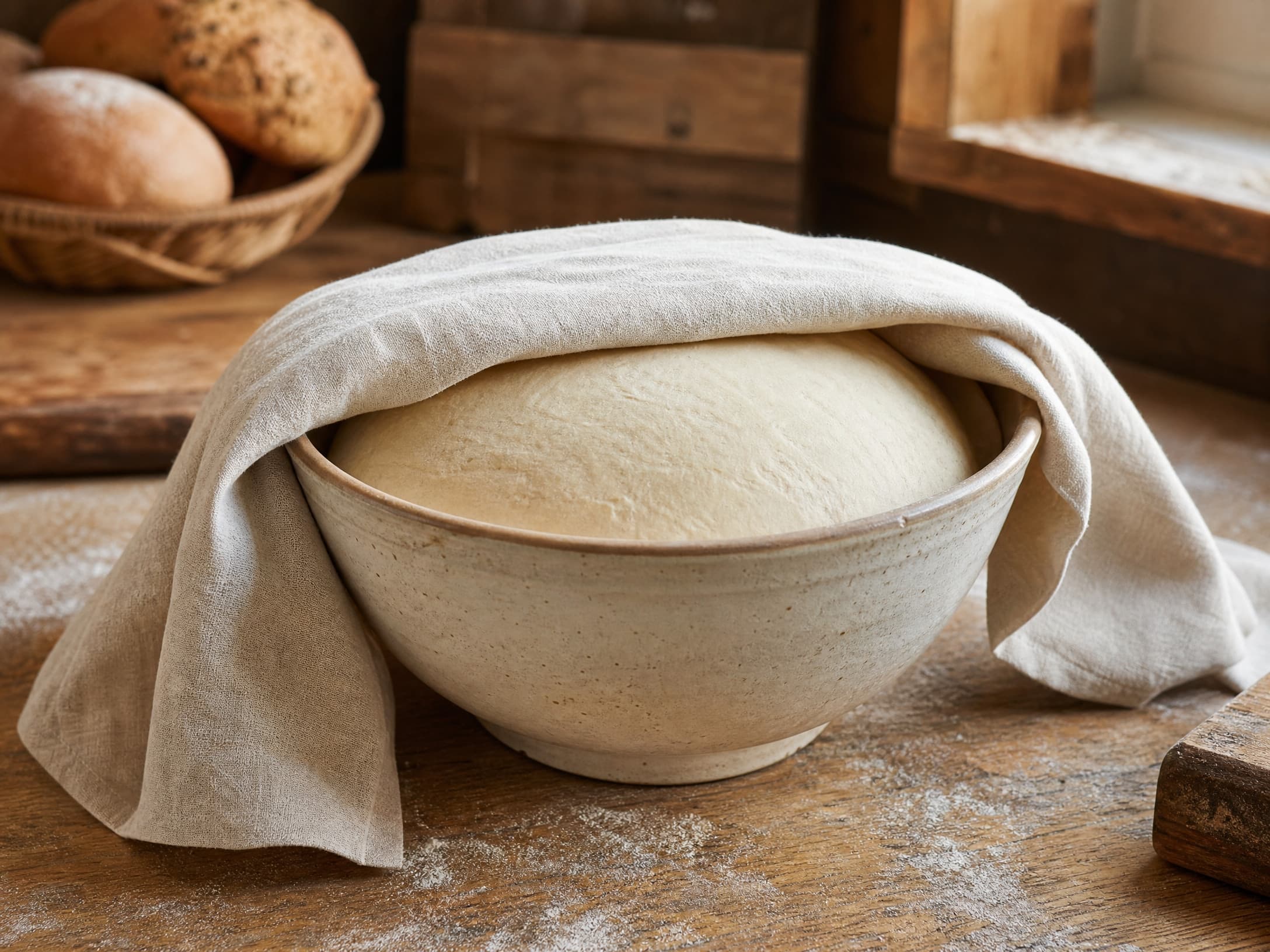
Bulk ferment: transfer to an oiled bowl, cover and rise at warm room temperature (74-78°F / 23-26°C) for 2.5-3 hours until visibly puffy and about 50% bigger — rolls do not need the full double rise. Warm is key: this dough is lean-ish and quiet.
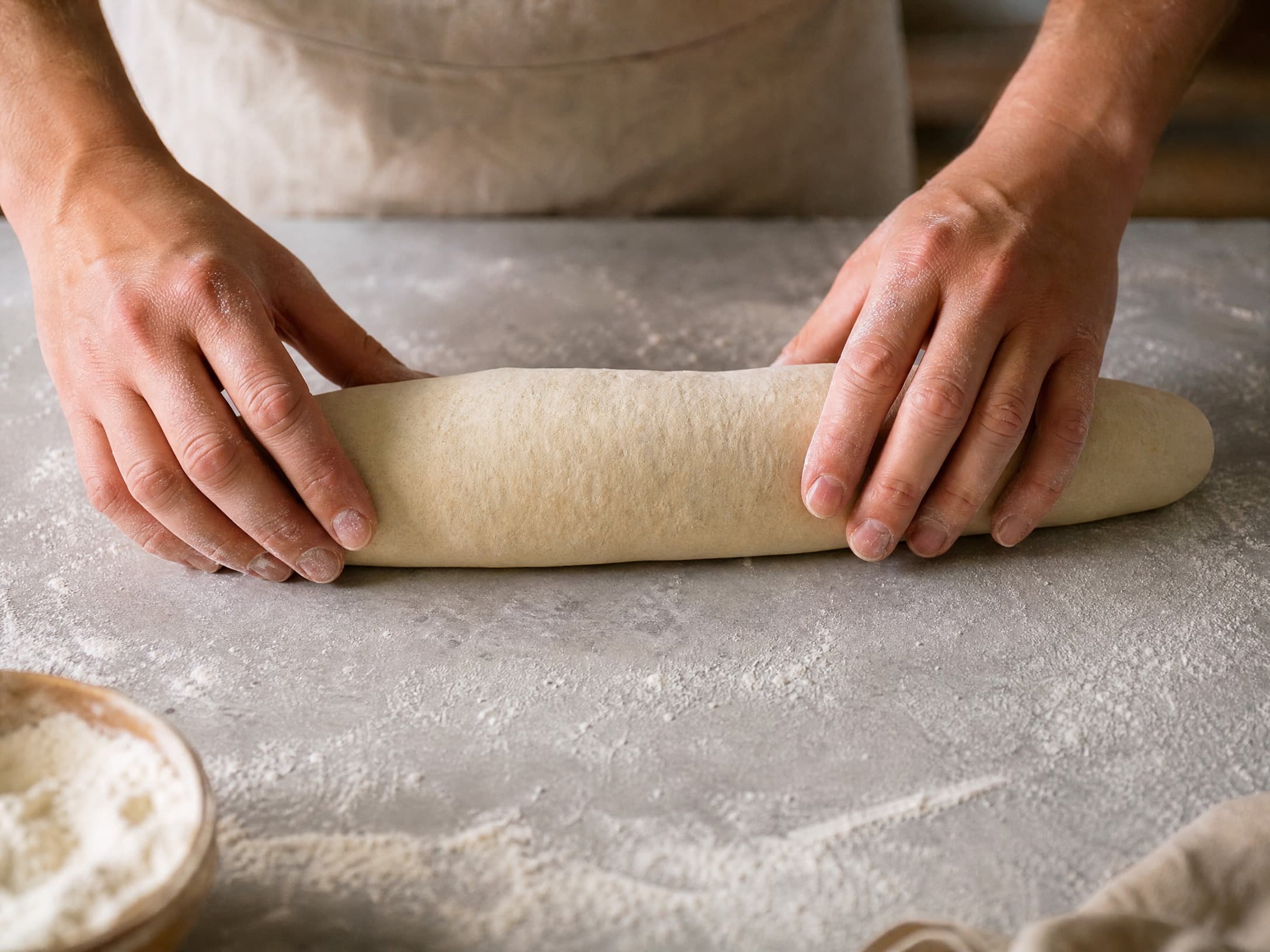
Divide and shape: turn the dough onto an unfloured or lightly floured bench, divide into 6 equal pieces (about 115 g each), and roll each into a tight oblong log — hoagie-shaped, tapered at the ends like a sub roll. Place on a parchment-lined sheet, two rolls apart.
Proof: cover loosely and proof at room temperature 2-3 hours, until the rolls are puffy and feel marshmallow-soft — press with a finger and the dimple should slowly spring back. Underproofing (dense, gummy center) is the classic sandwich-roll failure, so err long.
Optional egg wash: brush each roll with the egg wash and, if you like, score three shallow diagonal slashes across the top.
Bake: 400°F (205°C) for 20-25 minutes until deep golden and the bottoms sound hollow when tapped. Cool on a rack completely before cutting — a hot roll compresses instead of slicing.
Frequently asked questions
Why are my sourdough rolls dense and gummy in the middle?
Underproofing, almost always. Sandwich rolls bake fast (25 minutes max), so there isn't time to even out a slack structure — if the final proof isn't complete, the center stays tight and raw. Let the shaped rolls go until they're puffy and pillow-soft — usually 2-3 hours at warm room temp — before baking, and cool them fully before slicing.
Can I make these with sourdough discard instead of an active starter?
Yes, with a pinch of instant yeast: sub the discard 1:1 for the active starter and add about 1/4 teaspoon of instant yeast to the mix. The yeast gives the rolls the reliable rise that discard alone won't; you still keep the tang. This is the practical shortcut if you were hoping to use up discard.
Why are my rolls flat instead of tall and round?
Either the dough was over-hydrated for its shape or the rolls spread during proof. At 55% hydration this dough holds a log shape well — if yours collapses, the bulk ferment ran too long, the rolls were proofed somewhere too warm and puffed to collapse, or they were handled hard during shaping. Shape them tight, proof moderately, and bake without delay.
Can I cold-ferment the shaped rolls overnight?
Yes — shape the rolls, cover the sheet, and refrigerate 10-14 hours. Next day, bring them to warm room temperature for 1.5-2 hours until puffy before egg washing and baking. The cold ferment adds flavor and makes the dough easier to handle, at the cost of a longer pre-bake warm-up.
How long can I keep sourdough sandwich rolls?
At room temperature in a paper bag, 2-3 days; in the freezer, up to 3 months tightly wrapped. Reheat frozen rolls directly in a 350°F (175°C) oven for 8-10 minutes to restore the crisp crust — microwaving turns them rubbery. They're best the same day, like any fresh bun.
Why are Italian sandwiches (hoagies) better on sourdough rolls?
Sourdough's firm, slightly chewy crumb holds a generous, filling-heavy sandwich without going soggy, and the mild tang cuts through salty cured meats and rich dressings. A soft commercial roll collapses; a sourdough roll keeps its structure and its flavor. It's the same reason the [soft sourdough sandwich bread](/sourdough-sandwich-bread) is the deli-counter favorite — the microbiome does the bread's work.