Soft Sourdough Sandwich Bread (All-Purpose Loaf)
A soft, buttery sourdough sandwich bread with a fluffy crumb and subtle tang — all-purpose flour, just a touch of butter, and a gentle overnight rise. The most-asked loaf on the site.
By Maya Ellison · Reviewed by Maya Ellison · Updated August 21, 2026 · 1 min read
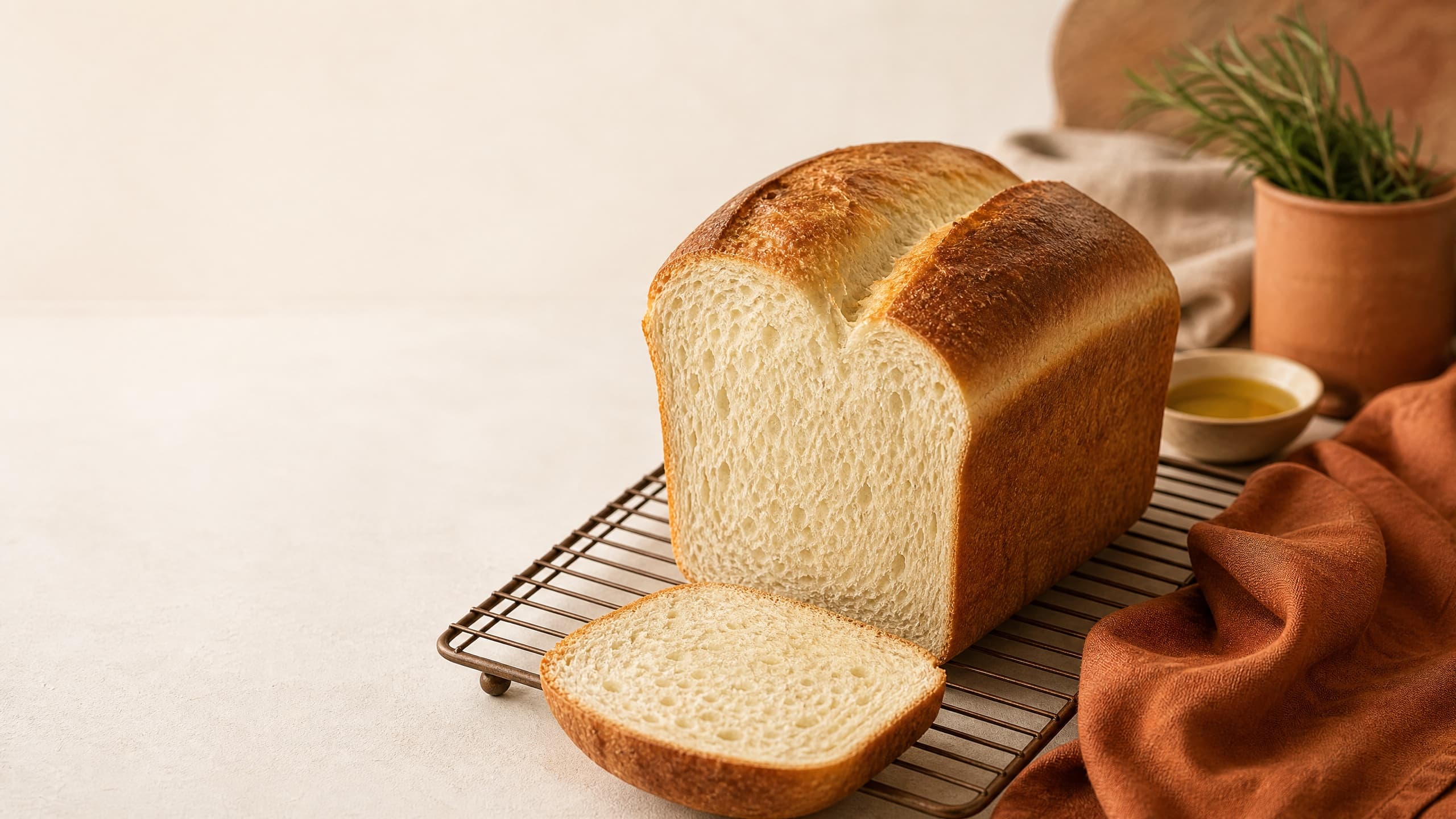
Sourdough sandwich bread is the most-requested loaf in this kitchen — a soft, buttery white slice with a tender crust that holds up to a filling without squishing. Plain all-purpose flour, a touch of butter, and a gentle overnight rise produce a crumb that's fluffy rather than chewy, and it's the bread your deli counter should have been.
Why it's the everyday loaf
The whole point of a sandwich loaf is soft and sliceable — not the open crumb of a rustic boule. The butter softens the crumb, all-purpose flour keeps it light, and the gentle handling stops the gluten from making it tough. It's the sourdough loaf that toasts, holds and slices like the sandwich bread you already buy, but better.
The overnight rise that does the work
Mix, rest 30 minutes, then knead 6-8 minutes. The slow overnight rise builds flavor gently without turning the crumb dense. The second rise is the honestest step: stop it when the dough crowns just above the pan rim. Over-proof on the second rise is the classic sandwich-loaf failure, turning proud plump pillows flat.
The pan is part of the recipe
An 8.5x4-inch pan gives a tall, bakery-style loaf; a standard 9x5 gives a wider, squatter sandwich. Pick the pan before you start and it changes the crown and crumb. Shape the loaf soft and place it seam-down, and let it climb without a score.
Variations live here too
Swap in up to 30% whole wheat for a tiny waxy chew, or stir in cinnamon-raisin for the breakfast version. The same gentle dough is forgiving under your hand and eager to please — proof that the platonic sandwich bread is a sourdough one.
Ingredients
Weights in grams are the source of truth; cup measures are approximate.
- 500 g all-purpose flour (or use bread flour for a chewer chew)
- 300 g water, room temperature
- 100 g active sourdough starter, at peak
- 25 g unsalted butter, softened (or vegan)
- 10 g fine salt
- Rice flour, for the proofing basket (optional)
Method
In a stand mixer with the paddle, combine the flour, softened butter, salt and sugar, then pour in the starter and water and mix until a shaggy dough forms.
Rest 30 minutes to relax, then switch to the dough hook and knead 6-8 minutes until soft, supple and just slightly tacky — or by hand 8-10 minutes.
Transfer to an oiled bowl, cover, and rise overnight at room temperature until nearly doubled (about 10-12 hours at 68-72F). Watch the dough, not the clock.
Next morning, punch down and preshape a loose ball, rest 20 minutes, then shape into a loaf and place seam-down in a buttered loaf pan.
Second rise: cover and proof until the dough crowns just above the pan rim — about 2.5-3 hours at room temp, or up to overnight in the fridge, since this second rise is the make-or-break step.
Bake at 425F for 25 minutes, then drop to 375F for 25-30 more, until the internal temp reads 208-210F and the top is deeply golden. Turn out and cool on a rack before slicing.
Frequently asked questions
What's the most common mistake?
The second rise going too long. Over-proofed dough bakes up flat, and that's the single biggest reason a sandwich loaf flops. Follow the crown test — just above the pan rim — and stop.
Should I score this loaf?
No need — it's soft and non-scoring. You can if you like, and it won't hurt, but the sandwich loaf is intended to colophon and slice easily.
Can I make this with whole wheat?
Swap up to 30% whole wheat with good results. Or use the whole wheat variation in the recipe card if you want a fully whole grain loaf; pure whole wheat is denser and less sandwich-friendly.