Sourdough Discard Pasta: The Zero-Waste Fresh Noodle
Sourdough discard pasta turns the jar you'd otherwise pitch into soft, silky fresh noodles. Just flour, eggs and fed discard — a 1-hour same-day dough or an overnight one.
By Maya Ellison · Reviewed by Maya Ellison · Updated August 21, 2026 · 1 min read
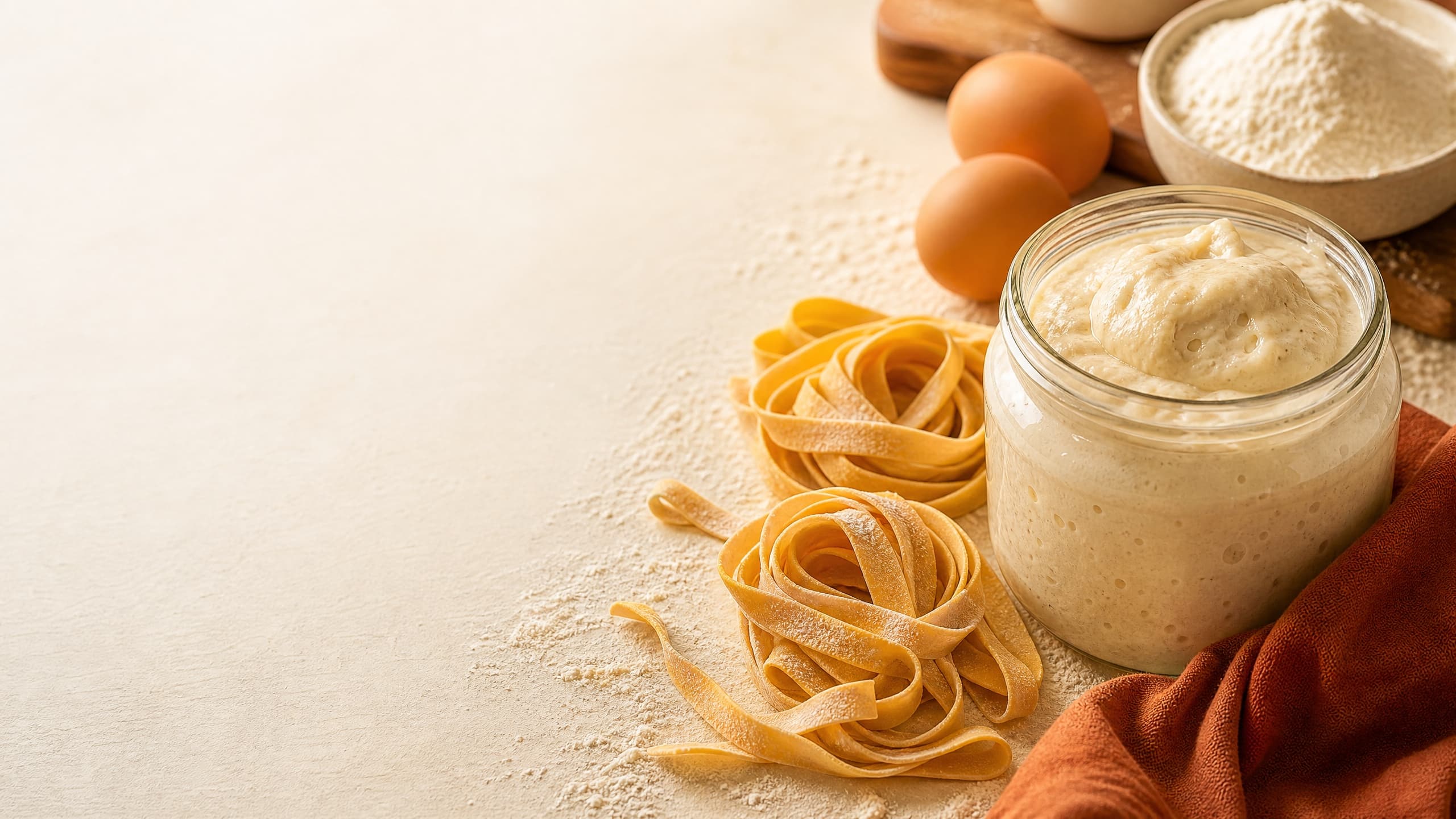
This is the zero-waste argument for fresh pasta, and it's compelling. Sourdough discard pasta takes the portion of your starter you'd usually pitch and turns it into soft, silky noodles with nothing but flour and eggs. The acidity that makes old discard awkward for leavening is exactly what makes it a quiet star in pasta: it relaxes the gluten and leaves a gentle tang in the ribbon. New to the discard side of the site? The discard recipes hub is the full index.
The same dough, pointed at reducing waste
The ratios mirror the main sourdough pasta recipe, but the intent is the jar. Use a freshly-fed, collapsed discard at room temperature — a jar that's sat for weeks brings too much acid and can make the sheet fight back. Fresh discard, a floured bench, and you get a clean jar and a silky pasta in one move.
Soft and quick, or deep overnight
One hour on the counter is plenty for a tender, gently tangy noodle. For more of the character, wrap the dough and let it rest overnight in the fridge — like all fresh pasta, the deeper flavor shows up exactly as long as you wait.
Roll, cut, boil
Keep the unused pieces wrapped and roll one sheet at a time on a semolina-dusted bench. Cut into spaghetti, tagliatelle or wide pappardelle and boil 3-4 minutes in generously salted water. Serve with a real no-cream alfredo — the glossy, Parmesan ribbons snag the silky noodle exactly right.
The shape family
The discard dough also shapes beautifully by hand — rolled pici, pressed cavatelli and pinched tortellini. Every filled or hand-formed noodle on the site begins where this one does.
Ingredients
Weights in grams are the source of truth; cup measures are approximate.
- 250 g Italian 00 flour, plus extra
- 3 large eggs (about 150 g), beaten
- 100 g sourdough discard, freshly fed and collapsed (or room temp)
- 1 tsp fine salt
- Semolina or flour, for dusting
- Salt, for the boiling pot
Method
Whisk the eggs and discard until smooth, then pour over the flour and process or work until the dough gathers into crumbs.
Push the crumbs together, rest 10 minutes, then knead 3-4 minutes until soft, smooth and slightly silky — not sticky.
Wrap tightly and rest 1 hour at room temperature, or refrigerate up to 24 hours for deeper flavor.
Divide into 4, keep 3 wrapped, and roll one piece at a time to noodle thickness on a semolina-dusted bench.
Cut into ribbons or shape any noodle, then boil 3-4 minutes in generous salted water.
Frequently asked questions
Is any discard usable, or only fresh?
Freshly-fed, collapsed discard is best. One that's been sitting weeks, and too pungent, will carry acid that can weaken the gluten and make the roll-out a struggle. Same-day discard is the sweet spot.
How is this different from my sourdough pasta recipe?
The dough is near identical — the real difference is intent. Any of us are actively feeding a starter and want the discard version, the counter is to the sourdough pasta recipe's quarantine for the same silky pasta with less waste.
How should I serve discard pasta?
It shines with a real alfredo — butter and Parmesan over the fresh ribbons — or a simple tomato sauce with olive oil. The tang pairs best with anything glossy and buttery.