Homemade Sourdough Pasta Recipe (1-Hour or Overnight)
A soft, silky homemade sourdough pasta recipe with just 3 ingredients — flour, eggs and starter (active or discard). Choose a 1-hour same-day dough or a 24-hour ferment for deeper flavor.
By Maya Ellison · Reviewed by Maya Ellison · Updated August 21, 2026 · 2 min read
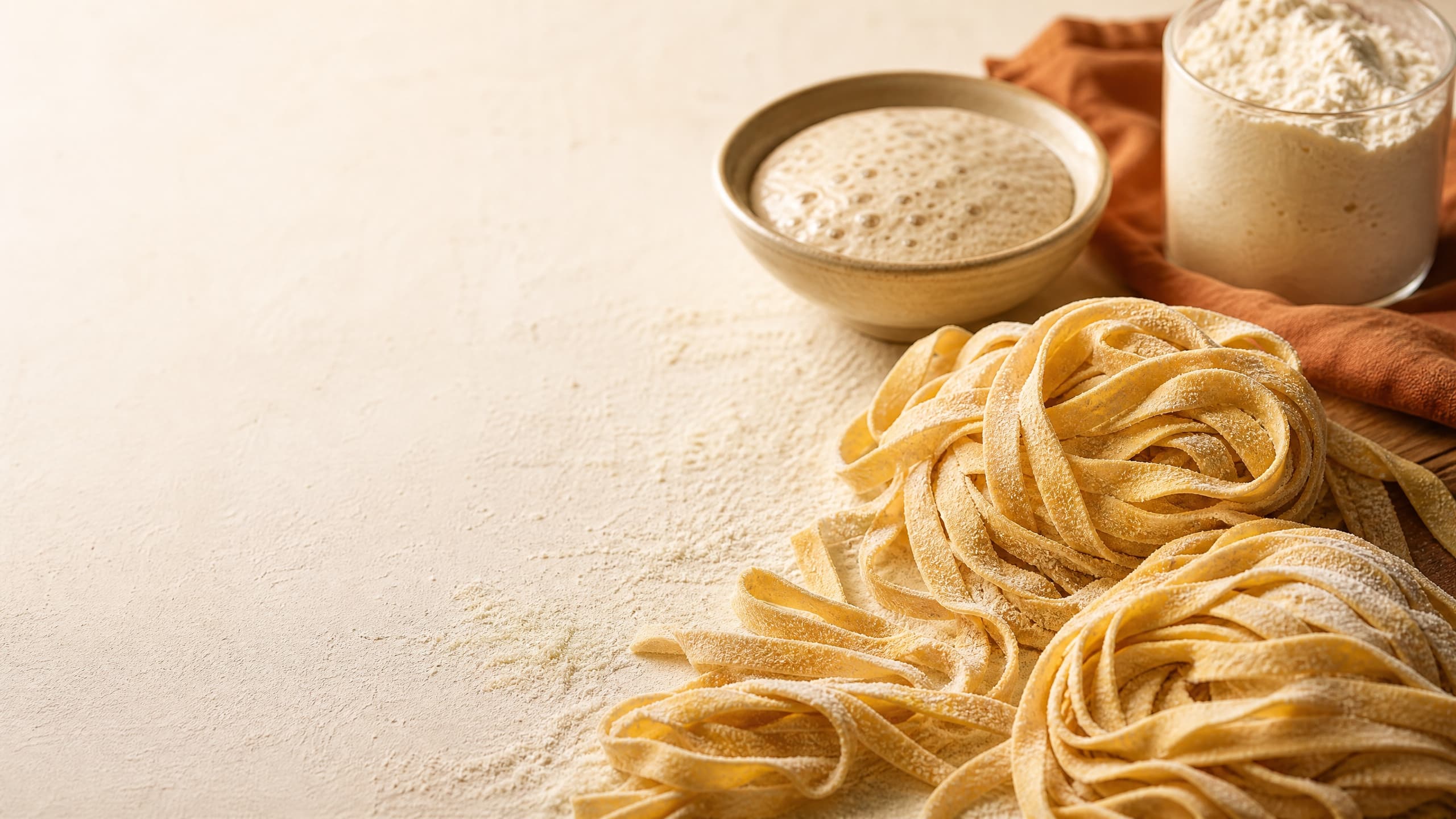
This is the sourdough pasta recipe that surprised me most. Three ingredients — 00 flour, eggs and whatever your starter has flowing — rolls into soft, silky ribbons with a subtle tang that turns a plain dinner into a plane ticket. The same dough works two schedules: a fast 1-hour same-day ferment for last-minute pasta, or a 24-hour cold rest that deepens the flavor and makes it easier on the gut. If you're new to fresh pasta at all, the master pasta dough guide covers the hands and resting, and the sourdough pasta guide is the full deep-dive.
Why the dough works
Honestly, sourdough pasta sounds bad — nothing about "sour noodles" makes a bowl. But the starter's acidity does something wonderful to fresh pasta: it relaxes the gluten just enough that the sheet rolls thin and the noodle stays soft and silky through a short cook. The subtle fermented note plays beautifully with rich sauces and bright butter ones.
Same-day or overnight
One hour on the counter at 68-75°F gives a soft, mild chew — perfect for speedy fresh pasta for dinner. A 24-hour rest in the fridge is the other, slower road: deeper flavor, easier digestibility and a sheet that rolls clean because the gluten has relaxed. Both come from the same dough; the clock is the only variable.
Roll, cut, boil
Divide, keep the unused pieces wrapped and roll one sheet at a time up to the thickness you want. Dust the bench and trays with semolina and the soft sheets won't glue shut. Cut into ribbons — spaghetti, tagliatelle, the wide pappardelle — and boil 3-4 minutes in well-salted water. Emulsify with alfredo, or keep it simple and let the fresh noodle sing.
Troubleshoot the two common fails
Dry, crumbly dough means too little egg — the eggs are the liquid, so weigh them cracked and nudge the flour in 10 g increments. Sticky dough that glues shut means you skimped on the semolina and the semi-dried rest. Both are one change from fixed. Beyond that, the classic sourdough troubleshooting hub covers the baker-side problems.
Ingredients
Weights in grams are the source of truth; cup measures are approximate.
- 250 g Italian 00 flour, plus extra for the bench
- 3 large eggs (about 150 g), beaten
- 100 g sourdough starter, active or recently fed discard, at room temperature
- 1 tsp fine salt
- Semolina or all-purpose flour, for dusting
- Generous salt for the boiling water
Method
Whisk the eggs and starter together in a small bowl until smooth and slightly frothy. The starter can be active or a recently-fed, collapsed discard — just not a weeks-old jar.
Pour the egg mixture over the flour in a food processor lid on and process until the dough gathers into fine crumbs. If mixing by hand, stir with a fork until the same crumbs form.
Tip the crumbs out, push them together and rest 10 minutes, then knead 3-4 minutes or until the dough is smooth, elastic and feels soft but not sticky. Add a teaspoon of spoonful 00 or water only if your dough is dry and crumbly.
Wrap the dough tightly and either rest 1 hour at room temperature (68-75°F) for mild same-day pasta, or refrigerate up to 24 hours for deeper flavor and easier digestibility.
Divide the dough into 4 pieces and keep 3 wrapped. Flatten one piece and roll through the machine or with a rolling pin up to your chosen thickness (setting 4-5 for noodles).
Cut the sheets into spaghetti-width ribbons (or shape pappardelle, tagliatelle, or lasagna), toss with semolina and boil 3-4 minutes in generously salted water.
Frequently asked questions
Can this recipe be zero-waste with sourdough discard?
Yes — sourdough discard pasta is the zero-waste argument for this exact dough. Use a recently fed, collapsed discard and you'll have soft, silky noodles and now empty jar. It wouldn't be a [discard recipe] page without a full version.
Is 1 hour of fermentation long enough?
For a mild, tender fresh pasta, yes — an hour at room temperature puffs the dough slightly and gives a soft chew with a gentle sour note. The 24-hour overnight option is for deeper flavor and better digestibility.
Which flour works best for sourdough pasta?
Italian 00 flour is ideal — fine-milled and low-protein, it rolls into silky sheets with ease. All-purpose or a mix of 50/50 00 and semolina also works; papers dough a touch more rustic.
How do I know when the dough has enough egg?
The dough should feel firm and dry but pliable — like a thick play dough. If it crumbles, you need a little more liquid; add water or a yolk by teaspoons until a smooth pinch holds together.