Homemade Pappardelle Pasta (Wide Hand-Cut Ribbons)
Homemade pappardelle — the wide, ruffled ribbon of Tuscany — rolled thin from fresh pasta dough and cut by hand. A satisfying shape for ragù, braised beef and pesto.
By Maya Ellison · Reviewed by Maya Ellison · Updated August 21, 2026 · 1 min read
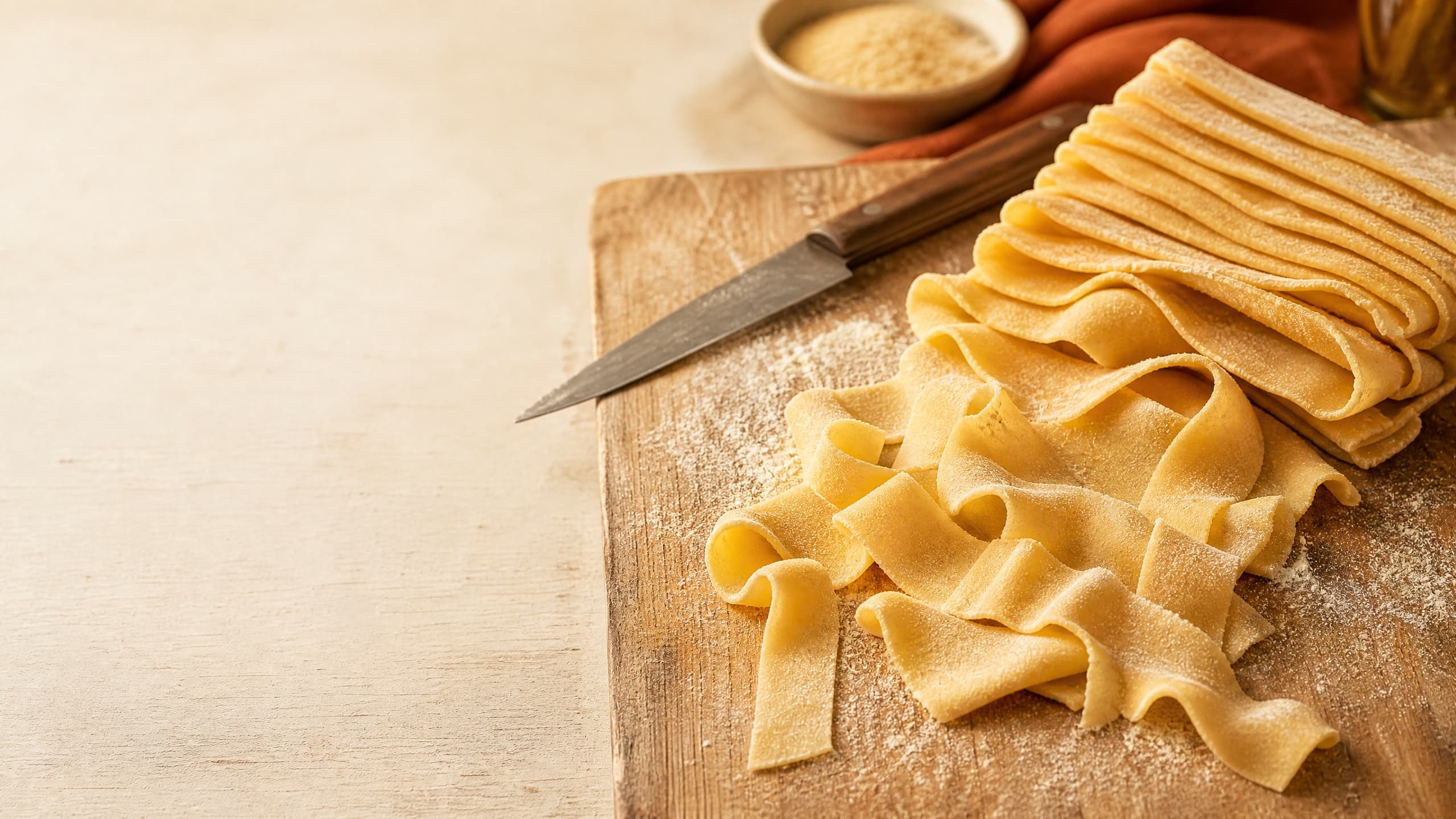
Homemade pappardelle is the wide, ruffled ribbon of Tuscany — the shape that catches a slow ragù or a braised beef like nothing else on the rack. It's also the friendliest hand-cut: roll the master dough thin, let the sheet rest, fold, and slice with a sharp knife. The recipe above is the master pasta dough taken wide; for the starter version, the same ribbon begins with the sourdough pasta family.
The shape that carries sauce
Pappardelle exists to hold. A wide, ruffled ribbon gives a slow ragù a broad surface to cling to, which is why it's the lasagna's brawny cousin at the top of the sheet. It doesn't beg for a dainty garnish — it wants a long-braised stew and a spoon of starchy pasta water to make the sauce stay.
Roll thin, cut wide
Roll a piece of dough as thin as you comfortably can, rest it until it feels like leather, fold it into loose layers, and cut gently across the folds with a long sharp knife. The ruffles come from two clean edges, not fussy work — light accordion folds and even, confident strokes.
The sourdough branch
The entire hand-cut craft carries to your starter: make the dough with active starter or a fresh discard and you get the same wide ribbon with a gentle tang. It belongs to the wider sourdough pasta family that shares this one shape book.
A quiet finish
Pappardelle needs a quiet pot — 3-4 minutes at a rolling boil, never crowded, and a spoon of the pasta water to help the sauce hang on. It's the shape that turns a slow pot of ragù into the centerpiece of a Sunday table.
Ingredients
Weights in grams are the source of truth; cup measures are approximate.
- 250 g Italian 00 flour
- 3 large eggs (about 150 g), beaten
- 1 tbsp olive oil
- 1 tsp fine salt
- Semolina, for dusting
- 1 generous tablespoon of water, only if needed
Method
Make the master dough: mix flour, beaten eggs, olive oil and salt into a stiff ball, rest 10 minutes, then knead until smooth and pliable.
Wrap and rest 30 minutes so the sheet rolls thin without snapping back.
Divide into 4 pieces, keep 3 wrapped, and roll one piece to a thin, even rectangle (about 1.5 mm).
Let the rolled sheet rest 5-10 minutes until it feels like supple leather, then fold it into loose accordion folds.
Cut the folded sheet into wide ribbons about 1.5-2 cm across, shaking out each strip as you go.
Drape the ribbons over a floured rack or hook to dry briefly, then boil 3-4 minutes in generously salted water.
Frequently asked questions
How wide should pappardelle be?
Traditionally about 1.5-2 cm — wider than tagliatelle. The generous surface is the whole point with a rich ragù or braised beef so it has room to catch.
Do I need a pasta machine for pappardelle?
No — pappardelle is the most forgiving hand-cut shape. Roll fairly thin with a pin, rest the sheet until just leathery, then fold and slice with a sharp knife.
Why does the sheet need to dry before cutting?
A fresh, wet sheet will stick in the folds the moment you press the knife. Ten minutes on the bench, dry-side, and it slices into clean, separate ribbons.