Authentic Alfredo Sauce (No Cream, 3 Ingredients)
Authentic alfredo sauce without cream — just butter, Parmigiano Reggiano and the pasta's starchy cooking water, tossed into a silk emulsion. Real Rome-style fettuccine alfredo.
By Maya Ellison · Reviewed by Maya Ellison · Updated August 21, 2026 · 1 min read
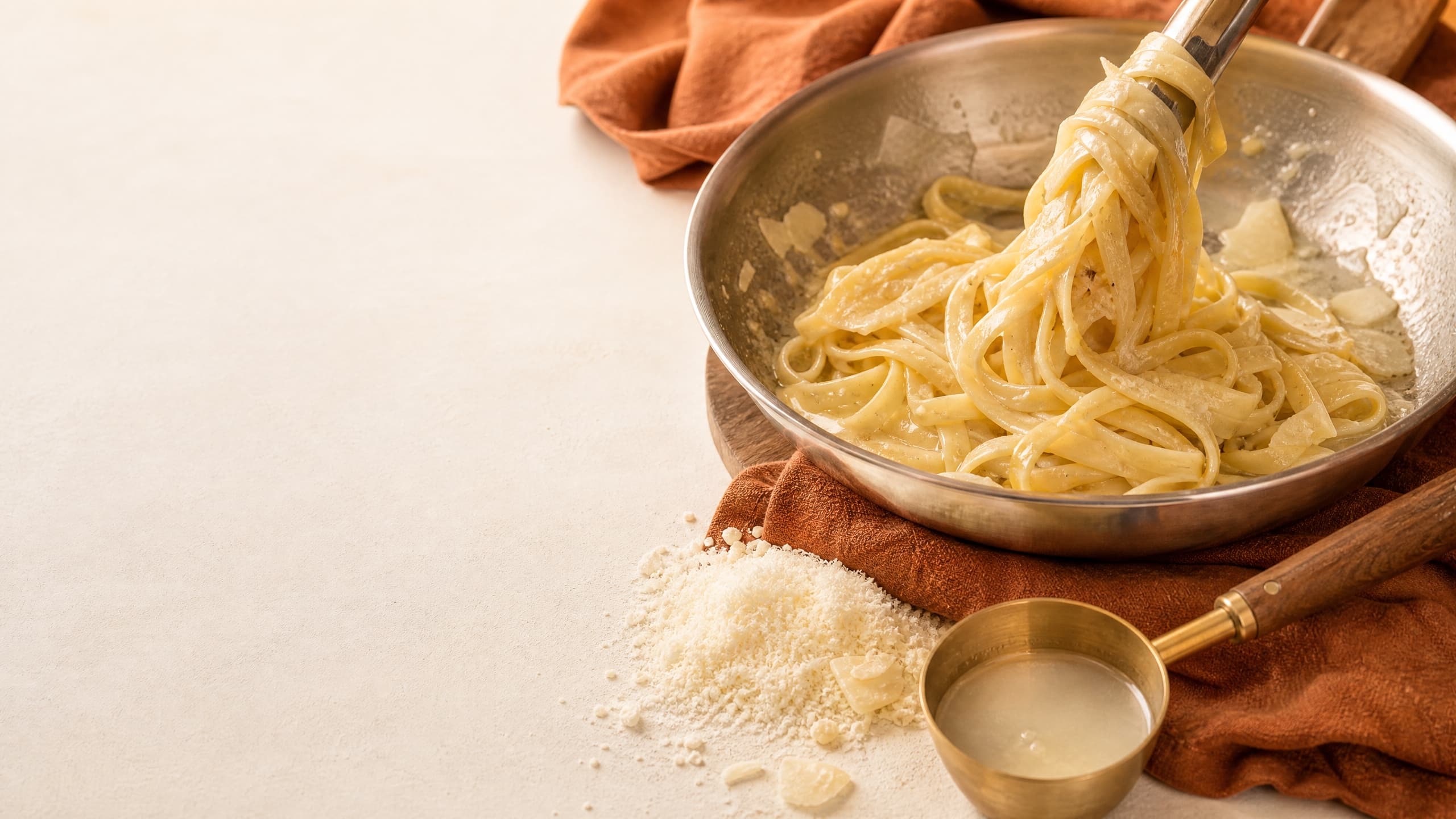
Authentic alfredo sauce without cream is the most underrated sauce in Italian cooking — three ingredients, a practiced toss, and a glossy silk that no jar can approach. The original Roman dish is not a cream-laden coat of butter and garlic; it's cold butter and real Parmigiano, emulsified into the pasta's own starchy cooking water. No cream. No garlic. No shortcuts.
The alchemy of water, butter and cheese
The sauce comes together in the pan, not the jar. Melt the butter, simmer in a little of the pasta's cooking water, then toss the fresh noodles through time after time so the starch, fat and cheese emulsify into an impossibly silky gloss. It's a technique-driven dish, which is why people swear it can't work — until they try it.
Ingredients matter more here than anywhere
High-fat European butter (82-90%) and a block of real Parmigiano Reggiano are non-negotiable — the extra butter fat and the real nutty cheese are what the emulsion actually coats the noodles with. And warm the plates, because cold china will split a delicate butter-and-cheese sauce mid-meal.
Cook in small batches
Alfredo needs room to move in the pan to build the emulsion, so it's a small-batch dish by design. Work a serving or two at a time and the toss gives you silk. Double the recipe twice through the same pan and the sauce ends up chalky and greasy — resist the math.
The finishing rhythm
Over fresh sourdough fettuccine, the cadence is: a splash of water, toss; some cheese, toss again — until glossy, just creamy. Plate onto the warmed dishes, and when the very first fork of it unfurls, you understand why a whole meal can be this small and this good.
Ingredients
Weights in grams are the source of truth; cup measures are approximate.
- 225 g fresh pasta (sourdough or homemade fettuccine)
- 60 g cold, high-fat butter (European-style ideal), cut into small pieces
- 100 g real Parmigiano Reggiano (buy in a block, freshly grated)
- 1/4 cup pasta cooking water, to start (plus extra)
- Flaky salt, for seasoning
- Notes on sauce
Method
Warm your serving plates in a low oven, then bring a generous pot of heavily salted water to a rolling boil.
Melt the cold butter in a wide, high-sided skillet or braiser over medium-low, and ladle a splash of the starchy pasta water into it; whether the water. Let it simmer until it thickens slightly — this is the base of the sauce.
Boil the fresh pasta 3-4 minutes, then using tongs transfer it straight from the pot into the hot butter-water pan, carrying a little extra cooking water with it.
Over higher heat, toss the pasta in the pan to coat. When the sauce looks glossy, add a small handful of the Parmigiano and keep tossing until it melts into a silky, creamy emulsion — add more cheese and a splash of water in rhythm.
Season with a pinch of salt, plate onto hot plates, and serve immediately while the sauce is glossy and warm — it will not wait.
Frequently asked questions
Is cream really not in authentic alfredo?
No. The original Roman dish is butter, Parmigiano and the pasta's own starchy water, tossed into a sauce that gets creamy from the technique alone. Cream-and-garlic alfredo is a popular American cousin, not traditional.
Why high-fat butter?
Most American butter is 80% fat; European-style runs 82-90%. The extra fat and less water makes the sauce richer and silkier, and the cold pieces emulsify into the hot water more readily.
Why warm the plates?
Cold china will seize and split a delicate butter-and-cheese emulsion. A warm plate keeps the sauce glossy right to the last swirl — it's the difference between just-good and restaurant.