Sourdough Brioche: Soft, Butter-Rich and Tangy
Soft, tender sourdough brioche with a gentle tang: enriched with butter and eggs, why it rises slowly, and a foolproof warm-bulk, overnight-proof schedule.
By Maya Ellison · Reviewed by Maya Ellison · Updated September 9, 2026 · 2 min read
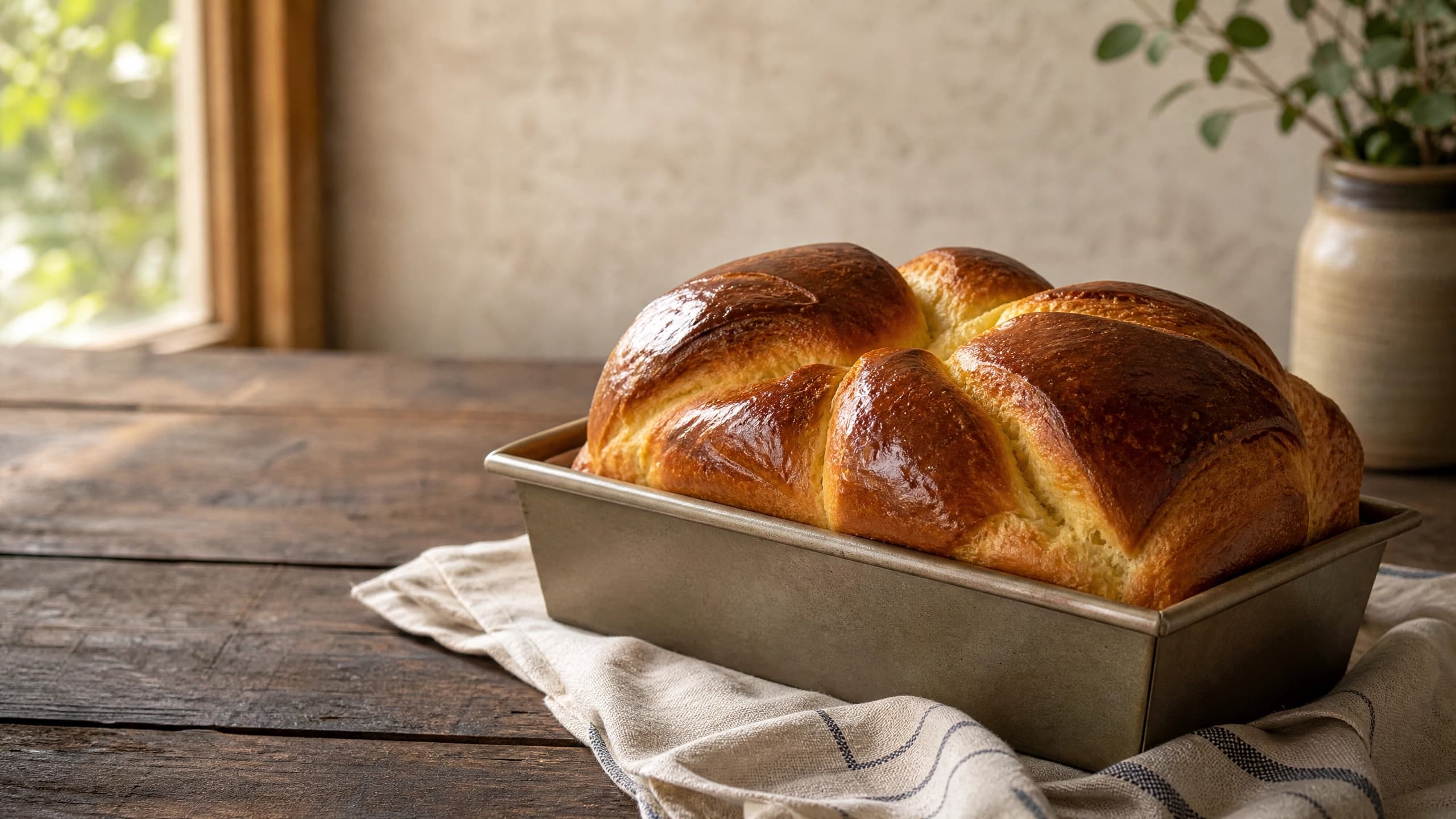
Sourdough brioche is proof that enriched dough and a sourdough starter can be friends: a soft, tender, butter-and-egg loaf with a mild tang that no commercial yeast brioche can match. The enriched dough ferments slowly — that is expected, not a problem — so the recipe runs on a warm bulk, a patient proof and an overnight schedule that fits real life. Start from an active, happy starter and you're already most of the way there; this page is the butter-on-the-way part.
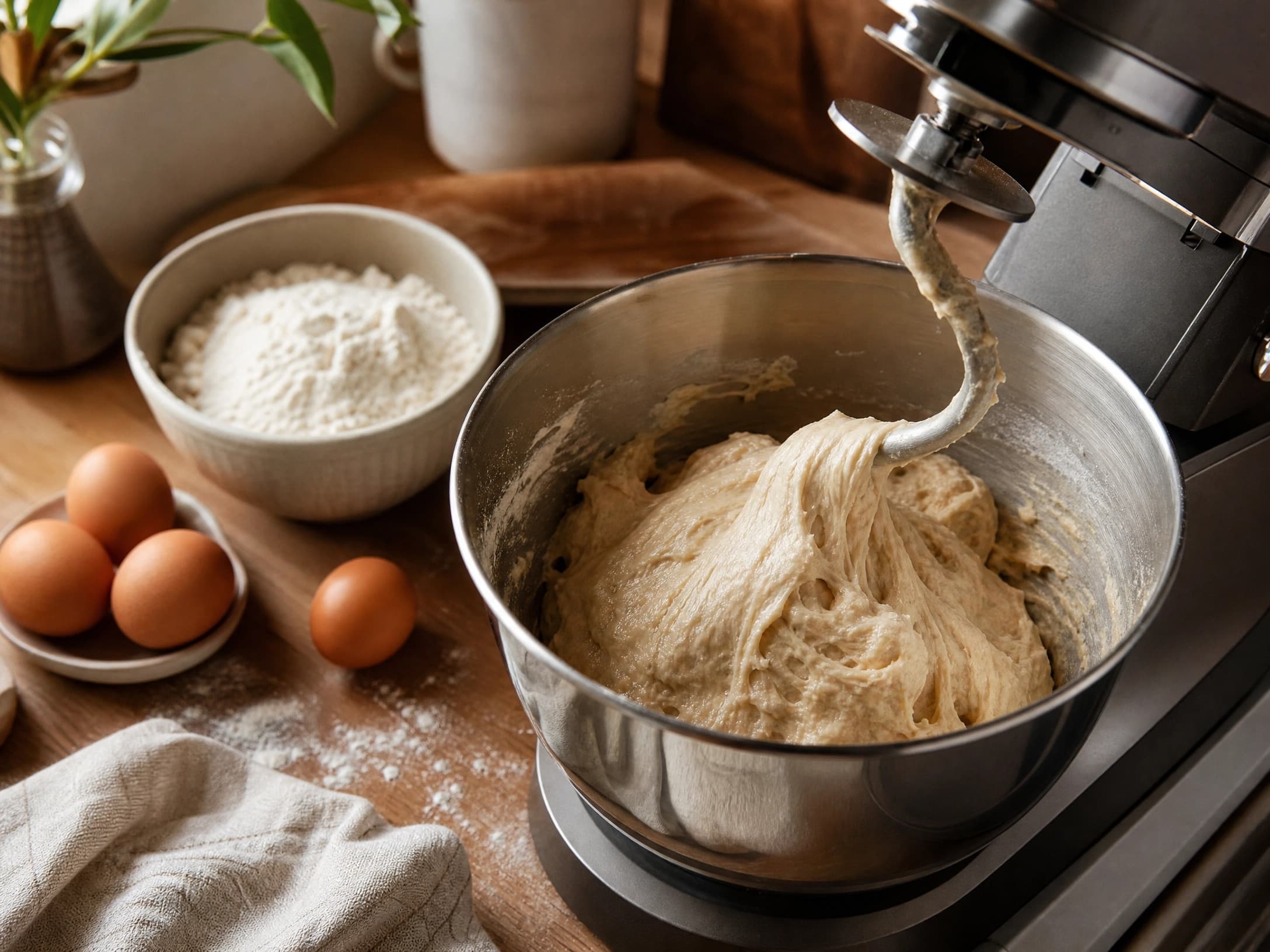
Why brioche is a patience bake
Regular sourdough loaves bulk in 4-6 hours. Brioche needs 3-4 just to hit the same point — the eggs, sugar and especially the butter coat the gluten strands and slow the yeast's work dramatically. That is not a sign of failure; it is the physics of a 20%-butter dough. The moment most bakers give up is exactly the moment the dough turns glossy.
The warm bulk and what 'nearly doubled' means
Because the dough ferments slowly, temperature matters more than in a lean loaf. Hunt out the warm spot in your kitchen for the bulk — the top of the fridge, the back of the stove, a covered proofing spot. A puffy, nearly doubled dough that wobbles like Jell-O when you shake the bowl is ready. Under-risen brioche bakes gummy; over-risen brioche bakes flat.
The overnight option that fixes the schedule
Brioche is the rare dough that improves with a fridge nap. Cold-proof the shaped loaf overnight, bake it cold the next morning, and you get a finer, more delicate crumb and a milder, deeper flavor. It also breaks the long instructions into two easy evenings — mix and shape one night, bake the next.
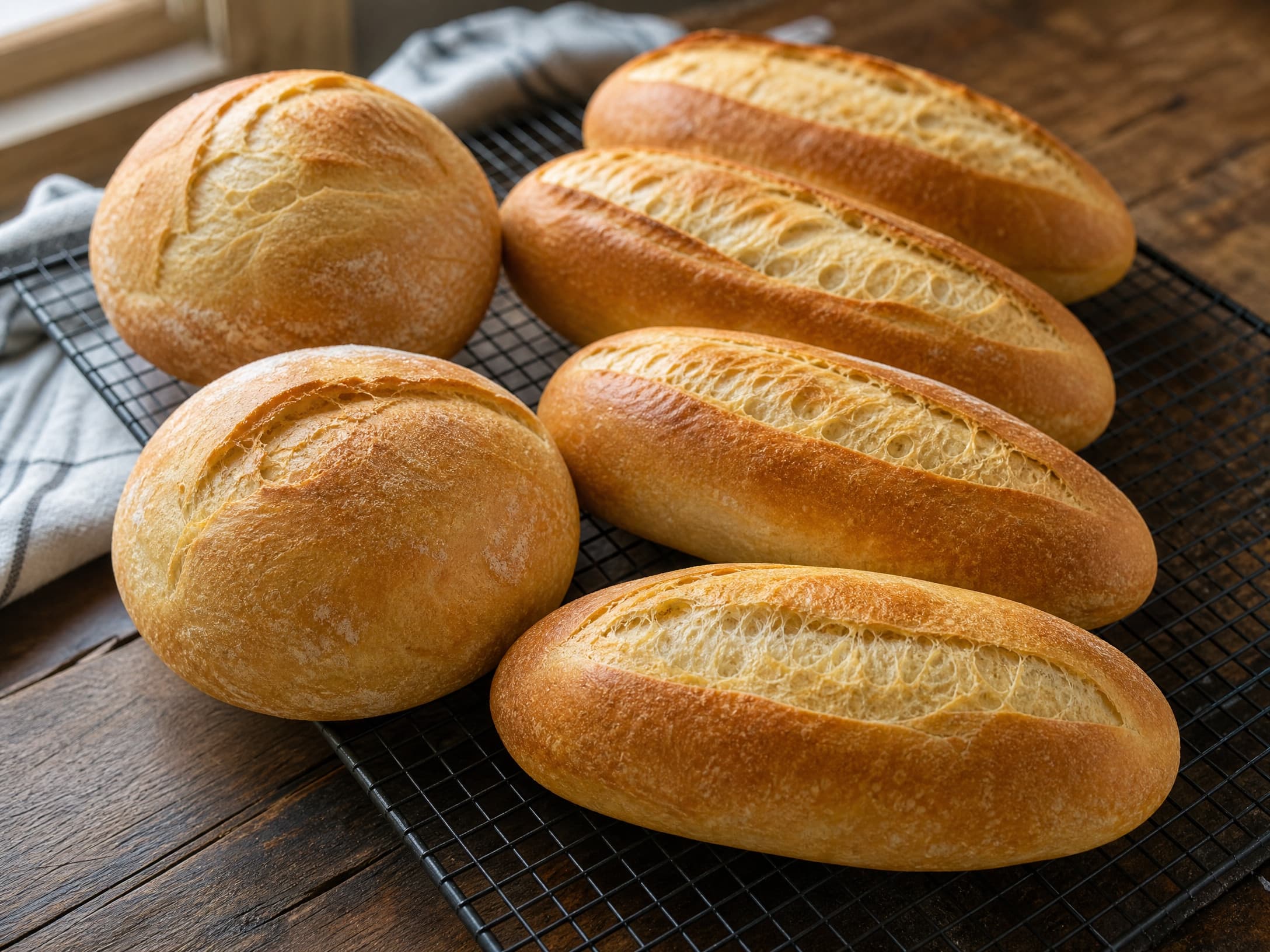
Serve it toasted for French toast, sliced for the best grilled cheese of your life, or shaped into sourdough cinnamon rolls for the enriched-dough upgrade. Want the science behind the slow rise? The dough temperature guide explains why warm bulk and cool proof give this kind of dough its texture, and the hydration guide covers why enriched doughs stay at around 70%.
Ingredients
Weights in grams are the source of truth; cup measures are approximate.
- 540 g bread flour (about 4 1/4 cups)
- 200 g whole milk, lukewarm (about 3/4 cup plus 2 tablespoons)
- 120 g unsalted butter, very soft (about 1 stick plus a generous pat), plus more for the pan
- 50 g sugar (about 1/4 cup)
- 100 g active sourdough starter, at peak (about 1/3 cup)
- 2 large eggs plus 1 yolk, room temperature
- 10 g fine sea salt (about 2 teaspoons)
- 1 egg plus 1 teaspoon water, for the egg wash
Method
Bloom the starter: stir the 100 g starter into the lukewarm milk with the sugar, and let it sit 15-20 minutes until the mixture looks foamy — you are waking the levain so the enriched dough has a running start.
Mix: add the eggs and salt to the starter mixture, then the flour, and mix to a shaggy dough with a spoon. Rest 20-30 minutes (the flour hydrates and the dough becomes workable).
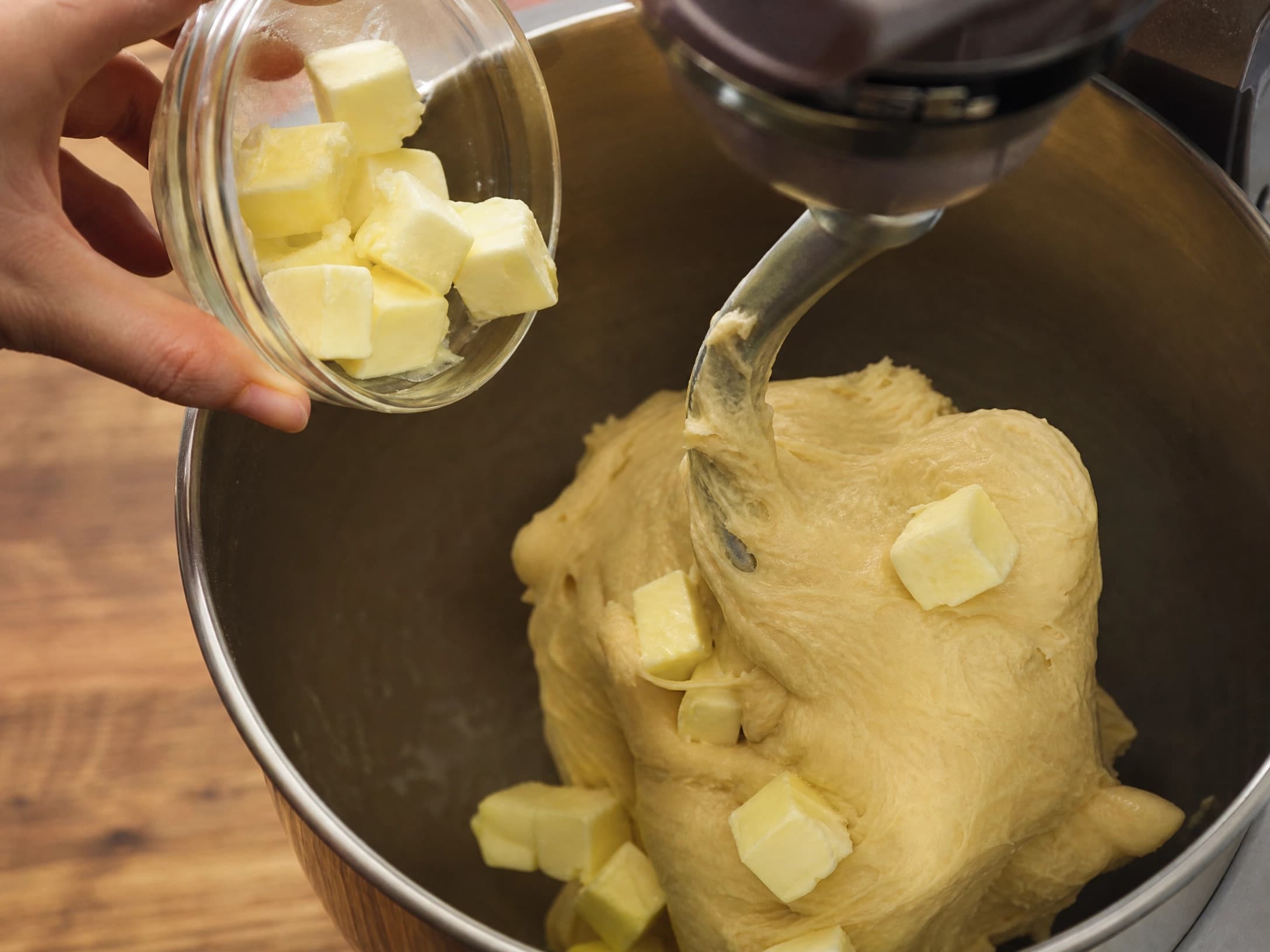
Knead in the butter: switch to a stand mixer with the dough hook and mix on medium 5-7 minutes, adding the soft butter in 3 additions once the dough is smooth-ish. The dough will look split and messy right before it comes together — keep mixing until it is glossy, elastic and pulls cleanly from the bowl (windowpane optional, but the dough should be silky).
Bulk ferment warm: transfer to a buttered bowl, cover, and rise at 78-82°F (26-28°C) — the back of a stove or a proofing box — for 3-4 hours. Enriched dough ferments slowly: you want it puffy and nearly doubled, not just faintly alive.
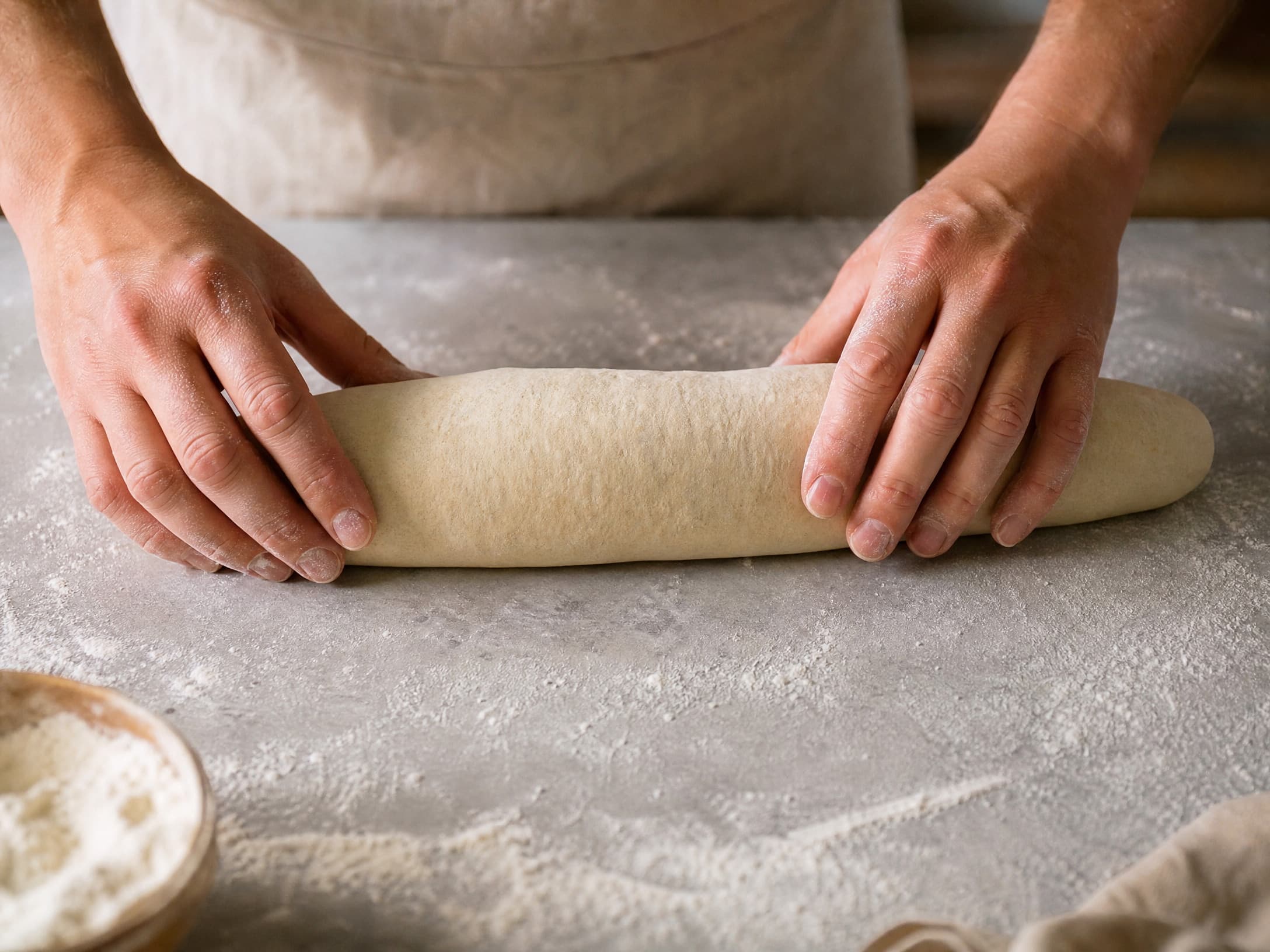
Shape: divide the dough into 4 equal pieces, roll each into a smooth ball, and set them in a buttered 9x5-inch (23x13 cm) loaf pan — four in a row or in a slight checkerboard for a pull-apart top.
Proof: cover and let the pan sit at warm room temperature for 2-3 hours until the dough is puffed and feels marshmallowy — press gently and it should slowly spring back. For a milder, less tangy brioche, cold-proof overnight in the fridge instead and bake from cold.
Bake: brush the loaf with egg wash. Bake at 350°F (175°C) for 40-45 minutes, tenting with foil if the top browns before the center is done (enriched dough burns fast). The loaf is done when the internal temp hits 200-205°F (93-96°C) or a skewer comes out clean.
Cool upright in the pan for 10 minutes, then turn out onto a rack and cool fully before slicing — the crumb is delicate and cutting warm squishes it.
Frequently asked questions
Why is my sourdough brioche not rising?
Enriched dough is slow — the fat and eggs coat the gluten, so fermentation creeps. Three fixes, in order: give it a warm spot (78-82°F), the full 3-4 hour bulk; make sure the starter was truly at peak (the bloom test catches a sluggish one); and be patient on the final proof. 'Too slow' here usually means 'still proofing'.
Can I make sourdough brioche without a stand mixer?
Yes, by hand: mix the dough, rest 20 minutes, then knead 10-12 minutes on the counter, slapping and folding to develop the butter-enriched gluten. Add the butter in pieces a few at a time and keep kneading until the dough turns glossy. It is more work, but the result is the same soft crumb.
Why does my brioche taste too sour?
The starter is doing its job — tangy is the whole appeal of sourdough brioche — but if it crosses over, shorten the bulk (target 150% rise instead of double), proof in the fridge instead of the counter for part of the schedule, or refresh the starter twice before baking to tame its acidity.
Can I add yeast to make it faster?
Yes — a pinch (about 1/4 teaspoon) of instant yeast alongside the starter safely speeds the enriched dough without removing the sourdough tang. It is the honest shortcut for brioche day when the schedule won't wait for the levain.
Can I cold-proof the shaped loaf overnight?
Definitely. It actually improves brioche: a cold-fermented brioche develops a finer crumb and a milder flavor, and the shapes hold better. Proof the shaped loaf in the fridge 12-18 hours, then bake straight from the fridge — add a few minutes to the bake time.
Should I use bread flour or all-purpose?
Bread flour (or strong all-purpose) gives the rich dough the structure it needs to hold butter, eggs and sugar and still stand tall. Pure all-purpose makes a squatter, moister loaf; if that is all you have, reduce the milk by about 30 g so the dough stays manageable.