Sourdough Cinnamon Rolls
Soft sourdough cinnamon rolls made with bubbly, active starter — gooey caramel-sugar swirls, a long tangy ferment and a cream cheese glaze. No discard, no yeast.
By Maya Ellison · Reviewed by Maya Ellison · Updated August 21, 2026 · 3 min read
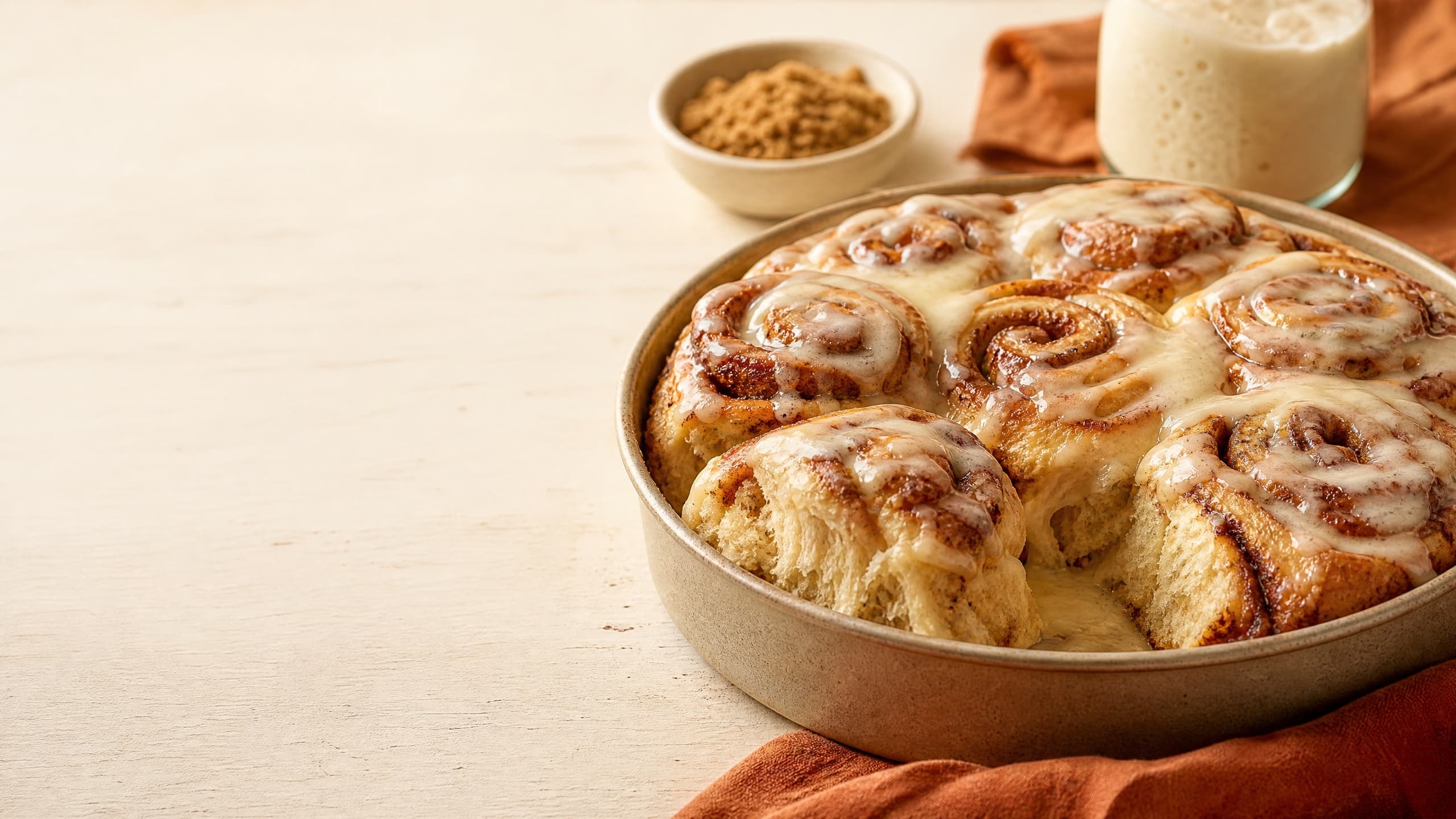
These are the how to make sourdough cinnamon rolls that end weekend mornings: soft sourdough cinnamon rolls leavened by your own bubbly, active starter, made with no commercial yeast and no discard — just a long overnight ferment that turns a sweet enriched dough into feather-light, gooey scrolls. I'll walk you through the easy sourdough cinnamon rolls recipe from mixing to the cream cheese glaze, and because enriched doughs are moody, the overnight strategy is built in so the rolls are tall, tender and reliably risen. If you're brand new and don't have a starter yet, the sourdough starter recipe is the place to begin — this one assumes you've got 100 g of bubbly, active starter at peak to bake with.
Why this recipe works
Sourdough cinnamon rolls are an enriched dough: milk, butter and sugar coat the gluten and slow fermentation down hard. That's why this works — instead of fighting it, the long cool rise lets the acids in your starter gently loosen the crumb, while the overnight proof builds a tang that balances the sweetness. The result is a roll that tastes less like a rushed recipe and more like the memory you're after: not knife-sharp sweet, but warm, aromatic and worth the wait. Baking in a high-sided pan traps moisture so the rolls climb rather than slump, and the center rolls stay soft and squidgy right to the middle.
The overnight strategy
The rolls would rather take their time, so the schedule is set for an evening: mix the dough after dinner, let it rise slowly overnight on a cool counter and by the morning it's domed, airy and ready to roll. Temperature is your only real calendar. At 68-72°F give it 10-12 hours; in a warmer kitchen, two hours at room temperature followed by a cold ferment keeps the tang and the texture. If your kitchen is cold, bump the proof window rather than the flour you blame. It's the same logic that shapes a high-hydration dough — the recipe works slowly on purpose.
Shaping the swirls
An oiled, floured counter is non-negotiable, and a rest of fifteen minutes after patting the dough into a rectangle is the close second. The dough relaxes, rolls to a thin 16 x 12-inch rectangle and takes the buttery spread of melted butter, brown sugar and cinnamon without tearing. Roll it tight, pinch the seam and a length of unflavored dental floss is the unlikely hero for clean, even slices so the swirls show. Set them snug in one high-sided pan, proof until they look puffy and slow to spring back, and they'll bake up tight instead of slumping.
Bake, glaze and finish
Bake at 350°F until the deepest point of the middle roll reads around 190°F — about 25 to 30 minutes, but trust the thermometer, not the clock. The finishing move is a cream cheese icing beaten smooth while the pan cools, then spread over warm so it melts down the swirls and glints in the first slice. A plain powdered sugar glaze works too, but the cream cheese is what makes these taste like the bakery version.
Storage
Cinnamon rolls are best the day they bake, warm, with the glaze still running. Leftovers keep three days airtight — refresh in a 300°F oven for 8 minutes and add a little more glaze, because the first coat gets absorbed. Shaped, un-baked rolls freeze beautifully: freeze on the tray, then bake from frozen at 350°F for 35-40 minutes. For more ways to use your starter, find the main sourdough bread recipe and the discard recipe collection.
Ingredients
Weights in grams are the source of truth; cup measures are approximate.
- 500 g bread flour (12.5-13% protein)
- 100 g bubbly, active sourdough starter (100% hydration), at peak
- 100 g whole milk, warm
- 1 large egg (about 50 g), beaten
- 50 g granulated sugar (about 1/4 cup)
- 8 g fine salt (about 1 1/4 tsp)
- 50 g unsalted butter, softened, for the dough
- 60 g unsalted butter, melted, for the filling
- 120 g light brown sugar, packed (about 1/2 cup)
- 18 g ground cinnamon (about 2 1/2 tbsp)
- 100 g cream cheese, softened, for the glaze
- 60 g powdered sugar (about 1/2 cup), for the glaze
- 15 g whole milk, for the glaze
Method
Stir the warm milk, beaten egg, granulated sugar and active sourdough starter together in a large bowl and let it sit 5 minutes — this wakes the starter and dissolves the sugar before the flour goes in.
Add the bread flour and salt. Mix into a shaggy dough, then turn it out and knead 8-10 minutes, adding the 50 g of softened butter in a few pieces once the dough comes together. Knead until soft, smooth and slightly tacky — it should pass the windowpane test.
Bulk rise: cover the bowl and let the dough rise at a cool room temperature (about 68-72°F) overnight, 10-12 hours, until roughly doubled and domed. Too warm and it runs; too cold and it takes all night. If your kitchen is warm, refrigerate the dough after a 2-hour bench start.
The following morning, lightly oil and flour your counter. Gently pat the dough into a rough rectangle and let it rest 15 minutes to relax the gluten — the dough will roll out much more willingly.
Roll the dough into a rectangle about 16 x 12 in (40 x 30 cm). Spread the melted butter over it, leaving a 1/2 in border, then scatter the brown sugar and cinnamon evenly across the surface.
Roll the dough tightly into a log from the long side, pinch the seam and slice into 8 even rolls using a sharp knife or unflavored dental floss.
Arrange the rolls spiral-side up in a buttered high-sided pan (a deep 9 in round or springform holds them snug so they rise up rather than slumping outward). Cover and proof in a warm spot 60-90 minutes, until puffy and nearly doubled.
Heat the oven to 350°F. Bake the rolls 25-30 minutes, until deeply golden brown and the center of the middle roll reads 190°F on an instant-read thermometer.
While the rolls bake, beat the cream cheese, powdered sugar and milk until smooth and spreadable. Cool the baked rolls 10 minutes in the pan, then spread the glaze over the warm rolls and serve.
Frequently asked questions
Can I use sourdough discard instead of an active starter here?
Not the same recipe. This page is the pure-sourdough version — bubbly, active starter at peak ferments and leavens the rolls on its own, no commercial yeast. Discard, by definition, is the portion past its peak, so it won't lift an enriched dough reliably alone. If you want the discard version, use the [discard cinnamon rolls](/sourdough-discard-cinnamon-rolls) — they swap in a little instant yeast for the same reliability.
Why does it take so long, and can I speed it up?
The long slow ferment is the point: 10-12 hours turn the enriched dough's flavor deep and give the gluten time to relax into a feathery crumb no commercial-yeast roll gets close to. If you must rush, a 2-hour warm bench rise plus proofing works in a day, but the rolls will be blander and slightly denser. Temperature is the only variable to trust — see the [dough temperature guide](/guides/dough-temperature).
My rolls baked dense and flat. What happened?
Almost always an under-proofed second rise or a too-warm bulk that ran out of momentum. The shaped rolls must look puffy and slow to spring back before they hit the oven, and 350°F, not hotter — a hot oven sets the outside before the inside can rise. Work through the [troubleshooting hub](/sourdough-troubleshooting) before you blame the flour.
Can I prep these ahead or freeze them?
Yes to both. Shape the rolls, bake and freeze unglazed for up to a month — reheat in a 300°F oven for 10 minutes and glaze after. Or shape, freeze before proofing and bake from frozen at 350°F for 35-40 minutes. The glaze is best made fresh either way.
Can I make these vegan or swap the glaze?
Swap the cream cheese glaze for a simple powdered-sugar icing: beat 60 g powdered sugar with 30 g milk and 1/2 tsp vanilla. For a non-dairy roll, sub the milk with oat milk and the butter with a solid vegan butter — the texture shifts a little but still works. Active starter makes it rise either way.