Sourdough Baguette
A French-style sourdough baguette with a crisp, lacquered crust and an open, chewy crumb, leavened by an active starter and baked with steam.
By Maya Ellison · Reviewed by Maya Ellison · Updated August 29, 2026 · 2 min read
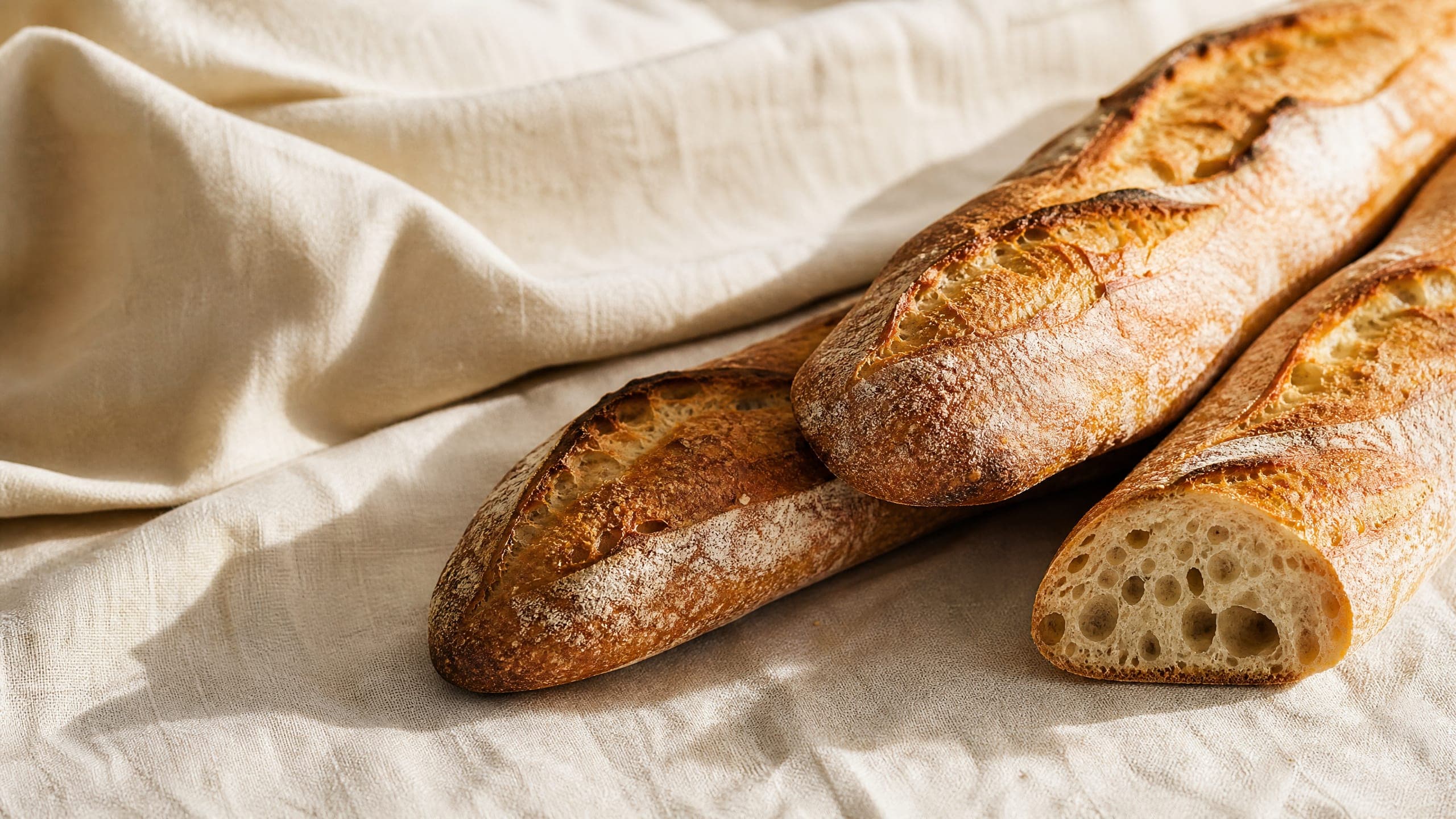
A sourdough baguette is the slender, crunchy cousin of the round loaf: a high-hydration active-starter dough shaped long and thin, scored hard, and baked with steam for a lacquered, crackly crust over an open, chewy crumb. It's the loaf that shows off your scoring and disappears within the hour. The crust is the whole point.
Why this recipe works
Baguettes want a wetter dough (around 72%) and a loose, extensible gluten so the long shape stays relaxed and the crumb opens. Steam in the first part of the bake delays crust set, letting the scores bloom. A hot oven and a hard final bake give the signature snap.
| Ingredient | Percentage | Weight |
|---|---|---|
| Bread flour | 100% | 500 g |
| Water | 72% | 360 g |
| Active starter | 20% | 100 g |
| Salt | 2% | 10 g |
Keep it wet and handle gently — this is not a tight boule dough.
Shaping the length
Preshape loose, rest, then roll into a log that tapers at both ends. The taper lets the baguette bake evenly instead of blowing out in the middle. Don't over-tension or the crumb stays tight and the shape fights the proof.
Common mistakes
- Tight, dense crumb: under-proofed or over-shaped. Let it jiggle and keep the shape relaxed.
- Pale, soft crust: no steam or oven too cool. Steam the first 12 minutes and bake hot.
- Scores that don't open: dull lame or wrong angle. Shallow diagonal cuts with a sharp blade.
- Flat, spread baguettes: seam up neglected or weak gluten. Support with a couche and gentle folds.
Before you bake
Peak your starter with the sourdough starter guide. The scoring guide is essential here, and the proofing guide explains the final rise. The dough poke test tells you when it's ready, and the base method is the sourdough bread recipe. Troubleshooting lives in the sourdough troubleshooting hub.
Ingredients
Weights in grams are the source of truth; cup measures are approximate.
- 500 g bread flour (12.5-13% protein)
- 360 g water at 80°F / 27°C
- 100 g active sourdough starter, at peak
- 10 g fine sea salt
- Rice flour, for the couche or towel
Method
Mix the flour, water and starter into a shaggy dough. Rest 30 minutes, then add the salt and pinch it in.
Bulk ferment 3.5-4 hours at 76-78°F with four gentle coil folds 30 minutes apart in the first 2 hours.
Divide into 3 pieces of about 300 g, preshape into loose logs, rest 20 minutes, then shape into tight baguettes with a taper at each end.
Place seam-side up on a floured couche or towel, fold the cloth between them, and proof 45-60 minutes at room temperature, or cold-retard 12-16 hours and temper 30 minutes before baking.
Preheat the oven with a steam source to 475°F (245°C). Transfer the baguettes to parchment, score 4-5 shallow diagonal slashes, and load with steam for the first 12 minutes.
Bake 22-25 minutes, removing the steam for the last 10 minutes, until deep golden with a crackly crust. Cool on a rack at least 1 hour.
Frequently asked questions
Why bake with steam?
Steam keeps the surface moist so the crust can expand and the scores open into those classic ears. Without it the baguette sets too early and stays pale and tight.
Why is my baguette dense?
Usually under-proofed or shaped too tight to relax. Let the final proof show a puffy, jiggly dough and keep the shaping loose enough to spring.
Can I make baguettes without a couche?
Yes — a floured linen towel with folds between the loaves works nearly as well to hold the shape and the seam.
Why cold-retard them?
An overnight retard deepens the sour flavor and makes the dough easier to score cleanly. Temper 30 minutes so they proof evenly before baking.