Italian Herb & Cheese Sourdough Bread (Bold, Savory, Cheesy)
An Italian herb and cheese sourdough bread brimming with bold herbs and melty pockets of parmesan and mozzarella. Savory, aromatic and perfect for sandwiches.
By Maya Ellison · Reviewed by Maya Ellison · Updated August 30, 2026 · 2 min read
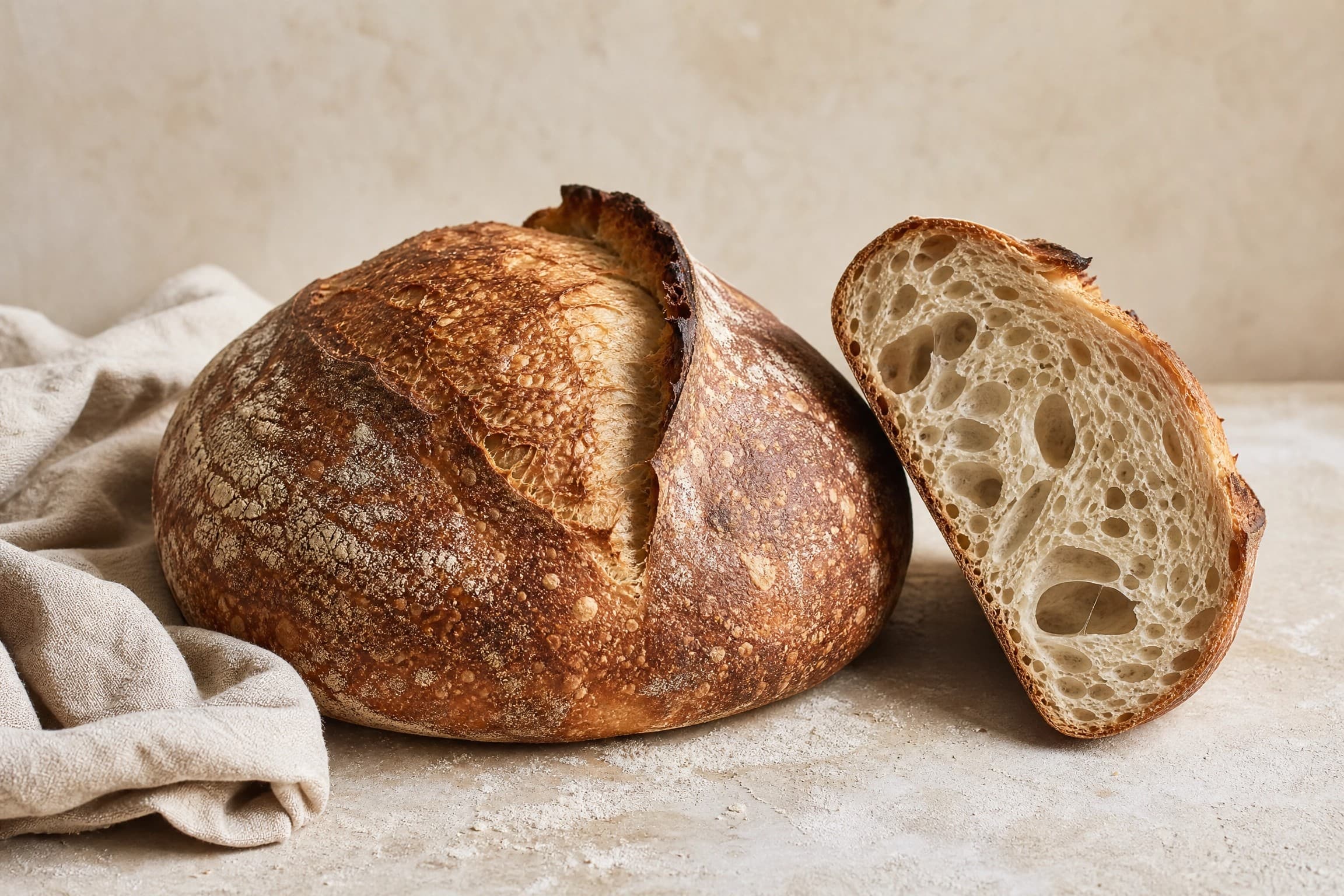
There's something irresistible about an Italian herb and cheese sourdough bread — the aromatic herbs, the melty pockets of cheese and that crackling golden crust. It's the kind of loaf that disappears fast, whether it's toasted for a sandwich, torn beside a bowl of soup or sliced warm with butter.
And the best part: it's not much harder than a plain loaf. You're just folding a little extra flavor into the dough you already know how to make.
The ingredients that make it sing
Cheddar, mozzarella, parmesan, romano — basically any cheese you enjoy eating. This is a fantastic way to use up the odd bits of cheese hiding in your fridge. Just keep the total to around 150 g so you get flavor without overwhelming the dough.
Dried Italian herbs — a mix of basil, oregano, thyme, rosemary and marjoram. Dried herbs win here because their concentrated flavor survives the long fermentation better than fresh, and they're on hand all year.
The base is the same sourdough bread you already know: flour, water, salt and a strong starter. The cheese and herbs are simply folded in at the right moment.
When to add the cheese and herbs
Timing matters. Fold the cheese and herbs in during the stretch-and-fold phase, not at the very start. Work them through on the second or third set of folds, using gentle hands to spread them evenly without tearing the gluten network that gives the loaf its spring.
This keeps the crumb open and airy while the cheese distributes into little pockets throughout — exactly what you want.
A bake worth bragging about
Shape the loaf into a tight boule or batard, cold-ferment it for deeper flavor and better blistering, then bake it hot in a Dutch oven. The long preheat and the cold dough are what create that gorgeous, crusty, slightly blistery golden exterior.
If you're new to shaping or want a clean, tall rise, the shaping guide and scoring guide will help you finish strong.
Serving ideas
This loaf shines on its own but really earns its keep in a sandwich — it's a natural base for a deli-style sub or a sourdough grilled cheese. It also freezes beautifully, so consider slicing and freezing what you won't eat in the first few days.
Ingredients
Weights in grams are the source of truth; cup measures are approximate.
- 500 g bread flour
- 350 g water
- 50 g active sourdough starter (fed a few hours before)
- 10 g fine sea salt
- 150 g cheese, grated (parmesan, mozzarella, cheddar or a mix)
- 5 g dried Italian herbs (basil, oregano, thyme, rosemary, marjoram)
- Rice flour, for the banneton
Method
Autolyse: mix the water and starter together, then add the flour and salt and rest 1 hour to fully hydrate.
Form the dough: work around the bowl stretching the edges over the centre about 20-25 times into a smooth ball, then rest 30 minutes covered.
Add the inclusions: after the first set of stretch-and-folds, scatter the grated cheese and dried Italian herbs across the dough and fold them in over the next 1-3 sets so they're evenly distributed without tearing the gluten.
Stretch and fold: do 4 sets in total, 4 stretches per set, about 15-30 minutes apart, until the dough is strong and the cheese and herbs are well worked through.
Bulk ferment: cover and leave at room temperature until just under double — soft, jiggly and full of bubbles.
Shape: dust your bench and the banneton with rice flour, shape the dough into a tight boule or batard, and place seam-side up in the banneton.
Cold ferment: cover and refrigerate at least 5 hours up to 36 for deeper flavor.
Bake: preheat a Dutch oven to 450°F (230°C) for about an hour. Turn the cold dough onto parchment, dust with rice flour and score.
Lower into the hot pot, cover, and bake 30 minutes. Uncover and bake 10-15 minutes more until deeply browned with a blistery, golden crust.
Cool on a wire rack at least 4-6 hours before slicing.
Frequently asked questions
What cheese is best in Italian herb sourdough?
Use whatever you like and have on hand — romano, parmesan, mozzarella, sharp cheddar or a mix all work beautifully. Recipe-wide, stick to the total weight (about 150 g) so you don't overload the dough and cause it to collapse. Freshly grated cheese melts best.
Fresh or dried Italian herbs?
Dried herbs generally give the most consistent flavor here; the mix of basil, oregano, thyme, rosemary and marjoram holds up through the long ferment better than fresh, which can fade in flavor and add moisture. Dried is also a convenient pantry staple you can bake with any time of year.
When should I add the cheese and herbs?
Add them during the stretch-and-fold phase, ideally folding them in on the second or third set. Work your hands gently around the dough folding the cheese and herbs through so they spread evenly without deflating the dough or tearing the gluten network.
Why does my cheese bread collapse or turn out dense?
Usually too much cheese or it was added too early in a way that cut the gluten. Keep the cheese to the recommended weight, add it in the middle of the folds (not the start), and make sure the dough still bulk-ferments to a full, jiggly rise before shaping. A cheese-heavy dough is also softer, so handle it gently.
How do I get a cheesy, blistery crust?
Dust the shaped loaf with rice flour before the cold ferment and bake it very hot in a covered Dutch oven. A blistery, bubbly crust comes from a cold dough hitting a screaming-hot pot — give the oven a full hour to preheat with the pot inside. A longer cold ferment also builds more blistering.
Can I use sourdough discard for this recipe?
You can use active starter for the full flavor and rise this loaf needs. Discard works if you're in a hurry, but since discard isn't as strong, you may want to use a touch more of it or accept a slightly less dramatic rise. For a cheesy loaf that uses lots of discard, our [discard recipes hub](/sourdough-discard-recipes) has options.