Homemade Pasta Dough: The 3-Ingredient Master Recipe
The foundational homemade pasta dough recipe: flour, eggs and a little olive oil. Weigh the eggs, knead to silky, rest and roll — the master dough behind fettuccine, pappardelle and more.
By Maya Ellison · Reviewed by Maya Ellison · Updated August 21, 2026 · 2 min read
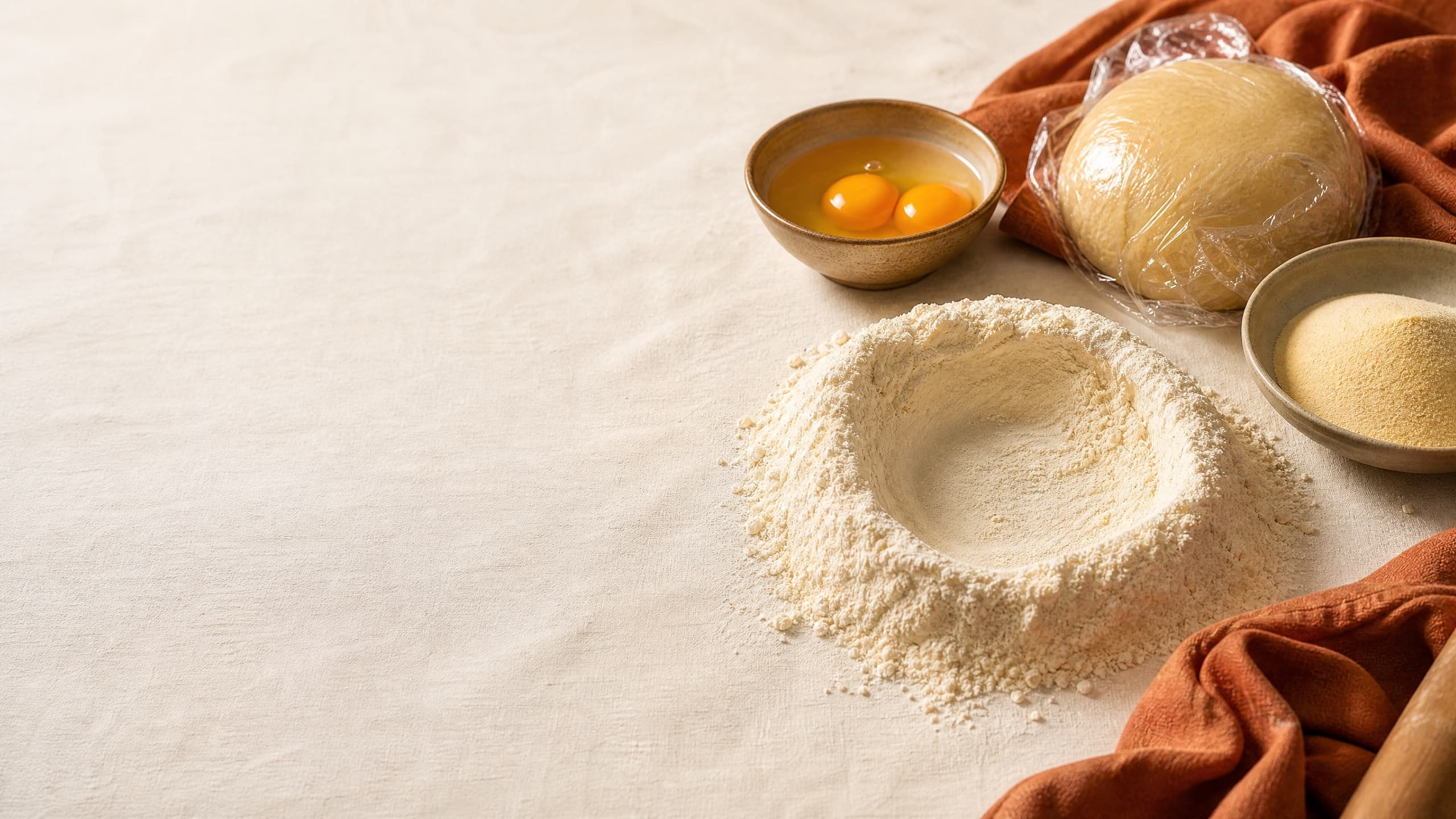
Quick answer
The most reliable trick for hand-made pasta is not a machine or a magic flour — it's a scale and a rested dough. Homemade pasta dough is three ingredients and one ratio: flour, a beaten egg and a little olive oil. Master the feel on the bench and the knead, and every shape follows — the fresh ribbon of fettuccine, the wide pappardelle, the hand-pinched ravioli. This is the master dough, and the one that best teaches the hand-rolled technique.
The ratio is the whole recipe
Weigh the eggs. The dough balances on how much liquid is inside the egg, which varies from tray to tray; weighing locks in the soft, silky consistency and stops a pile of dry crumbs. Add the oil by drops only when the dough cracks at the edges. The moment the ball moistly holds together, stop hydrating and knead.
Kneading and the rest
The dough feels dry, stiff and completely wrong at first — that's normal. Knead it forward and back, working the heel of your hand through the surface. Then comes the step beginners skip: rest the ball 10 minutes before the knead, then another 30 minutes before rolling. The rest does the work — the flour hydrates, the gluten relaxes and a stiff ball becomes a silky, rollable sheet.
From dough to sheets
Divide the dough and keep every unused piece covered, because bare pasta dries within minutes. Send one piece through the machine, easing the setting two or three times per pass up to the thickness you want. Dust the trays with semolina and the fresh sheets will not stick. Without a machine, the hand-rolling guide covers the pin-only path.
Storage and make-ahead
Fresh pasta dough keeps in the fridge 2-3 days, or frozen for a month. To prep ahead, cut the pasta and freeze the sheets flat and dusted with semolina. Fresh-cut noodles boil 2-4 minutes in salted water; frozen, drop them in straight and add a minute. Rolled fresh is always worth the extra few minutes — the taste is a world from the box.
Frequently asked questions
Why do I need to weigh the eggs?
Pasta ratio is a formula and eggs are the liquid. Weigh them after cracking and you hit a soft, pliable dough every time; too little egg gives a dry, crumbly ball that fights back at the roller.
00 flour vs all-purpose for pasta?
Italian 00 makes the softest, most tender pasta and a dough that's easier to knead and roll; all-purpose still works but yields slightly chewier, more elastic sheets.
Does pasta dough need to rest before rolling?
Yes — the rest hydrates the flour, relaxes the gluten and turns a stiff, resistant ball into a sheet that rolls without fighting. An hour is ideal, which is why it's the step beginners most often skip.