How to Bake Sourdough Without a Dutch Oven
How to bake sourdough without a Dutch oven: open bake with a pan of steam or an inverted loaf-pan lid. Same crackly crust and oven spring, no cast iron.
By Maya Ellison · Reviewed by Maya Ellison · Updated September 9, 2026 · 4 min read
Quick answer
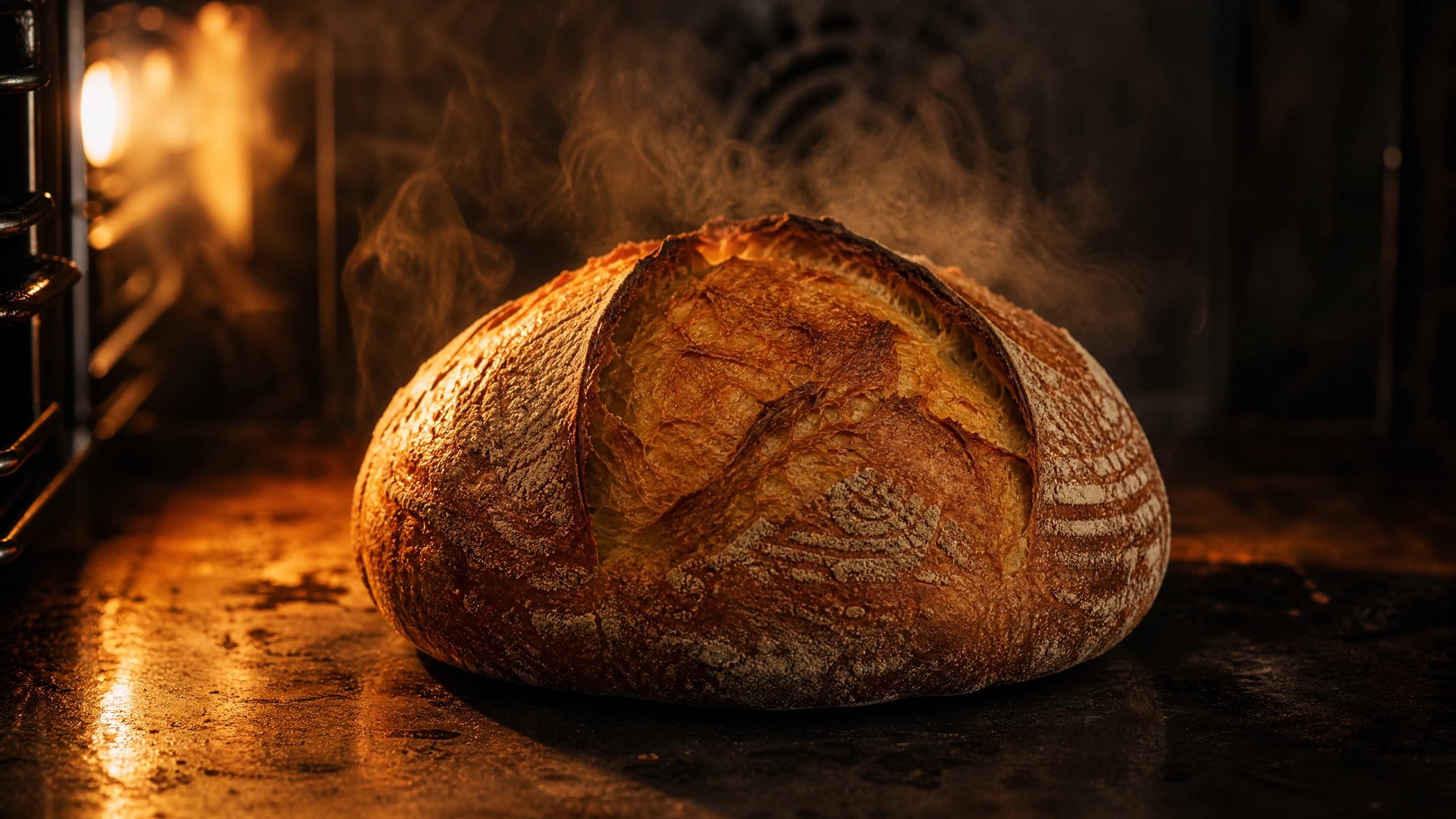
How to bake sourdough without a Dutch oven is one of the most-asked questions in sourdough, because the Dutch oven is treated like a lucky charm when it is really just a steam trap. The answer: replicate the steam and you replicate the bread. This guide covers the two reliable no-cast-iron methods — the open sheet with added steam, and the inverted-pan covered bake — with the same crust, same crumb and same timing as a pot-baked loaf. The beginners guide to sourdough covers the pre-bake fundamentals; this page is strictly the bake.
Why the Dutch oven exists at all
Professional bread ovens inject steam for the first minutes of the bake. Steam keeps the developing crust soft and elastic, which is the window when the dough springs up — the loft, the ears, the crackle. A Dutch oven recreates that by trapping the loaf's own moisture under its lid. Once you understand that, the substitutes are obvious: any way to hold humidity for the first half of the bake.
Method 1: open bake with steam (the everyday way)
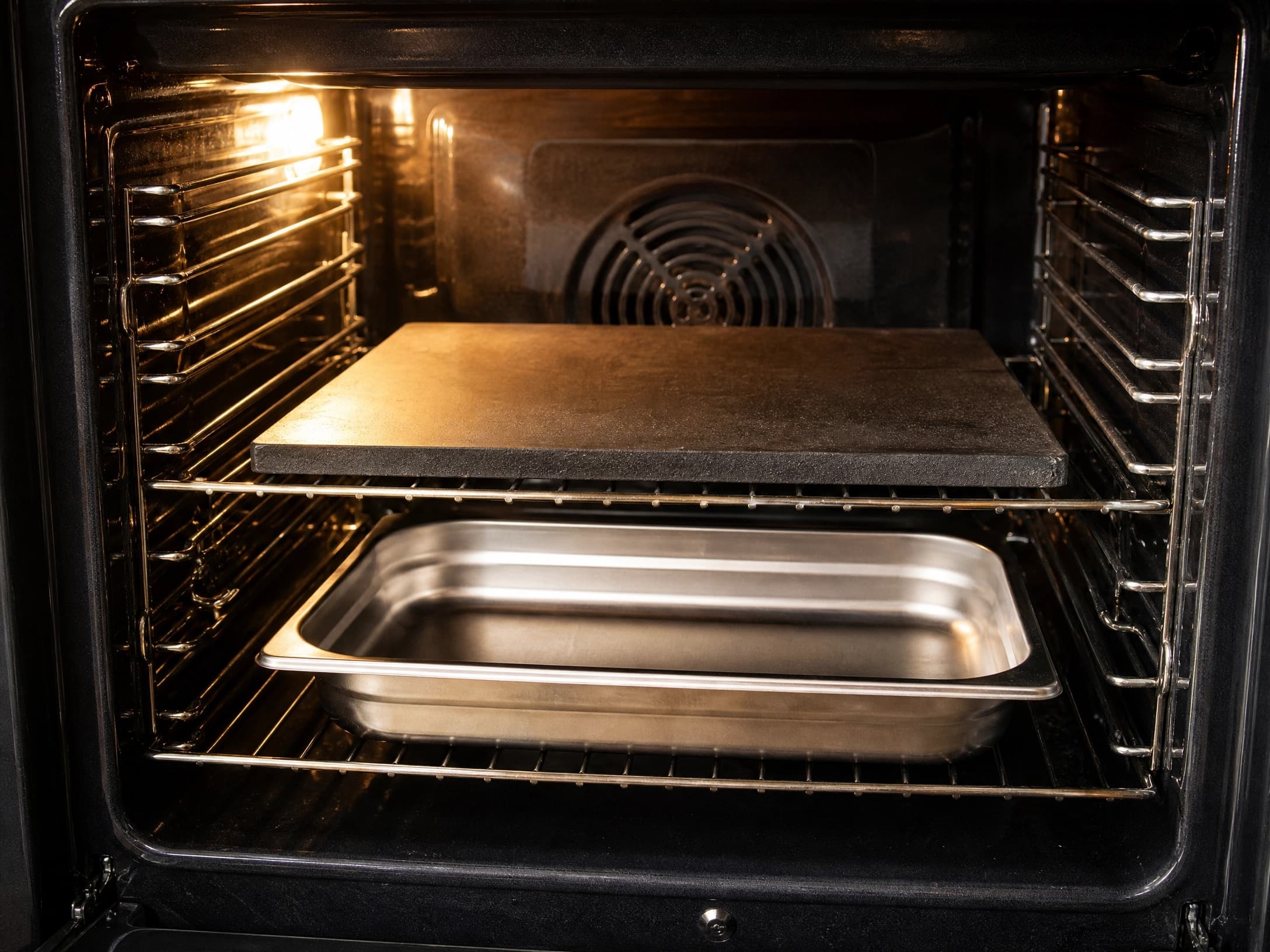
- Preheat a baking sheet or baking steel on the middle rack and a shallow metal pan on the bottom rack, at 450°F (230°C), for 45–60 minutes. Preheating is what turns the sheet into a heat reservoir like the Dutch oven it replaces.
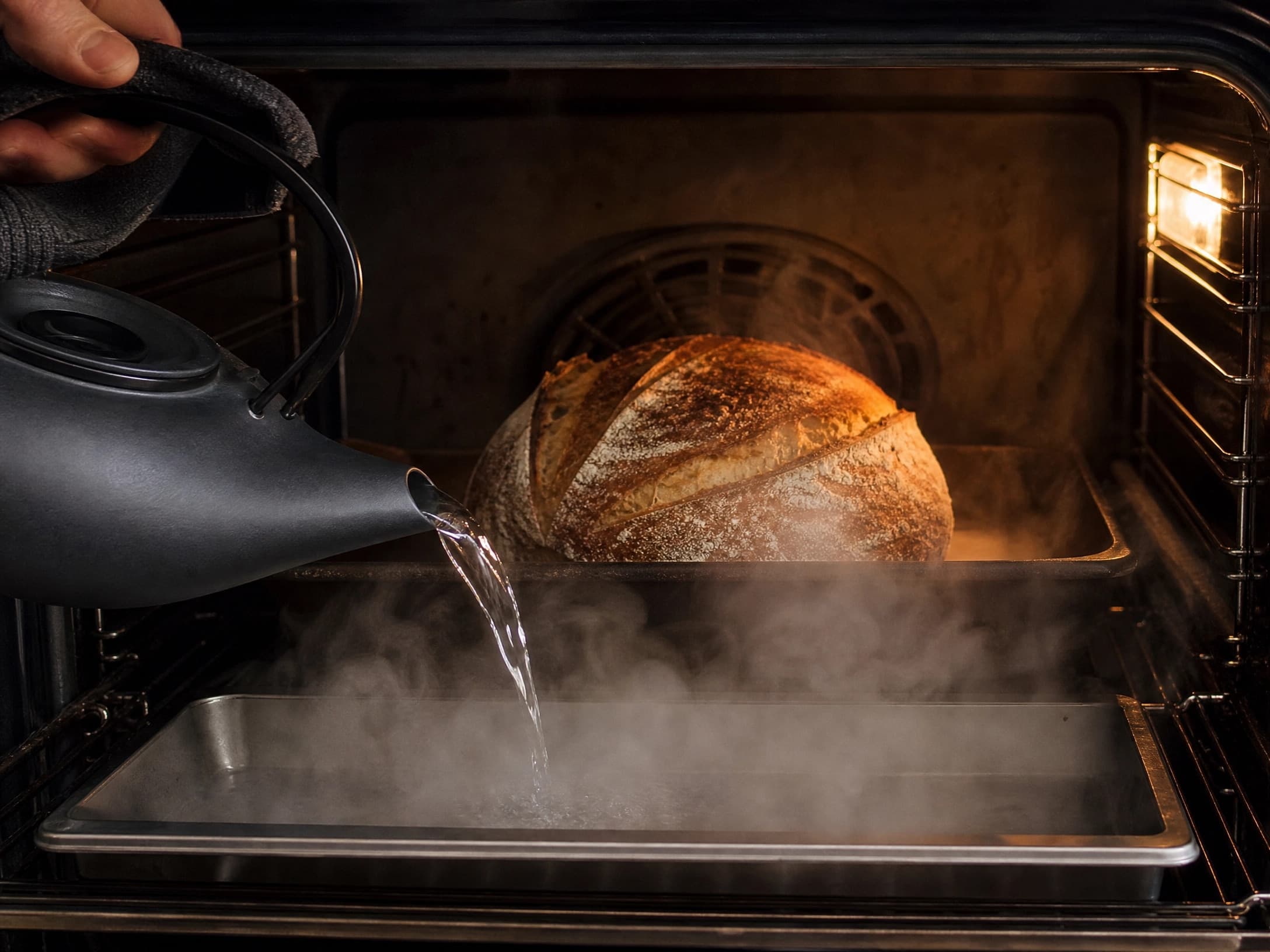
- Pour boiling water (about a cup) into the bottom pan just before loading the loaf — then do not dawdle: steam escapes every second the door is open.
- Bake covered-by-steam for 20–25 minutes until the loaf is risen and pale gold.
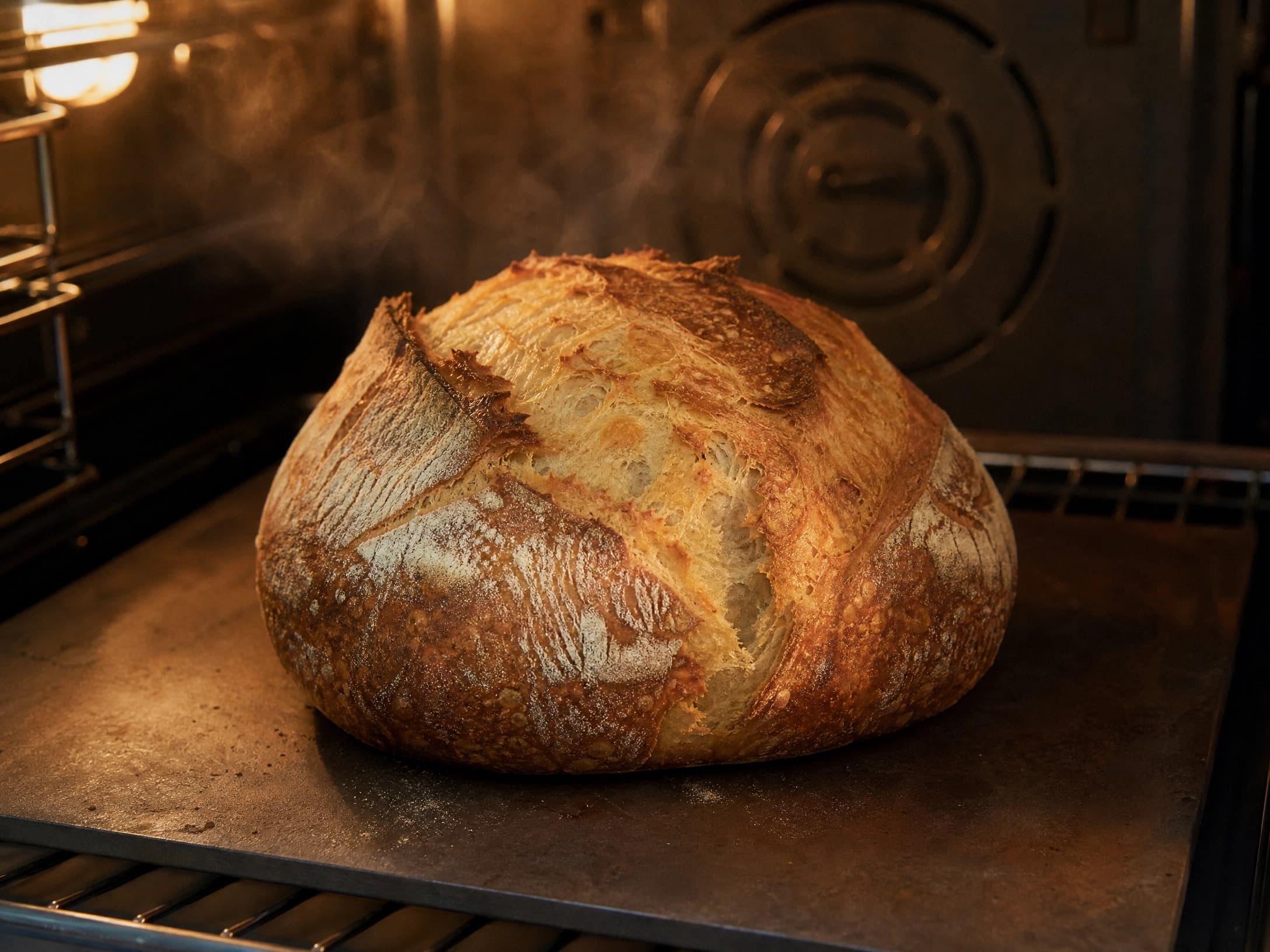
- Release the steam (pull out the water pan) and finish 15–20 minutes until deep brown and hollow-sounding.
- Cool fully before slicing.
Method 2: the inverted-loaf-pan cover
No dedicated steam setup needed — just an extra oven-safe loaf pan:
- Preheat the oven (and only the sheet) to 450°F (230°C).
- Shape and proof as usual; flip onto parchment and score.
- Cover the loaf with an inverted, spotless, oven-safe loaf pan — a metal pan, not glass or nonstick at this heat.
- Bake covered 25 minutes, then remove the top pan and bake 15–20 minutes more to brown.
What about loaf pans and roasters?
Yes to both, with a caveat. A loaf pan baked on a sheet in a steamy oven gives you a different, softer-sided sandwich-style loaf — which the soft sourdough sandwich bread recipe leans into on purpose. An enamel roaster or clay cloche behaves like a lighter-weight Dutch oven: preheat it, drop the loaf in covered. Expect slightly thinner crust and a little more oven spring variation than cast iron, but you'll still get a real boule.
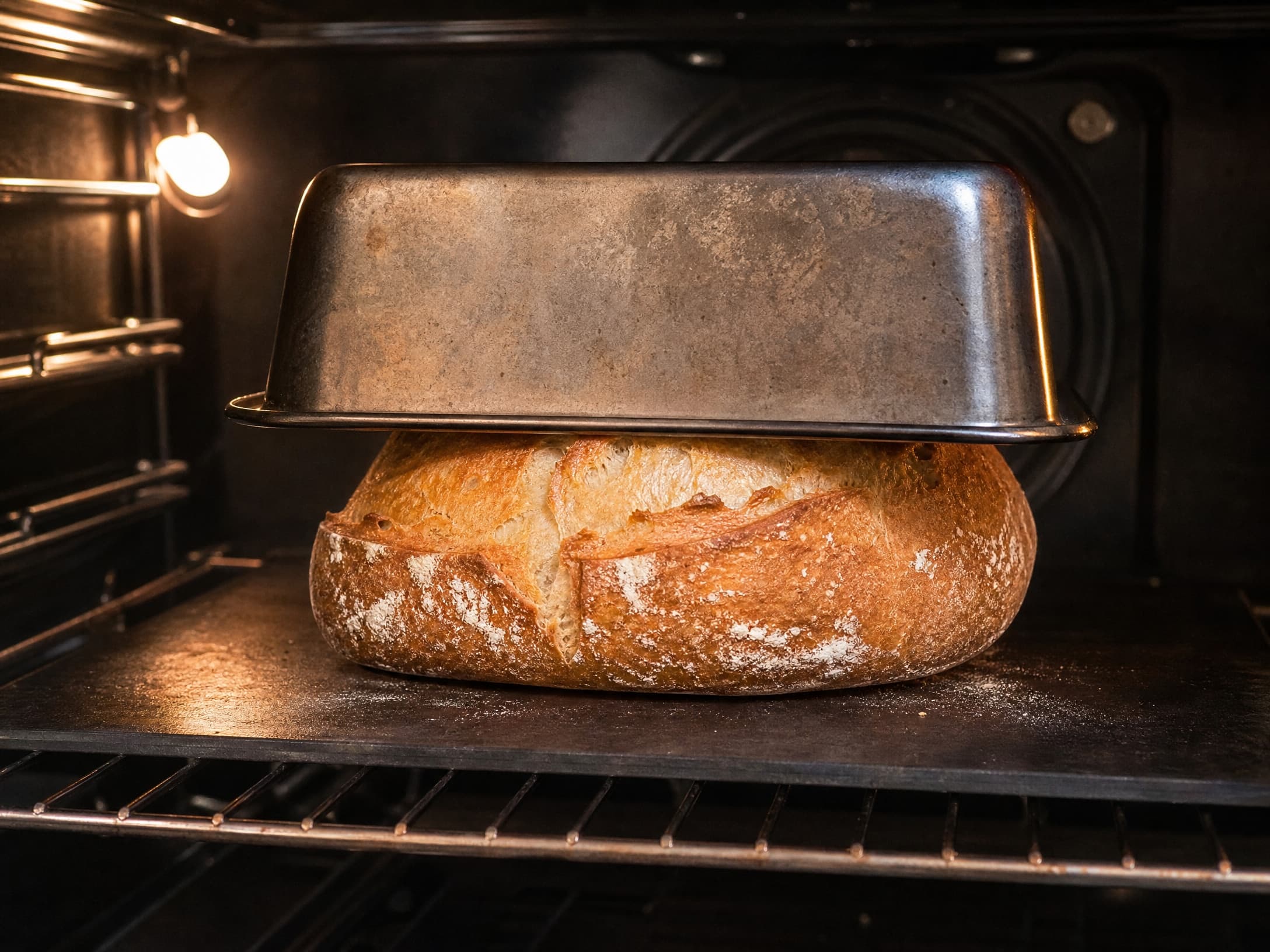
Troubleshooting the no-Dutch-oven bake
- Flat, dense, no spring: steam arrived too late or vanished (door left open, no water). Water right before loading, door shut fast.
- Pale, soft crust: steam stayed too long or the finish bake was skipped. Pull the water pan at 25 minutes and give the crust its full dry finish.
- Stuck to the sheet: preheat longer and load onto parchment, heavily floured on the underside if using a cover.
- Bottom too pale: the sheet needed more preheat time or a hotter rack spot; move it a notch down.
The theory that makes all of this work — steam, crust formation and oven spring — is covered in the companion dutch oven baking guide and the convection vs bake guide. And since a pan-free, steam-free bake is impossible, the honest baseline remains: if you bake weekly, a Dutch oven is a good purchase; until then, this page is all you need.
References
- King Arthur Baking — "Baking bread without a Dutch oven": steam techniques for open baking: kingarthurbaking.com
- Reinhart, P. (2001). The Bread Baker's Apprentice. Ten Speed Press — on steam and oven spring in lean doughs.
- Gisslen, W. (2016). Professional Baking (7th ed.). Wiley — the role of steam in crust formation and ovenspring.
Frequently asked questions
Can I bake sourdough without a Dutch oven?
Yes, and with results close to identical. The Dutch oven's job is only to hold steam for the first half of the bake. On an open sheet, replace it with steam from a hot bottom pan — or cover the loaf with an upside-down oven-safe loaf pan for the first 20-25 minutes, then remove it to brown. The one thing you cannot skip is some form of steam or cover during oven spring.
Why isn't my open-baked bread getting a crust or spring?
Almost always because the crust set before the dough finished springing — meaning the steam window was missed. The steam must be present the instant the loaf hits the heat (boiling water poured right before loading, door shut fast), and the oven should be truly preheated. A dry 450°F oven and a loaf that waited 2 minutes in the doorway is the classic cause of a flat, hard, pale loaf.
What's the best substitute for a Dutch oven?
The three that work best: an open sheet with added steam (recipe above), baking under an inverted loaf pan (spotless, oven-safe), and a covered cast iron skillet or combo cooker you already own. Lighter enamel roasters and clay cloches work too, though the last two conduct less even heat than cast iron.
Do I need to preheat the substitute the same way?
For the open-sheet method, yes — preheat the sheet with the oven so the dough hits a hot surface immediately. For an inverted-loaf-pan lid you don't need to preheat the pan itself: place it over the loaf as you load, and pull it off for the last stretch. Combo cookers and covered skillets bake best preheated like a Dutch oven.
Why did my bread stick to the sheet?
Either the sheet wasn't hot enough or there wasn't enough flour or parchment. Always load onto parchment on the preheated sheet, and if you're using the inverted-pan lid, give that underside a dusting of flour so it lifts off without tearing the crust.
Does the steam hurt my oven?
No — the standard home-oven hack is a pan of boiling water or a few ice cubes dropped into a preheated dish; bakers have done it for decades. Just pour the water into the preheated empty pan carefully (hot water sprays), keep it away from the heating element, and open the door fully away from your face. The crust and crumb you get back are worth the 15 extra minutes.