Best Sourdough Starter Kit
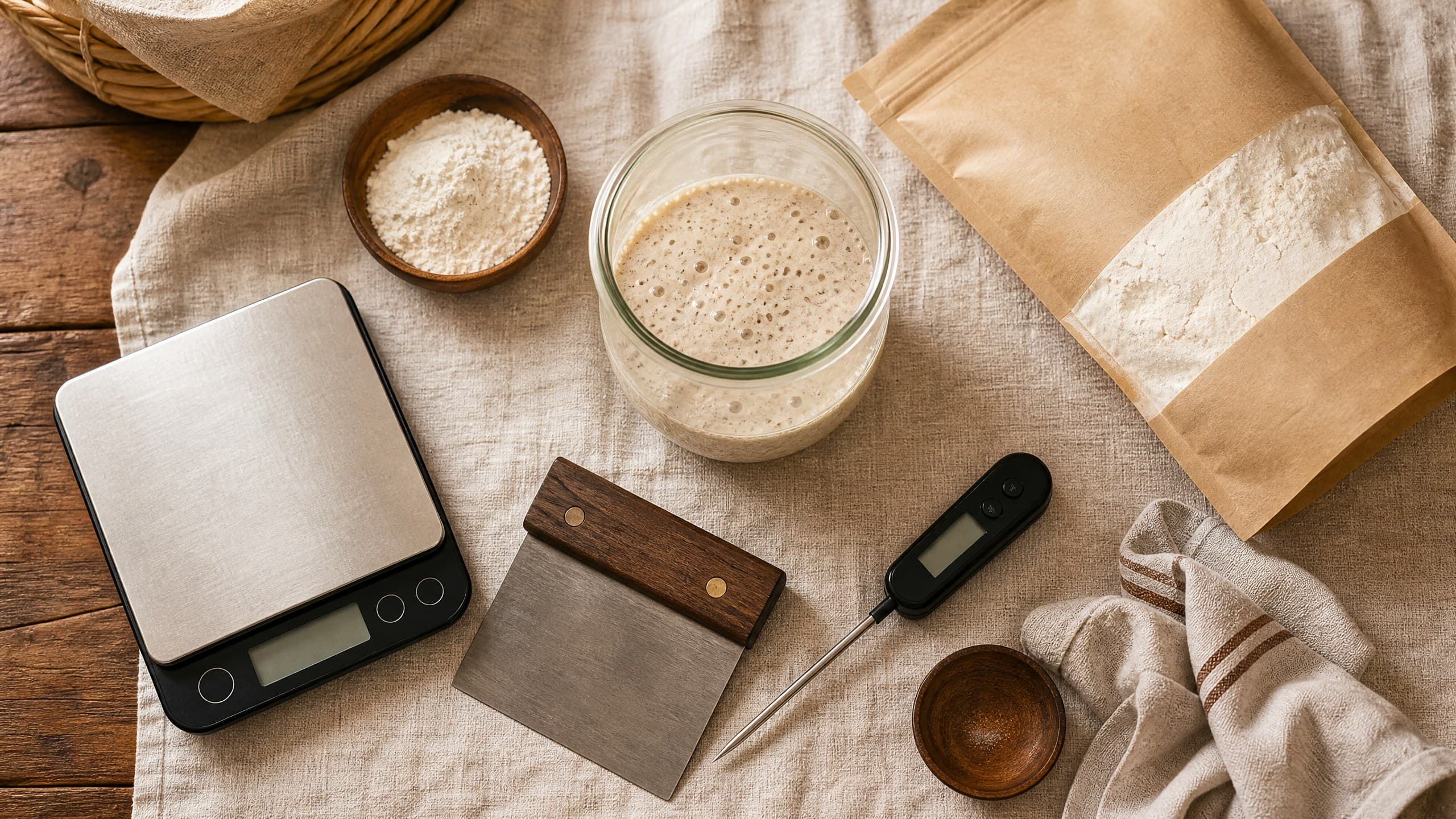
What belongs in a sourdough starter kit: jar, scale, bench scraper, thermometer and flour — the beginner tools that actually earn their place on the bench.
By Maya Ellison · Reviewed by Maya Ellison · Updated August 29, 2026 · 3 min read
Quick answer
A sourdough starter kit is the set of tools that turns "I want to try sourdough" into a starter that actually lives and a first loaf that actually bakes. The trap is buying a cute bundle full of gadgets you'll never use. The honest kit is small: a jar to host the starter, a scale to feed it by weight, a scraper to handle dough, a thermometer to read temperature, and flour to feed it. Those five earn their place; almost everything else is optional.
Prefer to build your own toolkit piece by piece and control the quality? See the essential sourdough tools — the full supplies hub with the nice-to-haves.
Why a real kit (not a gimmick one)
A starter is alive and finicky about two things: consistent feeding by weight and consistent warmth. A kit that nails those — a clear jar, a 1 g scale, a thermometer — sets a beginner up to succeed. A kit that ships a tiny unreliable scale and a novelty jar sets them up to think sourdough is hard when it's just the tools that failed. We'd rather you buy five good parts than one pretty box.
What belongs in a sourdough starter kit
- A clear starter jar. Glass or BPA-free, loose lid, straight sides for rise marks, ~1 L (1 qt).
- A digital kitchen scale. 1 g precision, 5 kg capacity — feeding is by weight, never by cup.
- A bench scraper. Flexible or rigid; moves sticky dough without tearing it.
- A thermometer. Instant-read for water temp plus a strip on the jar for starter temp.
- Good flour. Unbleached bread or all-purpose, with a little whole wheat or rye to start.
- A thermometer strip (bonus). Stuck to the jar so temperature is visible at a glance.
Kit components compared
| Component | Good for | Why it matters | Cons |
|---|---|---|---|
| Clear glass starter jar | Hosting and watching the starter | Read rise, loose lid vents gas | Breaks if dropped |
| Digital scale (1 g) | Feeding by weight | Ratios are everything | Cheap ones auto-off fast |
| Bench scraper | Handling wet dough | Clean transfer, less mess | None real |
| Instant-read thermometer | Water/ambient temp | Controls fermentation speed | One more tool to store |
| Whole-grain flour (to start) | Waking a new starter | Ferments faster, livelier | Not for the long-term feed alone |
The jar
Pros: a clear, straight-sided jar lets you see bubbles and measure rise; a loose lid vents gas without building pressure. Cons: glass breaks — a BPA-free plastic jar is the drop-safe alternative.
The scale
Pros: feeding 1:1:1 by weight only works with a real scale; 1 g precision covers starter and dough. Cons: budget scales cut off mid-weigh; spend a little more for a slow auto-off.
The thermometer and flour
Pros: temperature explains why a starter is fast or slow; whole-grain flour gets a new starter bubbling sooner. Cons: neither is exciting — but both prevent the most common beginner failures.
Our recommendation
Start the starter with the beginner's guide to sourdough, feed it on the scale above, and you'll be shaping a loaf for the banneton and Dutch oven before the jar is even a month old.
Buy on AmazonThe full first-bake path — starter to scored, stored loaf — lives in the sourdough bread recipe.
Frequently asked questions
Do I need a special 'starter kit' or can I piece it together?
Piece it together — you'll get better tools for less money. A starter doesn't need a branded kit; it needs a clear jar, a scale, a scraper, a thermometer and flour. Pre-bundled kits are convenient but often include a weak scale or a cute jar you'll outgrow. Buy the parts and you control the quality.
What kind of jar is best for a sourdough starter?
A clear glass or BPA-free jar with a loose-fitting lid (not airtight — the starter releases gas) and straight sides so you can read rise marks. A thermometer strip stuck to the side tells you the temperature at a glance, which matters because cooler starter ferments slowly and warmer ferments fast. A 1-liter (quart) jar handles a healthy starter with headroom.
Why a thermometer in a starter kit?
Starter speed is ruled by temperature: around 75°F (24°C) it's lively, below 65°F (18°C) it's sluggish, and above 80°F (27°C) it can taste sharp and run fast. Knowing the temp of your flour, water and starter lets you feed on a schedule that works instead of guessing why nothing's bubbling. An instant-read thermometer for water and a strip on the jar cover both.
What flour should the kit include?
A plain bread flour or unbleached all-purpose to build the starter, plus a little whole wheat or rye to wake it up early — those whole grains ferment faster and help a new starter get going. Skip self-rising and bleached-white flours; you want unbleached with some natural microbes, not additives. The same flour you bake with is the right flour to feed with.