Best Dutch Oven for Sourdough Bread
How to choose a Dutch oven for sourdough bread: size, enameled cast iron vs combo cooker, lid, handles and safe temps — plus the pick we bake with.
By Maya Ellison · Reviewed by Maya Ellison · Updated August 29, 2026 · 3 min read
Quick answer
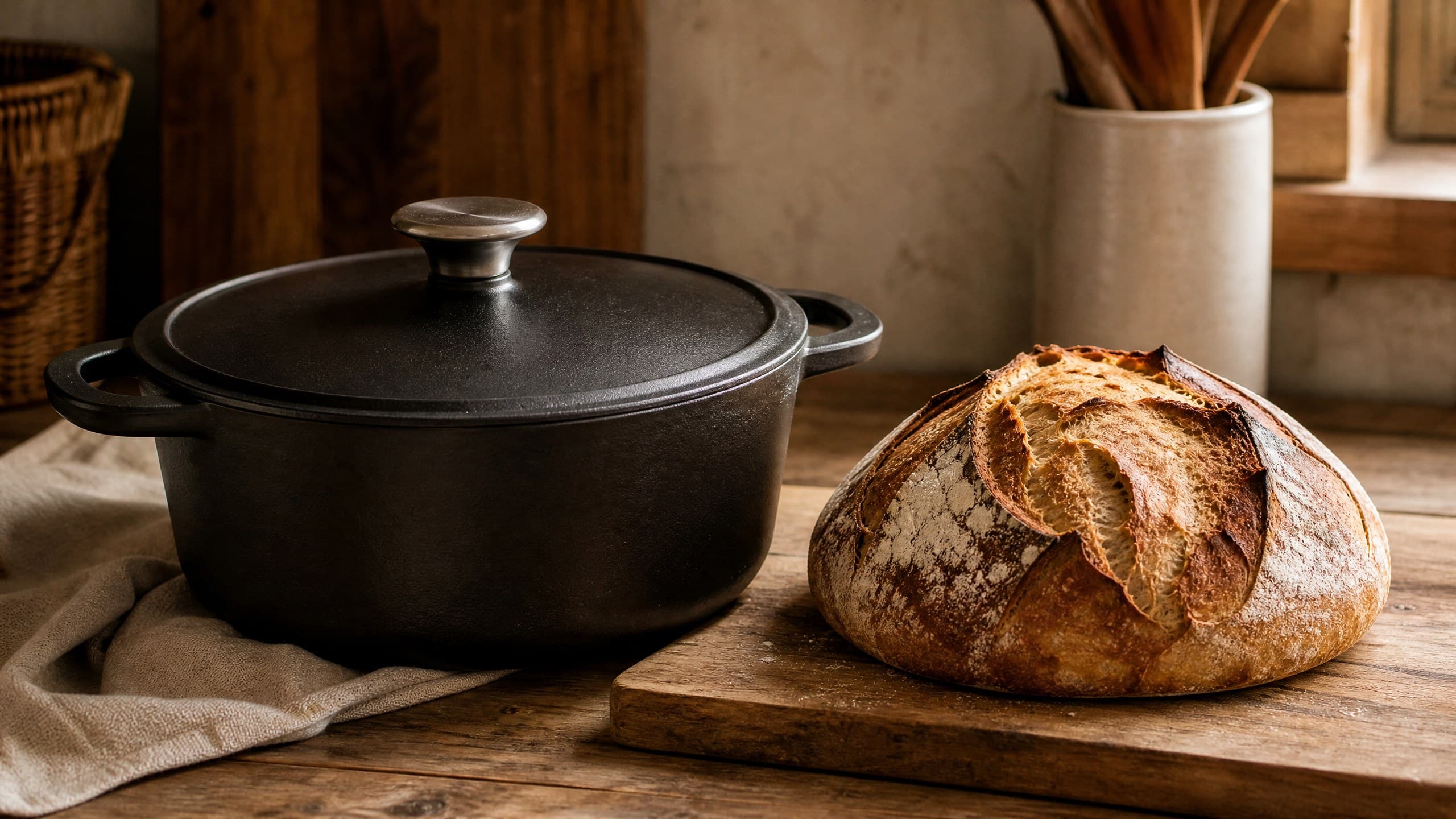
A Dutch oven for sourdough bread is the tool that turns a wet, sticky proofed loaf into a bakery-style round with a blistered, deeply colored crust. The reason is steam: a covered pot traps the moisture the dough gives off in its first minutes, keeping the surface supple so it can spring, then lets that steam vent once the lid lifts so the crust sets crisp and dark. Without that trapped steam, home ovens bake a paler, tighter loaf.
Why the Dutch oven works
Sourdough is a wet dough, and wet dough needs a humid first bake. In a professional bakery that humidity comes from a steam-injected oven; at home it comes from the lidded pot. The dough's own water becomes the steam, the lid holds it in, and the loaf gets a second rise (oven spring) it could never get in the dry heat of an open oven. We use a Dutch oven for our classic sourdough bread recipe for exactly this reason — it's the closest thing to a bakery oven most of us will own.
What to look for in a Dutch oven for sourdough
- Capacity of 4.5–5.5 qt. Big enough for a standard loaf with headroom, small enough that steam stays concentrated.
- Tight-fitting lid. The seal is what traps steam; a loose lid leaks humidity and you lose oven spring.
- Enameled cast iron. Even, steady heat and no seasoning or rust maintenance.
- Oven-safe rating of at least 450°F (230°C), ideally 500°F (260°C). You preheat the empty pot, so it must take the heat.
- Sturdy, grippy handles. You'll be lowering dough into a 450°F pot with both hands and parchment.
- Smooth, light interior (enameled). Easier to see browning and easier to clean than bare iron.
Types of pot compared
| Type | Good for | Capacity | Pros | Cons |
|---|---|---|---|---|
| Enameled cast iron round | The everyday sourdough loaf | 4.5–5.5 qt | Even heat, no rust, easy care | Heavy; check temp rating |
| Combo cooker (skillet + deep lid) | Easy loading of proofed loaves | 3.5–5 qt | Simple to load, round bottom | Two pieces to store, fewer size options |
| Bare cast iron Dutch oven | Cooks who already season iron | 5 qt | Indestructible, cheap | Needs seasoning and rust care |
| Ceramic / ceramic-coated | Lightweight alternative | 4–5 qt | Lighter, pretty | Lower temp limits, chips |
Enameled cast iron round
Pros: steady heat, no seasoning, light interior shows browning, dishwasher-safe usually. Cons: heavy to lift when full of hot dough; always confirm the oven-safe temperature.
Combo cooker
Pros: you set the proofed loaf in the skillet base and invert the deep lid over it, so there's no dropping dough into a deep hot well; gives a nice round base. Cons: two pieces to handle and store; fewer size and color choices than standard Dutch ovens.
Bare cast iron
Pros: nearly indestructible and often cheaper; takes any oven temperature. Cons: requires seasoning and careful drying or it rusts; dark interior makes browning harder to judge.
Our recommendation
One honest caveat: a Dutch oven is heavy and hot. Always preheat it empty, lower the dough in on parchment, and keep the lid on for the first 20–25 minutes only. After that, the steam has done its job and the lid comes off to finish the crust.
Buy on AmazonNew to the method? The beginner's guide to sourdough covers the full bake, and our sourdough bread recipe is built around this exact pot-and-lid approach.
Frequently asked questions
What size Dutch oven do I need for a loaf of sourdough?
A 4.5–5.5 quart (about 4.3–5.2 liter) round holds a standard 900 g dough comfortably with room to spring. Go smaller and the loaf touches the sides and bakes square; go much larger and the steam is spread thin and the crust dulls. A 5 qt round is the sweet spot for one loaf.
Enameled cast iron or bare cast iron for sourdough?
Enameled is easier: no seasoning, no rust worry, and the light interior makes it easy to see browning. Bare cast iron works just as well for baking but needs care to avoid rust. For bread, where you're only using it dry and hot, enameled is the friendlier choice and our default.
Can I use a combo cooker instead of a Dutch oven?
Yes — a cast iron combo cooker (skillet bottom + deep lid) is a great alternative. You bake with the lid as the dome and the skillet as the base, which makes loading a proofed loaf easier and gives a rounder bottom. It performs the same steam-trapping job as a Dutch oven.
Why does my Dutch oven have a lower temperature limit than my recipe?
Many enameled Dutch ovens are rated to 500°F (260°C) and some lower; check the maker's number. Our recipe bakes at 450–500°F (230–260°C), which is within range for most brands — but if yours is rated lower, simply preheat to its safe max and extend the bake slightly.