Best Banneton Basket for Sourdough
How to choose a banneton basket for sourdough: rattan round vs oval, sizes, liners and care — plus the proofing basket we use on the bench.
By Maya Ellison · Reviewed by Maya Ellison · Updated August 29, 2026 · 3 min read
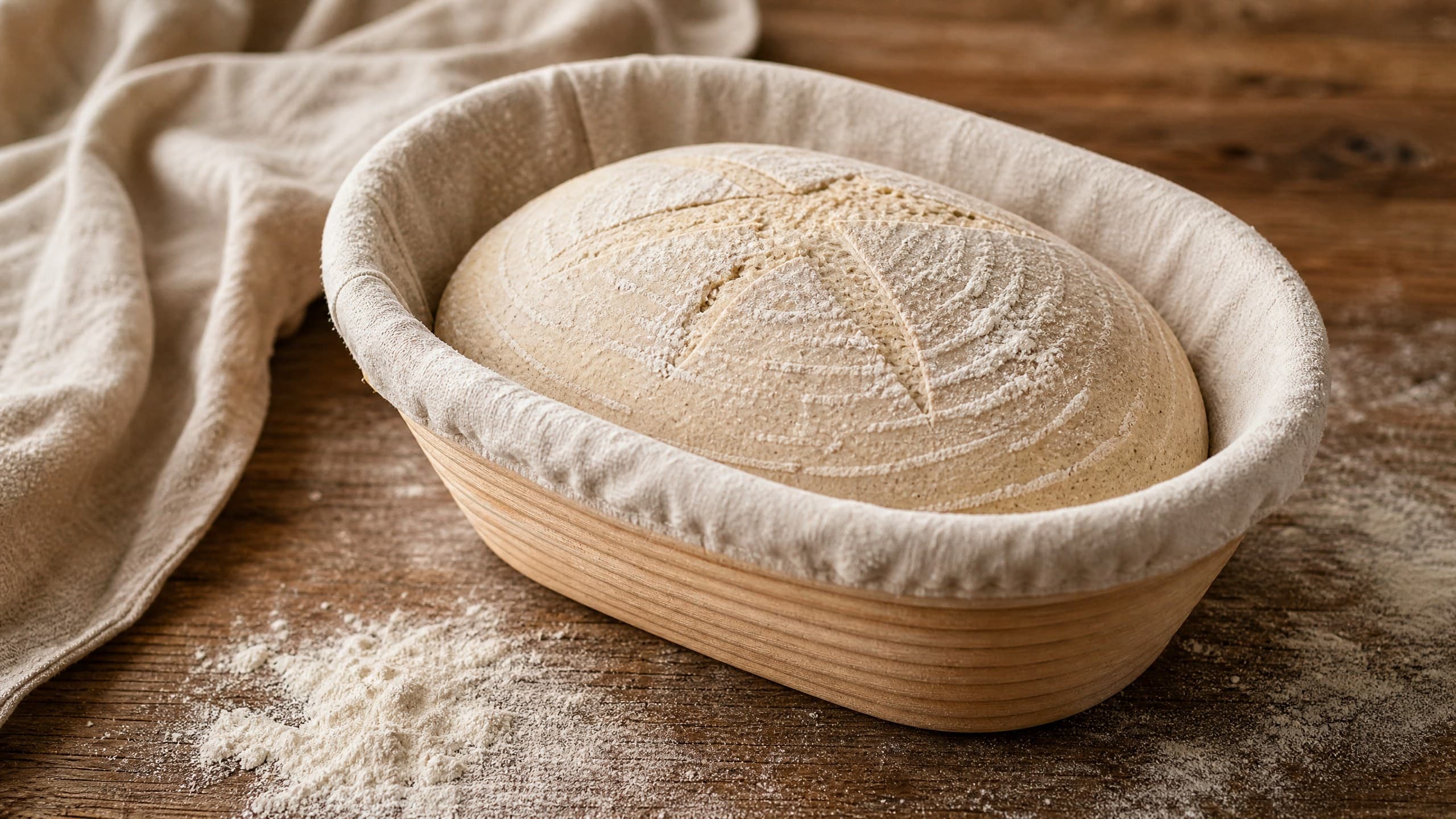
Quick answer
A banneton basket for sourdough is the quiet workhorse of the proofing step: it cradles the shaped dough while the final rise happens, holds it in a clean round or oval, and wicks moisture from the surface so the skin firms enough to score. Without it, a soft proofed loaf slumps on the counter and the blade drags instead of slicing. It's one of the cheapest tools in the kitchen and one we'd never bake without.
Why a banneton matters
After shaping, sourdough needs a final cold or room-temperature proof where the structure must stay supported. A banneton gives the dough a form to lean on so it proofs up instead of out, and the rattan pulls just enough moisture off the surface to build a skin. That skin is what lets you lay down a confident score — the cut that opens into an ear in the oven. A bowl lined with a towel can stand in, but it doesn't wick or shape the way rattan does.
What to look for in a banneton
- Natural rattan. It breathes and wicks better than plastic or metal, and it's the traditional material for good reason.
- The right size. 9-inch (23 cm) round for a standard boule; 10-inch (25 cm) oval for batards and larger loaves.
- Removable cloth liner. Lets you proof sticky doughs cleanly and doubles as a smoother-surface option.
- Smooth, splinter-free weave. You want cane that won't snag the dough or your hands.
- A stand or two baskets. Having a second means you can proof two loaves at once — handy once you bake regularly.
Types of banneton compared
| Type | Good for | Shape | Pros | Cons |
|---|---|---|---|---|
| Round rattan (9 in) | Standard boules | Round | Classic spiral, versatile | Too small for big batards |
| Oval rattan (10 in) | Batards, long loaves | Oval | Fits sandwich-style bakes | Takes more shelf room |
| Rattan with liner | Wet, sticky doughs | Round/Oval | Clean release, smooth crust option | Extra piece to wash |
| Plastic/metal proofing container | Cold bulk proof, not final shape | Various | Cheap, stackable | No wicking, no shape |
Round rattan (9 inch)
Pros: the all-rounder for a single boule; leaves the familiar spiral; fits most recipes. Cons: a touch small if you regularly bake a 1.2 kg loaf or bigger.
Oval rattan (10 inch)
Pros: holds longer batards and fits oblong bakers; the right call if your recipe makes an elongated loaf. Cons: larger footprint in the fridge; fewer liner options than round.
Rattan with liner
Pros: the liner keeps high-hydration dough from sticking and gives a smoother finish when you want one. Cons: one more thing to launder, and a damp liner must dry fully before storage.
Our recommendation
Care is simple: dust with rice flour, brush out after use, dry completely, store with air. Done right, one banneton outlives dozens of loaves.
Buy on AmazonPair it with a bread lame for scoring and the sourdough bread recipe for the full bench-to-oven flow. New bakers should start with the beginner's guide to sourdough.
Frequently asked questions
Round or oval banneton — which should I buy?
Round for boules (the classic round loaf) and oval for batards and longer sandwich-style loaves. A 9-inch round fits a standard 900 g dough; a 10-inch oval suits a larger or elongated loaf. Pick the shape that matches the loaf in your recipe, not the prettiest one on the shelf.
Do I need the cloth liner?
For wet, high-hydration doughs, yes — the liner keeps sticky dough from gluing to the rattan and gives a smoother, less-striped crust. For drier doughs you can proof straight on the bare rattan for the traditional spiral pattern. A removable liner does both jobs.
How do I clean a rattan banneton?
Never soak it. Brush out loose flour after each use, let it dry fully in open air, and store it somewhere with air flow. For stubborn stuck bits, a stiff brush and a little sunlight do more than water ever will. A well-cared banneton lasts for years.
Why is my dough sticking to the basket?
Usually too little flour or dough that's too wet for bare rattan. Dust the basket (and the liner) with rice flour or a rice/white blend — rice flour stays drier than wheat flour — and use the liner for sticky high-hydration bakes.