Sourdough Pumpernickel Bread: Dark, Dense, Deep Rye
A home sourdough pumpernickel bread: 300 g dark rye, 100 g bread flour, 300 g water, 100 g starter, cocoa and coffee for color, baked long and low into a dense, dark, molasses-sweet loaf.
By Maya Ellison · Reviewed by Maya Ellison · Updated August 29, 2026 · 3 min read
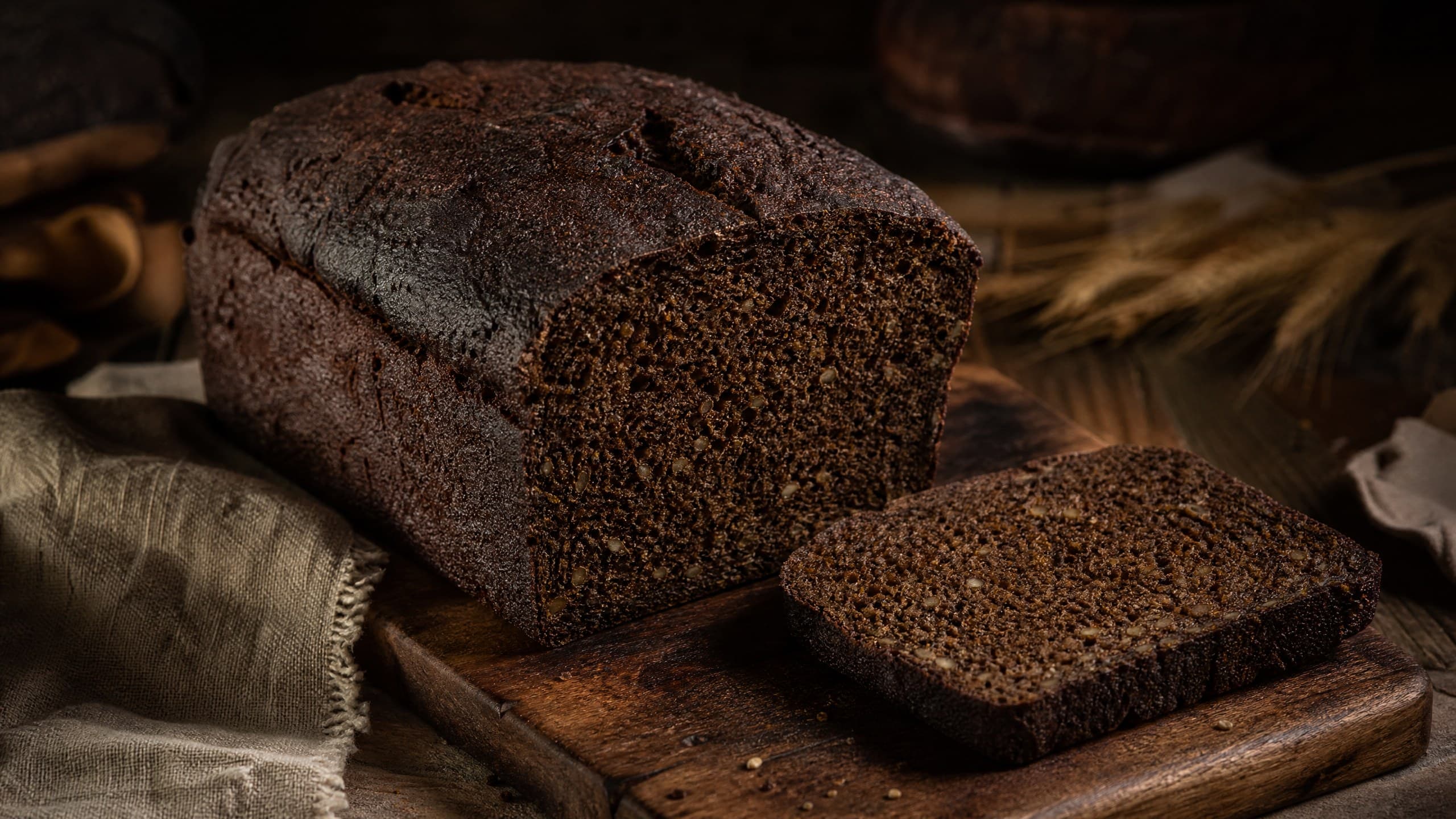
Sourdough pumpernickel bread is the dark, dense, molasses-sweet rye loaf of German tradition: 300 g dark rye, 100 g bread flour, 300 g water and 100 g starter, with cocoa and coffee lending its near-black crumb. Baked low and long, then rested overnight, it slices into tight, fudgy squares that taste nothing like ordinary bread — and keep for a week.
Why this recipe works
True pumpernickel is whole rye baked for up to 16 hours until the sugars caramelize to black. We can't run the oven that long at home, so this recipe fakes the color and depth with cocoa and coffee while keeping the honest rye fermentation. Rye has almost no gluten, which is why the loaf is dense and pan-baked rather than free-shaped.
| Ingredient | Percentage | Weight (this recipe) |
|---|---|---|
| Dark rye flour | 75% | 300 g |
| Bread flour | 25% | 100 g |
| Water + coffee | 90% | 360 g |
| Active starter | 25% | 100 g |
| Salt | 3% | 12 g |
Hydration sits high because rye flour drinks water and stays paste-like. There is no windowpane test here — just mix and trust it.
The stages, in order
The mix is a spoon job, not a hand job. Stir everything into a thick paste. Rye's pentosans (not gluten) hold the structure, and they don't need kneading.
Bulk fermentation is quiet. The dough won't double; it just loosens, bubbles faintly and smells sweet and sour. Three to four hours is plenty.
The pan does the work. Scrape the slack dough in, smooth the top, and let the pan give it a shape rye never could on its own.
The bake is low and slow at 325°F (160°C) so the center cooks through without burning the crust. An internal thermometer is the only reliable doneness check.
The overnight rest is non-negotiable. Wrap the cooled loaf and wait. Slicing warm gives you a gummy smear; slicing tomorrow gives you clean, fudgy slices.
Common mistakes (and the fix)
- Gummy center: underbaked or cut too soon. Bake to 205-210°F (96-99°C) and rest overnight.
- Stuck to the pan: parchment and oil skipped. Always line and grease a rye pan.
- Tastes like chocolate: too much cocoa. Use 15 g unsweetened only for color, never sweetened.
- Cracked, dry loaf: over-proofed or baked too hot. Keep the proof short and the oven at 325°F (160°C).
Serving ideas
Pumpernickel is built for strong toppings: smoked salmon, cream cheese, cured meats, or just butter. It's the classic base for open-faced rye snacks. For more rye work, the 90% rye loaf goes further, and the sourdough starter guide covers building a rye-friendly starter.
Before you bake
This recipe needs an active sourdough starter — a rye starter gives the most authentic flavor. If yours needs building, the sourdough starter guide gets it to peak. The proofing bread dough guide helps with rye's subtle rise, and the sourdough troubleshooting hub covers the rest. New here? Start with the beginner's guide to sourdough.
Ingredients
Weights in grams are the source of truth; cup measures are approximate.
- 300 g dark rye flour (about 2 1/2 cups), such as whole rye or pumpernickel-grade rye
- 100 g bread flour (about 3/4 cup), for structure
- 300 g water at 80-85°F / 27-29°C (about 1 1/4 cups), plus 20 g for the starter
- 100 g active rye or wheat sourdough starter (about 1/3 cup), fed to peak
- 12 g fine sea salt (about 2 teaspoons)
- 15 g unsweetened cocoa powder (about 2 tablespoons), for color, not chocolate flavor
- 60 g strong brewed coffee, cooled (about 1/4 cup), for depth and darkness
- 20 g blackstrap molasses (about 1 tablespoon), optional, for a sweeter traditional note
Method
Mix: combine the dark rye flour, bread flour, active starter, 300 g water, cocoa powder, cooled coffee and molasses in a bowl. Mix with a spoon or wet hand until a thick, sticky, paste-like dough forms. Rye has almost no gluten, so there is no kneading to do.
Add salt: sprinkle the salt in and mix until dispersed. The dough will be wet and slack, more like a stiff batter than a wheat loaf — this is correct for rye.
Bulk ferment: cover and leave at 74-78°F (23-26°C) for 3-4 hours. Rye dough won't dome or double; look for a few surface bubbles and a slightly risen, aromatic mass.
Prepare the pan: line a small 8x4 inch (20x10 cm) loaf pan with parchment and brush with oil. Rye sticks badly, so don't skip this.
Shape and fill: scrape the dough into the pan and smooth the top with a wet spatula. It won't hold a shape on its own, so the pan does the structuring.
Proof: cover and proof at room temperature 45-60 minutes. Pumpernickel proofs briefly; do not wait for a big rise. A few cracks on top are fine.
Bake low and long: preheat the oven to 325°F (160°C). Bake the covered loaf (tent with foil) for 60 minutes, then uncover and bake 25-30 minutes more, until the internal temperature reaches 205-210°F (96-99°C) and the crust is very dark.
Steam-rest then cool: turn out, wrap the warm loaf in a clean towel and let it sit overnight at room temperature. Pumpernickel needs a long rest to set its dense crumb — slice the next day, not the same evening.
Frequently asked questions
Why does pumpernickel use cocoa and coffee?
Traditional German pumpernickel gets its near-black color from a very long, slow bake of whole rye. At home we can't replicate that 16-hour oven, so unsweetened cocoa and strong coffee deepen the crumb's color and add roasty depth without making the bread taste like dessert.
Why is my pumpernickel so dense?
Density is the point — real pumpernickel is a close, heavy rye. If it's gummy rather than just dense, it was underbaked or sliced too early. Bake to 205-210°F (96-99°C) internal and rest the wrapped loaf overnight before cutting.
Can I make pumpernickel with 100% rye?
Yes, swap the 100 g bread flour for another 100 g dark rye. The loaf will be even denser and more fragile and must be baked in a pan. The small amount of bread flour here simply helps it slice cleanly.
How long does sourdough pumpernickel keep?
Beautifully. Wrapped tightly, it stays moist for a week and the flavor deepens. It also freezes well sliced — toast straight from frozen for the best texture.