Sourdough Pita Bread
Soft sourdough pita bread with a real pocket, leavened by an active starter and baked hot so each round puffs and splits.
By Maya Ellison · Reviewed by Maya Ellison · Updated August 29, 2026 · 2 min read
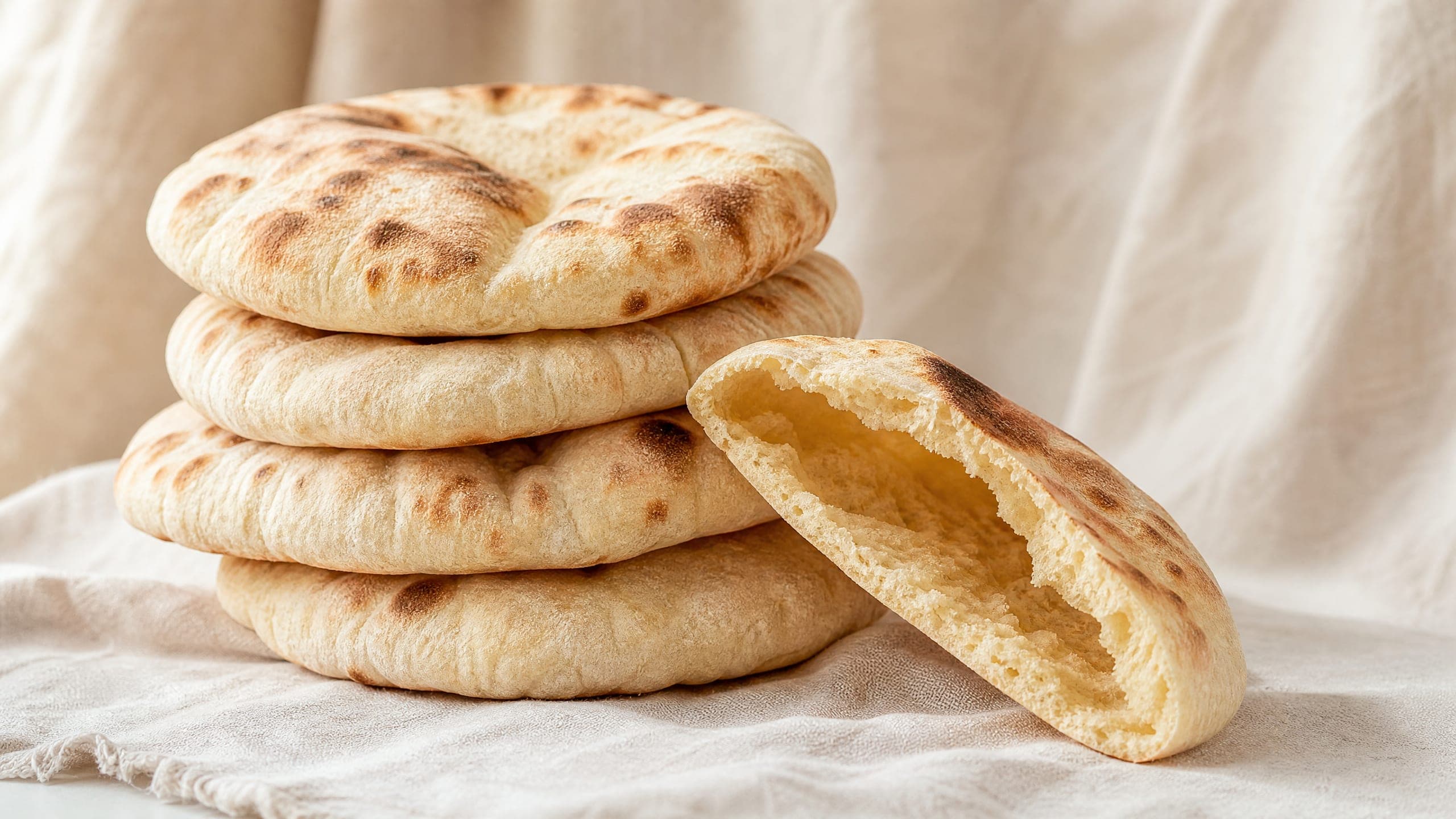
Sourdough pita bread is the pocket flatbread: an active-starter dough rolled thin and baked screaming hot so each round balloons and splits into a real pocket. No store-bought chewiness, just a soft, slightly tangy bread you can stuff, dip or tear. The puff is the moment — miss the heat and you get a flatbread instead of a pita.
Why this recipe works
Pita puffs because trapped steam inside the dough lifts the top layer away from the bottom at high heat. A moderately stiff dough (around 65% hydration) and a thin, even roll let that steam do its job. The pocket is physics, not luck — get the heat and thickness right and it happens every time.
| Ingredient | Percentage | Weight |
|---|---|---|
| Bread flour | 100% | 400 g |
| Water | 65% | 260 g |
| Active starter | 25% | 100 g |
| Salt | 2% | 8 g |
Roll thin and bake hot — those two things decide the pocket.
Getting the puff
Heat your surface to 500°F or more and don't crowd it. Lay the round on, and within a minute you should see it dome; flip and finish. Stacking the cooked pitas under a towel keeps them pliable while the rest bake.
Common mistakes
- No pocket: oven too cool or rolled too thick. Max the heat and roll thin.
- Tough, dry pita: over-baked. Pull at first puff.
- Stuck to the peel: too much bench flour or rested too long. Light dusting only.
- Flat, dense rounds: under-proofed. Let them get visibly puffy first.
Before you bake
Build a peak starter with the sourdough starter guide. The dough poke test helps judge the short proof, and the sourdough troubleshooting hub covers density. The base method is the sourdough bread recipe, and storage tips are in the bread storage guide.
Ingredients
Weights in grams are the source of truth; cup measures are approximate.
- 400 g bread flour
- 260 g water at 80°F / 27°C
- 100 g active sourdough starter, at peak
- 8 g fine sea salt
- 10 g olive oil (optional, for softer dough)
Method
Mix the flour, water, starter, salt and olive oil into a dough. Knead 6-8 minutes until smooth.
Bulk ferment 4-5 hours at 74-76°F with two stretch-and-folds in the first hour.
Divide into 8 pieces of about 80 g, shape into tight balls, rest 15 minutes, then roll each into a 6-7 mm thick round.
Proof the rounds 30-45 minutes at room temperature until slightly puffy, or cold-retard 8-12 hours and temper 20 minutes.
Heat a baking steel, stone or heavy skillet to 500°F (260°C). Bake each pita 1-2 minutes per side until it balloons and the pocket forms.
Stack the cooked pitas under a towel to steam soft, and cool slightly before opening.
Frequently asked questions
Why didn't my pita puff into a pocket?
Usually the oven wasn't hot enough or the dough was rolled too thick. Crank the heat to 500°F plus and keep the rounds thin and even so the steam can separate the layers.
Why cold-retard the dough?
An overnight retard deepens the sour flavor and makes the rounds easier to roll thin. Temper them before baking so they spring in the heat.
Can I use a skillet instead of an oven?
Yes — a dry, screaming-hot cast-iron skillet works well and gives more control. Press gently and watch for the puff.
Why is my pita chewy and tough?
Over-baked or too much flour dusted on while rolling. Pull them the moment they puff and keep the bench lightly floured.