How to Store Sourdough Bread (Keep the Crust Crisp)
How to store sourdough bread so the crust stays crisp and the crumb stays moist: counter methods, paper bags, freezing sliced and reviving a stale loaf.
By Maya Ellison · Reviewed by Maya Ellison · Updated August 29, 2026 · 5 min read
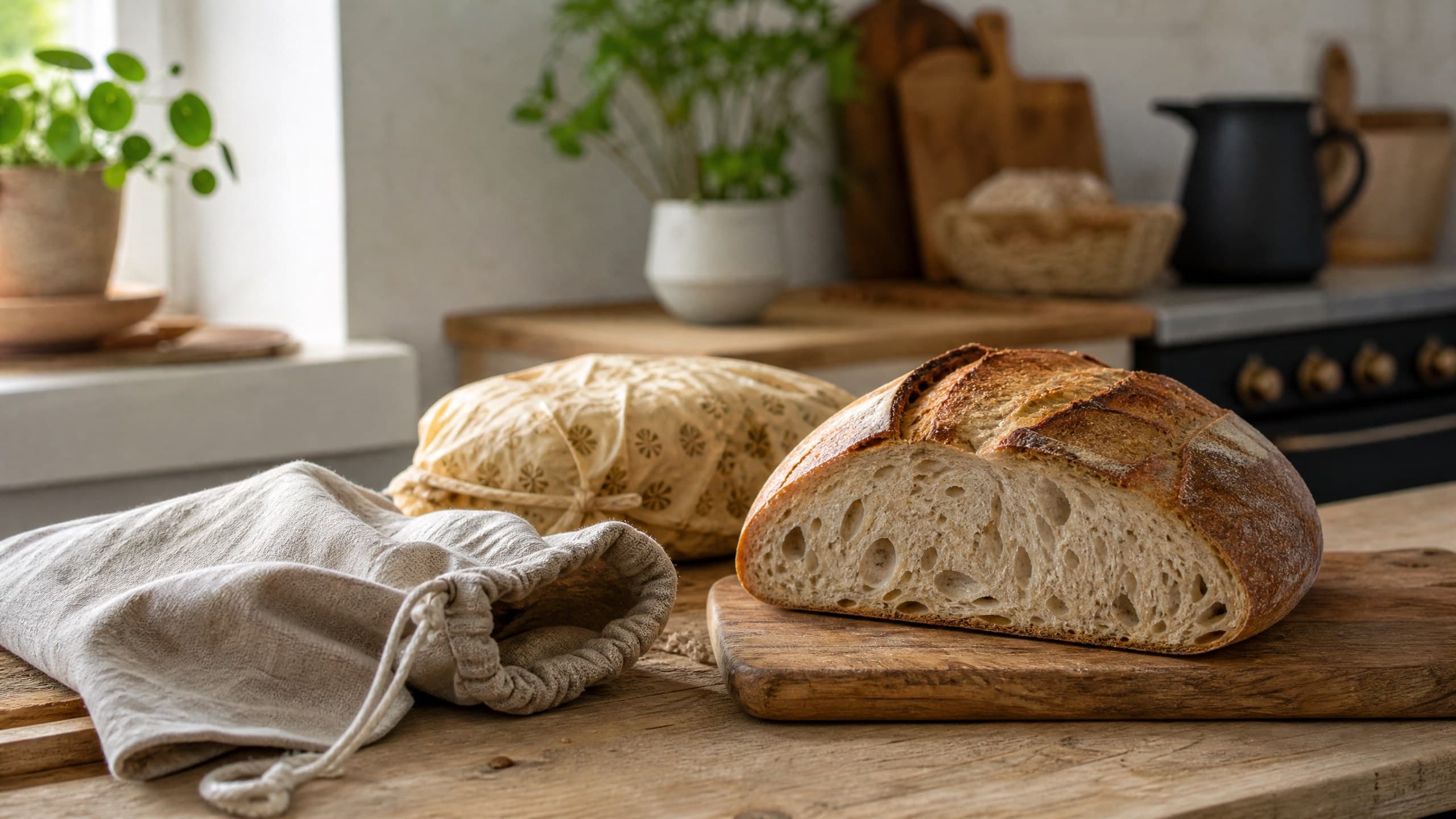
Quick answer
A loaf you spent two days building deserves better than a zipped plastic bag that turns the crust to rubber by morning. The trick to how to store sourdough bread is simple: keep the crust breathing at room temperature for the short term, and freeze it for the long term. Skip the fridge entirely. This guide covers the counter methods that hold a crisp crust, the right way to freeze a loaf, and how to bring a stale one back to life.
The rule: counter for now, freezer for later
Sourdough is alive with moisture and acid, and those two facts decide how you store it. The crust wants to stay dry and crisp; the crumb wants to stay moist. A sealed container traps the crumb's moisture against the crust and softens it. The fridge does something worse — it hardens the crumb faster than the counter ever could. So the plan is: breathe on the counter for a few days, freeze for everything beyond that.
Let the loaf cool completely before you store it — at least 4 hours, ideally overnight. A warm loaf sealed up sweats inside its own wrapper and you'll trade a crisp crust for a soggy one.
Counter storage: cut side down
For the first 2–3 days, the easiest method is also the best:
- Cut side down on a board. Stand the loaf cut-side down on a cutting board or clean counter. The cut face, now the most exposed to drying, is pressed against a surface, so the crumb stays moist while the rounded crust keeps breathing.
- Paper bag. Drop the whole loaf in a paper bag, folded closed. The paper slows moisture loss but lets the crust stay crisp far better than plastic.
- Linen or cotton cloth. Drape a clean tea towel over the loaf. It shields it from air without sealing it, the old bakery trick.
All three keep the crust honest for a couple of days. Day one is always best; by day three the crust is softer but the bread is still good.
Paper bag vs plastic
Plastic is the enemy of a crisp crust. A zip bag or cling film traps moisture and within hours the shatter turns to chew. If you must use plastic, only do it for freezing (below), never for counter storage. Paper and cloth are the middle path — protection without sealing.
Freezing: the long-term winner
When you know you won't finish the loaf in three days, freeze it. Done right, frozen sourdough is nearly indistinguishable from fresh once thawed.
- Slice first. A whole frozen loaf is a pain to thaw evenly. Slice it, and you can pull one piece at a time.
- Wrap tight. Wrap each slice or half in plastic wrap or foil, then drop the bundles into a freezer bag. Press the air out before sealing.
- Label and freeze. Note the date. It keeps 2–3 months.
- Use from frozen. Toast slices straight from the freezer, or warm a half-loaf at 350°F (175°C) for 10–15 minutes. No need to thaw on the counter.
Freezing stops staling cold, which is exactly what the fridge fails to do.
Reviving stale bread
Even a day-four loaf can be rescued. Staling is mostly reversible:
- Whole loaf: mist or run the crust under cool water, then bake at 350°F (175°C) for 5–10 minutes. The water steams the crumb while the oven crisps the crust.
- Single slice: just toast it. The heat softens the crumb and re-crisps the surface in one move.
This won't fix mold or a genuinely rotten smell — that's the one point to toss it. But a merely dry, stale loaf comes back surprisingly well.
What NOT to do
- Don't refrigerate it. The cold dries the crumb and dulls the crust faster than the counter. The fridge is for leftovers, not sourdough.
- Don't seal it in plastic on the counter. You'll lose the crust within a day.
- Don't store a warm loaf. Sweat is the quiet killer of crisp crusts.
- Don't slice until you need to if you're keeping it on the counter — an intact loaf dries slower than an opened one.
What to do with leftover sourdough bread
A loaf that has outlasted the first few days is not a problem — it is an ingredient. Sourdough's sturdy crumb and mild acid make it the best bread for second acts, and using it up is the flip side of storing it well:
- French toast — the sourdough french toast recipe was built for day-old slices that have lost their crunch.
- Stuffing — cubed stale sourdough makes the best sourdough stuffing for a holiday roast.
- Bread bowls — a round loaf hollowed out becomes sourdough bread bowls for chowder or soup.
- Garlic bread — a baked loaf split and buttered turns into sourdough garlic bread in minutes.
- Croutons and grilled cheese — both are classic ways to spend the last heel; cube it for croutons or griddle two slices with cheese.
The acid that keeps sourdough from molding quickly is the same thing that makes these hold up better than commercial bread would.
Frequently asked questions
Can you freeze sourdough bread?
Yes, and it's the best long-term method. Slice the loaf first so you can pull single pieces, wrap each slice or half in plastic or foil, then seal in a freezer bag with the air pressed out. Frozen properly it keeps 2–3 months with almost no loss in quality — better than any counter method past day three.
Why shouldn't you refrigerate sourdough bread?
The cold of a fridge accelerates starch retrogradation, which makes the crumb firm and dry and the crust leathery within a day or two. Staling in the fridge is faster than at room temperature. The freezer is different: its cold is dry and still, so the loaf barely changes until you thaw it.
How do you keep sourdough crust crispy?
Keep it out of sealed plastic at room temperature and let the crust breathe. Rest the loaf cut-side down on a bare board or in a paper bag, which slows drying while letting moisture escape the crust. A linen or cotton cloth draped over the loaf works too. If the crust softens, a few minutes in a hot oven brings it back.
How long does sourdough bread last?
On the counter, a well-baked loaf stays good for 2–3 days, with the crust at its best on day one. Freezing extends that to 2–3 months. Sourdough keeps longer than commercial bread because its acidity slows mold, but it is still real bread — trust your nose and eyes before eating.
How do you revive stale sourdough bread?
Run the crust under cool water or mist it lightly, then heat the loaf at 350°F (175°C) for 5–10 minutes. The water steams the crumb soft again while the oven re-crisps the crust. For a single stale slice, just toast it — the heat does the same job without the fuss.