Sourdough Bread Bowls
Round sourdough bread bowls baked from an active starter, hollowed out to cradle soup, stew, chili or chowder with an edible, chewy wall — plus store-bought premade bread bowl shortcuts and scoop ideas.
By Maya Ellison · Reviewed by Maya Ellison · Updated August 29, 2026 · 4 min read
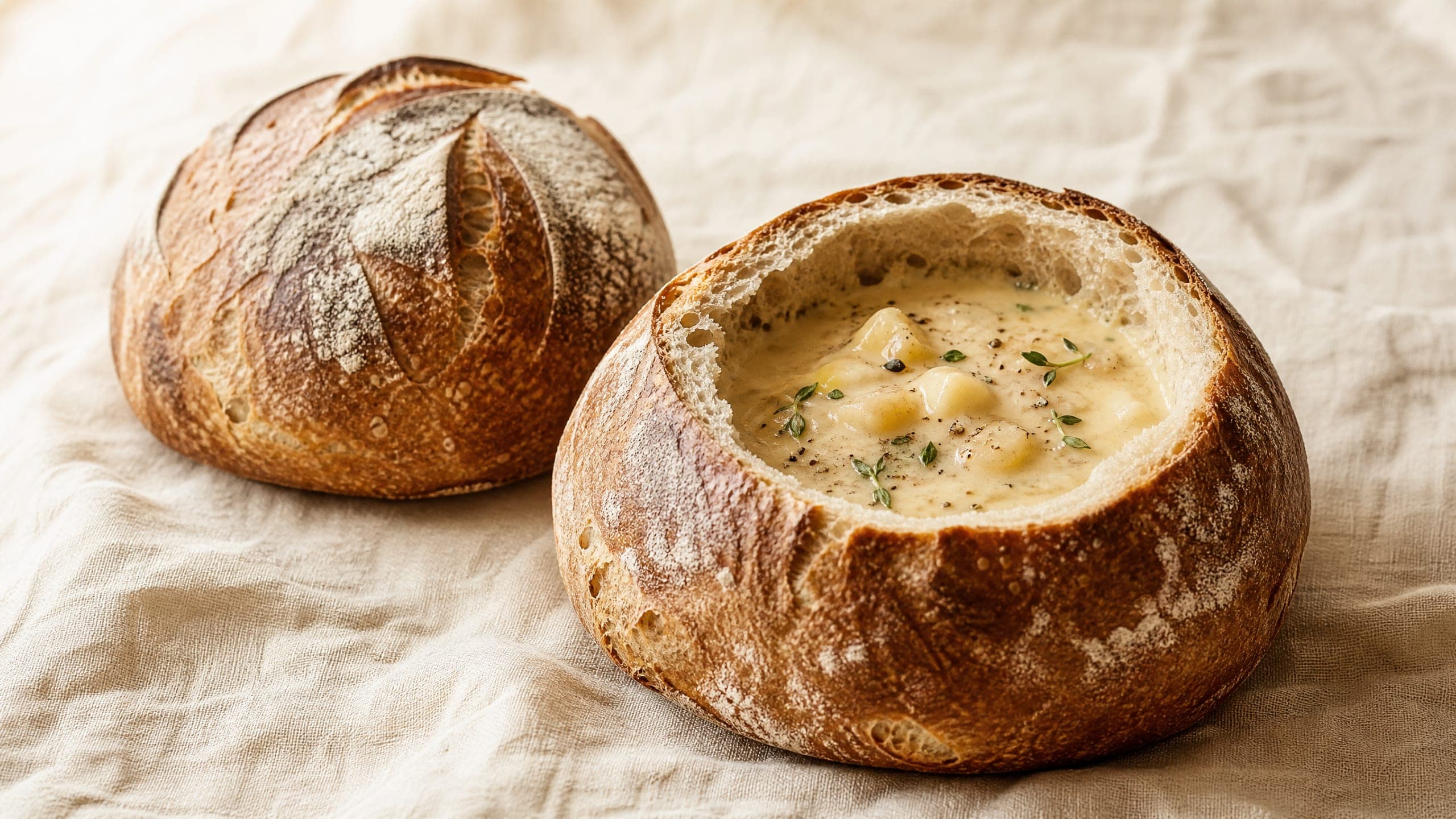
Sourdough bread bowls turn a loaf into the bowl: a round, crusty boule hollowed out to cradle soup, chili or chowder, with an edible wall that soaks up every last drop. Built from a standard active-starter dough and shaped into tight rounds, they're sturdy enough to hold a full serving of hot liquid. It's dinner and the plate at once.
Why this recipe works
The bowl is just a well-shaped boule baked hard. Tight surface tension and a thorough bake make a thick, rigid wall, while the crumb inside stays soft enough to scoop out cleanly. A firm dough (70% hydration) holds its dome instead of spreading flat.
| Ingredient | Percentage | Weight |
|---|---|---|
| Bread flour | 100% | 500 g |
| Water | 70% | 350 g |
| Active starter | 20% | 100 g |
| Salt | 2% | 10 g |
Shape tighter than you would a normal boule — the wall depends on it.
Shaping for a wall
After preshape and rest, pull each piece into a very taut round so the skin is smooth and drum-tight. That tension is what keeps the dome up and stops the bowl from sinking when you carve it. Dust well so it releases from the banneton.
Common mistakes
- Flat, spread bowls: too loose a shape or over-proofed. Tighten the skin and shorten the final proof.
- Soggy bottom: thin wall or broth added too early. Bake hard and oil the inside.
- Tough to hollow: under-baked interior. Bake until the crust is deep golden and hard.
- Cracked dome: no steam vent. Score a small slash before baking.
What to serve in sourdough bread bowls
A sourdough bread bowl is a great fit for any thick, hearty filling — the edible, chewy wall soaks up the last of the soup while holding its shape. Thicker fillings work better than thin broths, which can leach into the bread too quickly and go soggy. Great choices include:
- Clam chowder — the classic New England pairing; creamy and savory, a natural match for the crusty wall.
- Tomato soup — simple and bright, made richer as the bread soaks up all the flavor.
- French onion soup — the savory broth and melted cheese are excellent against the sourdough crust.
- Broccoli cheddar — thick and creamy with tender broccoli florets.
- Chili and beef stew — hearty chunks that give and soak without turning to mush.
- Spinach-artichoke dip — warm and cheesy, perfect for tearing off the bowl in pieces.
Thicker is better: if your soup is too thin, it will soak into the bread quickly and the bowl will turn soggy before you finish.
Store-bought shortcut: premade bread bowls
Don't have time for a two-day ferment? Premade sourdough bread bowls are easy to find. Costco and Sam's Club sell frozen sourdough bread bowls in the freezer aisle, and many supermarket bakeries carry them fresh. You'll also find them from gourmet bakeries and flour brands like King Arthur. Just re-crisp a frozen bowl in a hot oven (about 10 minutes at 230°C / 450°F) before filling, and you get a bakery-style bowl without baking from scratch.
How to hollow out a bread bowl
Cutting and hollowing the baked bowls is quick once they're completely cool (a hot or warm bowl goes gummy and is much harder to carve):
- With a small sharp knife — not a serrated one — cut a circle into the top with a slight downward angle.
- Lift the cap off and set it aside; it's perfect for dipping into the soup.
- Scoop out the soft interior with your fingers or a spoon, leaving a wall about 1.5 cm thick all around.
- Cube and toast the scooped-out crumbs for croutons.
Before you bake
Get your starter to peak with the sourdough starter guide. The shaping guide is key for tight rounds, and the proofing guide covers timing. For the base loaf, see the sourdough bread recipe, and fixes live in the sourdough troubleshooting hub.
Nutrition
Ingredients
Weights in grams are the source of truth; cup measures are approximate.
- 500 g bread flour
- 350 g water at 80°F / 27°C
- 100 g active sourdough starter, at peak
- 10 g fine sea salt
- Extra flour, for dusting
Method
Mix the flour, water and starter into a shaggy dough. Rest 30 minutes, add the salt and pinch it in.
Bulk ferment 4 hours at 74-76°F with three stretch-and-folds 30 minutes apart in the first 90 minutes.
Divide into 4 pieces of about 250 g. Preshape into tight rounds, rest 20 minutes, then shape into very taut boules so they hold their dome in the oven.
Place seam-side up in small bannetons or bowls dusted with flour and cold-proof 12-16 hours in the fridge.
Preheat a Dutch oven or baking stone to 475°F (245°C). Bake each bowl seam-side down 25 minutes covered, then 12-15 minutes uncovered until deep golden and hard.
Cool fully, then cut a 2-3 cm cap off the top and scoop out the soft interior, leaving a 1.5 cm wall all around.
Frequently asked questions
Why bake them as rounds instead of one big loaf?
Individual boules give you a thick, even wall and a self-sealing dome that won't collapse under hot soup. One large loaf makes a weak, soggy bowl.
How do I keep the bowl from getting soggy?
Bake the walls hard, cool completely, and brush the inside with a little olive oil or toast the hollowed shell briefly before filling. Brothy soups still need eating promptly.
Can I use any sourdough recipe?
Yes, but a firmer, well-structured boule works best. A very open, floppy crumb makes a bowl that falls apart — the [sourdough bread recipe](/sourdough-bread-recipe) is a good base.
What do I do with the scooped bread?
Cube and toast it for croutons, or use it as the cap to dunk. It's the best part for soaking up the last of the soup.
What is the best soup or stew to serve in a sourdough bread bowl?
Thicker, heartier fillings hold up best — clam chowder, tomato bisque, broccoli cheddar, French onion, chili or beef stew. They soak into the wall slowly instead of turning it soggy the way a thin broth does.
Can I use these bread bowls for dip?
Yes — a hollowed boule makes a great edible dip bowl for spinach-artichoke, loaded baked potato or a layered Mexican dip. Bake a couple of extra bowls and slice them into dippers.
Can I freeze bread bowls or make them ahead?
Baked and fully cooled bowls freeze well for a few weeks; wrap them tightly and re-crisp in a hot oven before filling. Freezing the dough after cold proof works too, but the baked bowl keeps its texture better.
Do I need to toast the inside before filling?
You can toast the hollowed shell or brush it lightly with olive oil to help it resist sogginess, but a thoroughly baked, hard crusty bowl will hold most hearty soups without it.
Can I buy premade sourdough bread bowls instead of baking?
Yes — Costco and Sam's Club sell frozen sourdough bread bowls, and many supermarket bakeries or King Arthur flour kits carry them. A quick reheat in a hot oven revives the crust before you fill.
Are sourdough bread bowls healthier than regular bread bowls?
Like sourdough generally, the long fermentation lowers phytate, which may help your body absorb the minerals in the flour — see the sourdough nutrition guide for the science.