High Fiber Sourdough Bread Recipe
What fiber in sourdough bread really means, plus a high-fiber loaf with wheat bran, ground flax and oat bran that rises well and stays soft.
By Maya Ellison · Reviewed by Maya Ellison · Updated August 18, 2026 · 3 min read
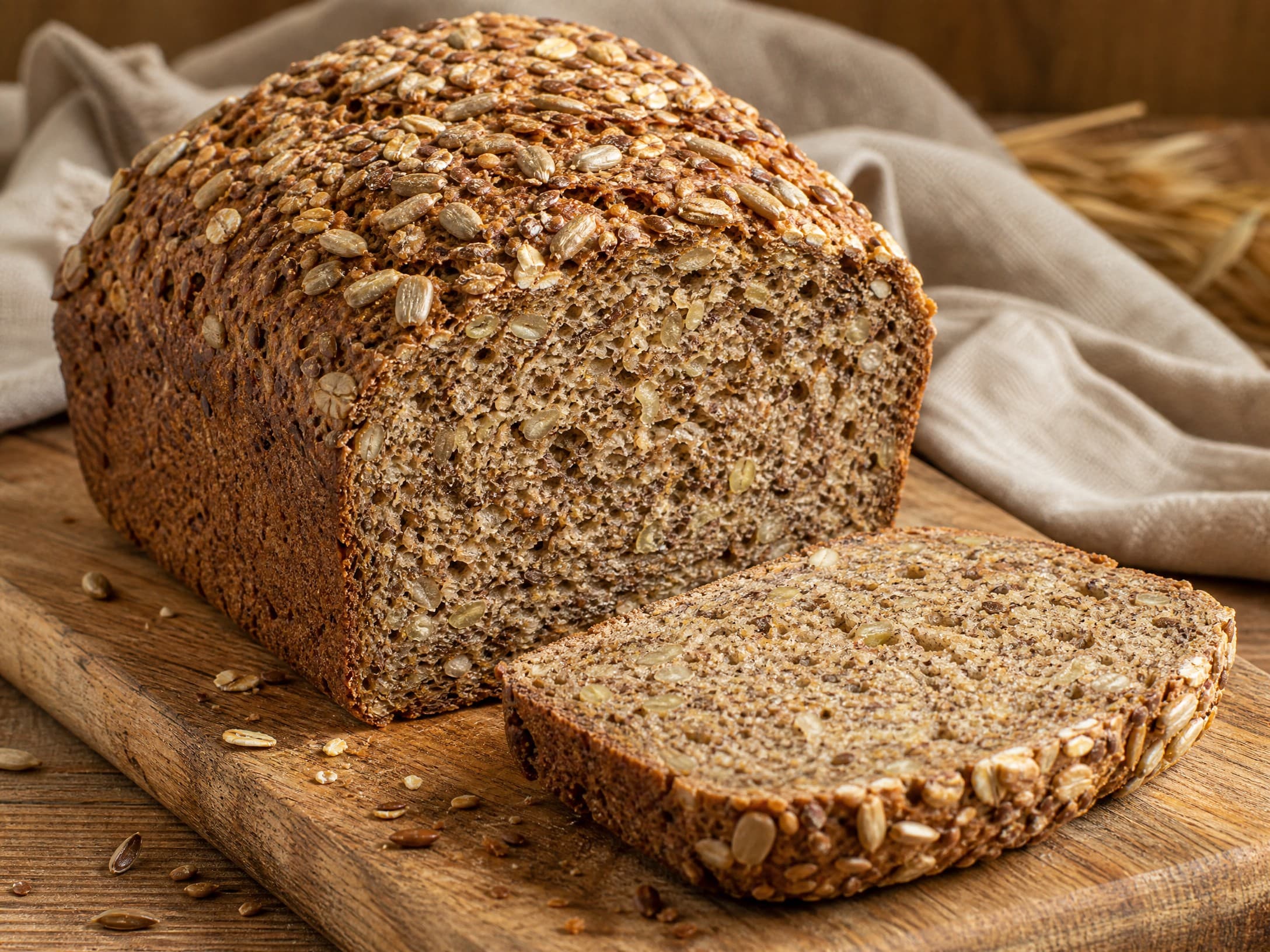
What does fiber in sourdough bread actually mean? It's a fair question, because the phrase gets thrown around a lot and defined rarely. The honest version: fiber is the plant material your body doesn't fully digest — the bran of the wheat berry, the husk of the seed — and this loaf takes that idea seriously. This high fiber sourdough bread recipe blends white flour with 30% whole wheat, wheat bran, ground flaxseed and oat bran at an 80% hydration that rises into a soft, sliceable everyday loaf instead of the doorstop you'd reasonably expect. It's a healthy sourdough bread in the plainest sense: it's good bread, made with more of the grain than most breads use.
Why this recipe works
Fiber-rich doughs fail in a predictable way: the bran and seeds starve the gluten of both water and movement and the loaf bakes dense and dry. This recipe pre-empts that with two moves — a bran soak and an elevated hydration. The soak re-hydrates the bran and flax before they ever meet the dough, so the main dough keeps its full 80% water for gluten development. The hydration itself gives the gluten room to stretch around all the fibrous particles. The bran gets toasted first, too, because toast turns raw bran's cardboard taste into something nutty and warm. Nothing here fights the fiber; everything accommodates it.
What fiber in bread actually is
Bread fiber lives almost entirely in the whole grain's outer layers — the bran — and in seeds. White flour is the starchy inside of the grain with the fiber-rich coat milled away, which is why this recipe's whole wheat, wheat bran and seeds matter more than any single miracle step. Each brings something: wheat bran is the workhorse (mostly insoluble fiber, the kind that adds bulk), oat bran brings a softer, soluble kind and ground flaxseed contributes both fiber and a gentle nuttiness. Grinding flax matters — whole seeds mostly pass through; ground flax actually shares its goodness with the crumb.
What sourdough fermentation changes
This is where the science gets genuinely interesting and where we'll stay carefully honest. Research suggests that long sourdough fermentation may reduce phytic acid — the compound in grains that can block mineral absorption — and may make some of the fiber and starches easier to digest than in rapid commercial bread. Both are "may" statements: science supports them as plausible effects, not certainties and the size of the effect varies with fermentation time. What is certain: this dough ferments for 24-plus hours from mix to oven, longer than most bread anywhere, so whatever benefit long fermentation offers, this loaf gets it. If you want the mechanics behind this, the autolyse and proofing guides cover the process in detail.
Swaps and variations
The formula is forgiving within reason. Swap oat bran for more wheat bran, or use chia seeds instead of flax — keep the seeds ground or soaked. Add 80 g of toasted sunflower seeds at the final fold for texture. Cut the whole wheat to 200 g and bump the bread flour to 600 g for a lighter crumb at the same fiber-ish character. Whichever way you lean, keep the soak and keep the hydration: this bread's softness is an engineering decision, not a happy accident.
Storage
The bran and seeds do double duty here — the extra fiber and fat slow staling, so this loaf keeps 4-5 days cut-side down on the board and up to a week wrapped. It toasts beautifully, browns fast (the fiber accelerates caramelization, so watch the toaster) and freezes whole or sliced for 3 months. Cold-proofed dough also keeps two days in the fridge before baking, which makes this a forgiving loaf for busy weeks: mix Tuesday, bake Thursday, eat all weekend.
Ingredients
Weights in grams are the source of truth; cup measures are approximate.
- 500 g bread flour
- 300 g whole wheat flour
- 120 g wheat bran
- 50 g ground flaxseed (golden or brown)
- 30 g oat bran
- 800 g water, room temperature, for the main dough
- 50 g boiling water, for soaking the bran
- 200 g active sourdough starter (100% hydration)
- 22 g fine salt
Method
Spread the wheat bran and oat bran on a dry sheet pan and toast at 325°F for 8 minutes until fragrant. Cool completely.
Pour the 50 g of boiling water over the toasted bran and the ground flaxseed in a small bowl, stir and set aside to cool — the soak pre-hydrates everything so the bran won't steal water from the finished dough.
In a large bowl, mix the bread flour, whole wheat flour and the 800 g of water until no dry flour remains. Cover and rest for 45 minutes.
Add the starter and salt, then mix with a wet hand for 2-3 minutes until fully incorporated.
Fold the soaked bran mixture into the dough and mix until it's evenly distributed — the dough will feel bumpier and drier, which is why the extra soak water exists.
Rest 30 minutes, then perform 4 sets of stretch-and-folds, spaced 30 minutes apart. The bran makes the dough feel less elastic; fold firmly but don't tear.
Bulk ferment for 4-5 hours at 75-78°F, until the dough has grown about 60%. Bran slows fermentation — trust the look, not the clock.
Turn onto a lightly floured surface and shape into a round or batard with a bench scraper — gentle, decisive moves.
Seam-side up in a generously floured banneton. Cover and cold-proof 12-16 hours in the fridge.
Preheat a Dutch oven to 475°F for 45 minutes. Turn the dough onto parchment, dust with flour and score a single deep slash.
Bake covered at 475°F for 25 minutes, then uncovered at 450°F for 25-30 minutes, until the center reads 205-208°F and the crust is deeply browned.
Cool on a rack for at least 2 hours before slicing — a warm knife squashes the soft, fiber-rich crumb.
Frequently asked questions
Is sourdough bread lower in carbs than regular bread?
Any honest answer is a modest one. Research suggests sourdough fermentation may reduce some starches the body digests quickly and the fiber here slows digestion further — so this loaf may have a gentler effect on blood sugar than an equal slice of plain white bread. But the differences are modest, not dramatic and this site doesn't give medical advice. If you're changing your diet for a health reason, talk to someone who's qualified to advise you.
Does fermentation reduce the gluten in this bread?
Fermentation changes how gluten behaves, not how much of it there is. Over many hours, sourdough's enzymes partially break down gluten proteins, which is one reason long-fermented bread is easier to digest for some people — research suggests this, though it varies person to person. But this loaf is firmly a wheat bread and is not low-gluten or gluten-free. Anyone avoiding gluten for medical reasons should not consider it safe.
How much fiber does this loaf have?
Substantially more than a white loaf — roughly two to three times as much per slice, because wheat bran is mostly fiber and the flaxseed and oat bran add more. Exact numbers depend on your flour's milling and we deliberately don't print a nutrition panel, because bread nutrition varies by brand and batch. The short version: this is one of the more fiber-rich loaves you can bake at home and you'll notice the difference long before any chart would.
Do I have to toast the bran and soak it?
Toast the bran, yes — a raw wheat bran has a somewhat cardboard flavor that toasting turns nutty and pleasant. The soak is technically optional but strongly recommended: unsoaked bran will pull water out of the dough for hours and give you dry pockets in the crumb. Together they're five minutes of work for a loaf that tastes and bites like it's made from better flour.
Should I worry about portion size with high-fiber bread?
For most people, high-fiber bread solves portion problems rather than creating them — fiber is what makes a slice feel satisfying and a modest, reasonable slice of this loaf is more filling than a bigger slice of white bread. Start with your normal slice size and let your appetite be the guide. It's food, not a prescription: enjoy it like any other good bread.