Sourdough Inclusions: How to Add Flavors Without Ruining the Dough
How and when to add cheese, herbs, fruit, nuts and chocolate to sourdough without a soggy crumb or a collapsed loaf — with amounts and timing that work.
By Maya Ellison · Reviewed by Maya Ellison · Updated August 29, 2026 · 2 min read
Quick answer
Adding flavor to sourdough is where a plain loaf becomes yours — jalapeno cheddar, cranberry orange, rosemary olive, blueberry, cinnamon swirl. The trap is that inclusions add water, fat and weight, and a careless mix-in turns a proud boule into a dense, soggy brick. Get the timing and the amounts right and the crumb stays open with the flavor evenly threaded through.
When to add inclusions
There are two reliable moments:
- Final fold: scatter the additions across the dough during the last stretch-and-fold of bulk fermentation. The folds tuck them in without overworking.
- Lamination: stretch the dough into a thin sheet on a lightly oiled bench, spread the inclusions, then fold and shape. This gives the most even distribution and is best for delicate or larger pieces.
Avoid stirring inclusions into the flour at mixing time — it over-develops the dough and can turn soft fruit to mush.
How much to add
Aim for 15-25% of total dough weight in additions. For a typical 900g loaf, that's roughly 135-225g combined. This is enough flavor to read clearly without collapsing the structure. Heavier loads need a lower-hydration base dough and a longer bake.
Handling tricky inclusions
- Wet fruit (blueberry, cranberry, orange): pat dry, or use freeze-dried. Fresh berries bleed color and water, so fold them in at the very end.
- Nuts: toast first for flavor and to drive off moisture; chop so they don't tear the gluten.
- Cheese: use a firmer grating cheese, pat off surface oil, and expect some that melts into the crumb — that's normal.
- Chocolate: coarse chunks hold shape better than chips, which often contain stabilizers and bake waxy.
Example combinations
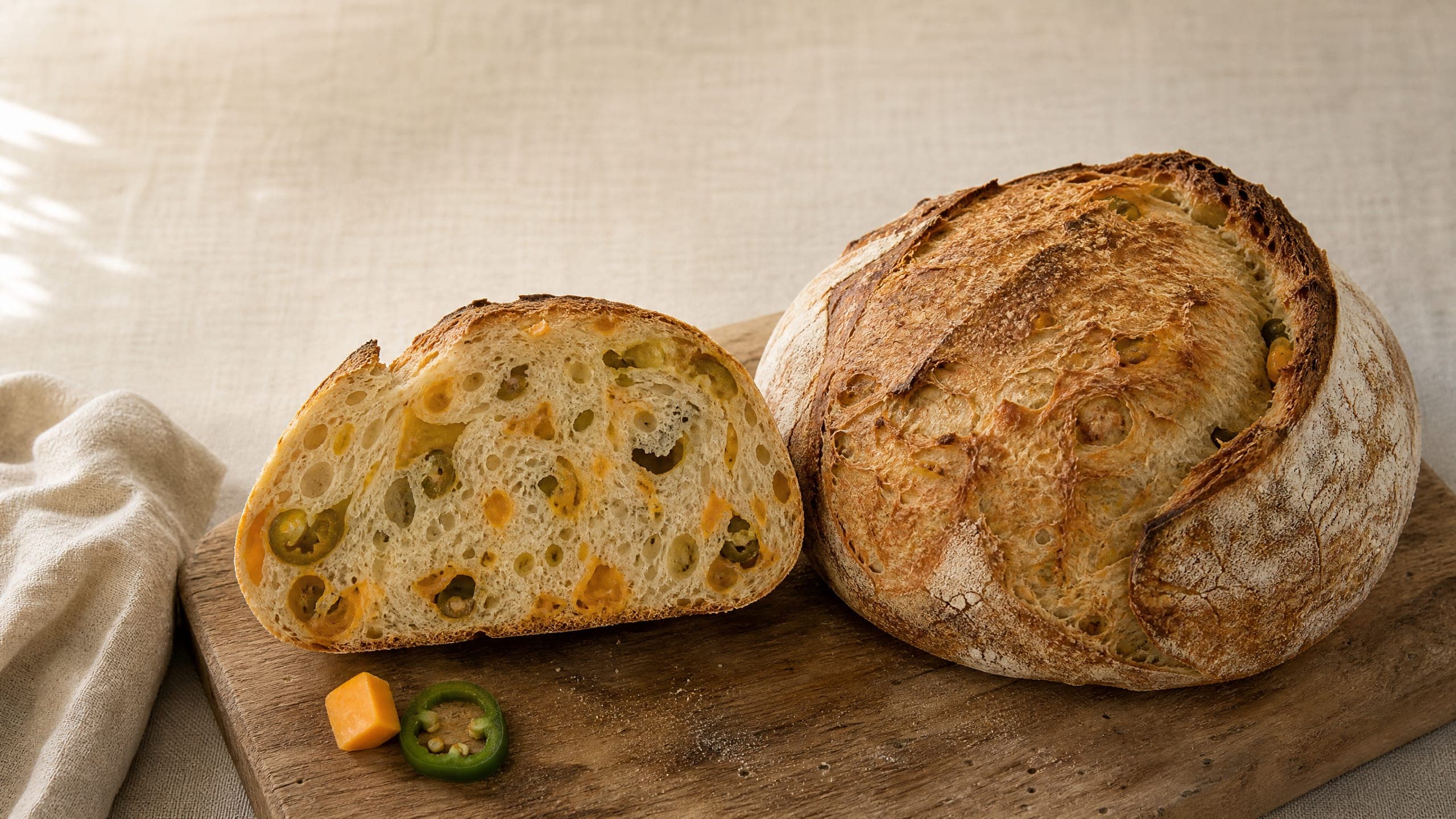
- Jalapeno cheddar: diced pickled jalapeno (patted dry) + aged cheddar, ~20% total.
- Rosemary olive: chopped rosemary + pitted oil-cured olives, drained, ~18%.
- Cranberry orange: dried cranberries + orange zest, ~15-20%.
- Cinnamon swirl: a cinnamon-sugar paste layered during shaping rather than folded in.
- Blueberry: fresh berries folded at the final fold, ~15%.
Keeping the bake clean
Inclusions add fat and water, so a loaded loaf often needs a few extra minutes in the oven and a lower base hydration. Proof it a touch less rather than more — an over-proofed inclusion loaf spreads badly. Score with care; the scoring guide covers cuts that open without catching on chunks, and the proofing guide explains how a heavier dough behaves. Start from the base sourdough bread recipe and swap in flavor from there.
Frequently asked questions
How much inclusion should I add to sourdough?
A good rule is 15-25% of the total dough weight. For a 900g loaf that's about 135-225g of additions total. Much more and the crumb turns dense or the loaf won't hold its shape, because the extras dilute the gluten network and add water and fat that slow the bake.
When is the best time to add inclusions?
Either during the last stretch-and-fold of bulk, or by laminating: stretch the dough flat on the bench, scatter the inclusions, then fold it up. Adding just before shaping also works for delicate items like fresh berries. Avoid mixing them in at the start, which overworks the dough and can mash soft fruit.
Why does my inclusion loaf come out soggy?
Wet additions release moisture as they bake. Pat cheese, olives and fruit dry; use freeze-dried or very well-drained fruit; and don't overload. A soggy middle also means the loaf needed a longer bake or a lower hydration base dough to absorb the extra liquid.
Can you add too much to sourdough?
Yes. Past about 25-30% the dough loses strength, proofs unevenly and bakes gummy in the center. If you want a heavily loaded loaf, drop the base hydration by 5-10% and expect to extend the bake by a few minutes.