Sourdough French Toast
Sourdough French toast made from thick day-old slices soaked in a vanilla custard and griddled until golden. The sturdy crumb holds the custard without falling apart.
By Maya Ellison · Reviewed by Maya Ellison · Updated August 29, 2026 · 2 min read
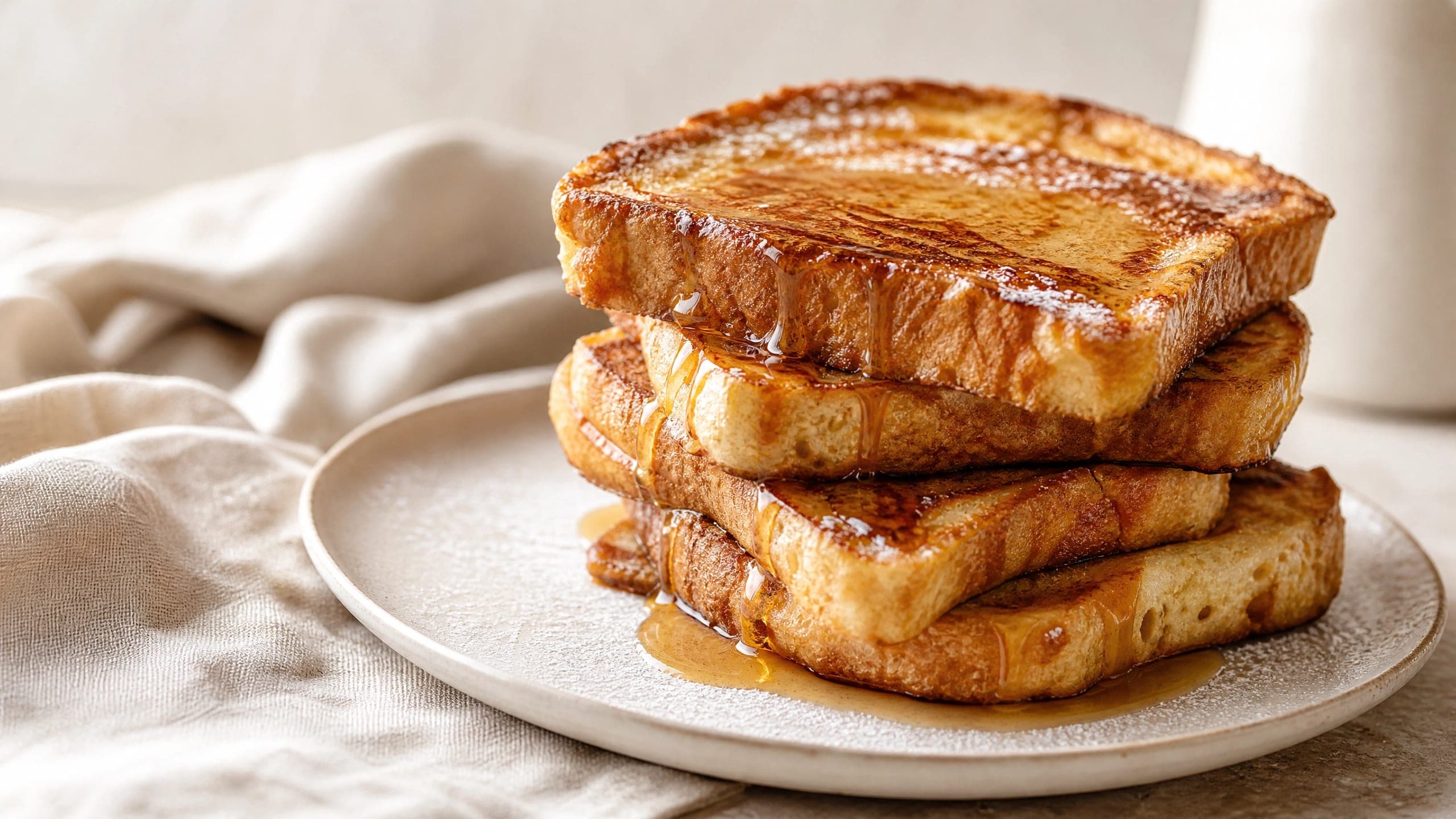
Sourdough French toast is the best use for a loaf that's a day or two past its peak: thick slices of sturdy sourdough soaked in a simple vanilla custard, then griddled until the edges crisp and the centers stay soft and eggy. The natural tartness of the bread balances the sweetness better than bland white bread ever could. It's a weekend breakfast that turns leftover bread into the best part of the meal.
Why this recipe works
French toast is a race between soaking and structure. Sourdough's tight, chewy crumb is ideal because it absorbs custard slowly and holds its shape on the heat. The tang of a real sourdough loaf also cuts through the sugar, so the dish tastes complex rather than cloying.
| Ingredient | Weight |
|---|---|
| Sourdough bread | 400 g |
| Whole milk | 200 g |
| Eggs | 100 g |
A 2:1 milk-to-egg custard keeps the slices rich but not heavy.
Soaking and griddling
Dip, don't dunk. Ten to fifteen seconds per side is enough for a thick slice; thinner bread needs less. Let the excess drip back into the dish so the pan doesn't steam.
Keep the skillet at medium-low. A hot pan burns the sugar in the custard before the middle firms. You want a slow, even set with deep golden edges.
Common mistakes
- Soggy center: slices soaked too long or pan too hot. Quick dip, lower heat.
- Dry, eggy crust: not enough milk in the custard. Keep the 2:1 ratio.
- Falling apart: bread too fresh or too thin. Use day-old, thick cuts.
- Burnt outside, raw inside: heat too high. Drop to medium-low and be patient.
Before you bake
Bake a loaf specifically for this with the sourdough bread recipe, and if the loaf goes stale faster than you eat it, the sourdough troubleshooting hub helps you dial in a tighter crumb. The proofing guide explains why a well-proofed loaf slices and holds better for French toast.
Ingredients
Weights in grams are the source of truth; cup measures are approximate.
- 400 g day-old sourdough bread, cut into 2.5 cm slices (about 8 slices)
- 200 g whole milk (about 3/4 cup plus 1 tablespoon)
- 100 g eggs (about 2 large)
- 25 g granulated sugar (about 2 tablespoons)
- 5 g vanilla extract (about 1 teaspoon)
- 3 g ground cinnamon (about 1 teaspoon)
- 2 g fine salt (about 1/4 teaspoon)
- 30 g butter, for the pan
Method
Whisk the milk, eggs, sugar, vanilla, cinnamon and salt in a shallow dish until smooth.
Heat a skillet over medium-low and add a knob of the butter.
Dip each sourdough slice into the custard for about 10-15 seconds per side, letting it soak but not go soggy, then lift and let the excess drip off.
Griddle the slices 2-3 minutes per side, until deeply golden and the center is set. Work in batches, adding butter as needed.
Serve warm with maple syrup, fresh fruit or powdered sugar.
Frequently asked questions
Why day-old sourdough and not fresh?
Stale bread has lost surface moisture and a sturdier crumb, so it soaks up custard without disintegrating. Fresh soft bread turns to mush in the egg mix.
Can I make this overnight?
Yes. Arrange dipped slices in a buttered dish, pour over any remaining custard, cover and refrigerate up to 12 hours, then bake at 350°F for 25-30 minutes for a baked version.
My French toast came out soggy in the middle. What went wrong?
The heat was too high so the outside browned before the inside set, or the slices soaked too long. Use medium-low and a quick dip, and choose thick cuts.
What sourdough loaf works best?
A firm country loaf or sandwich loaf both work. Avoid very airy, holey crumb breads that leak custard — a tighter crumb holds together better.