Best Bread Bags for Storing Sourdough
How to choose bread bags for storing sourdough: linen vs beeswax wrap vs plastic-free, breathability and freezing — plus the storage we use for a fresh loaf.
By Maya Ellison · Reviewed by Maya Ellison · Updated August 29, 2026 · 3 min read
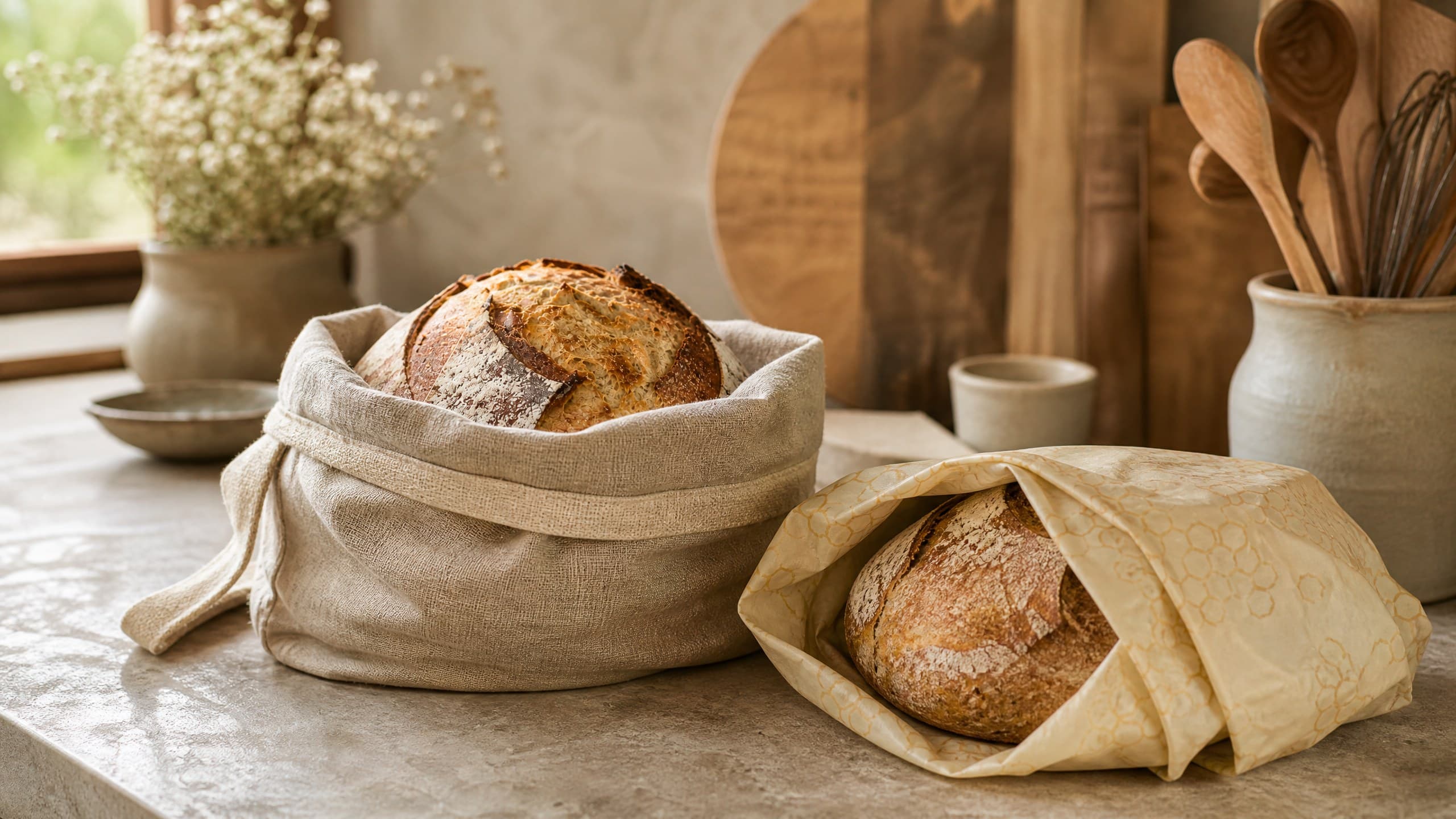
Quick answer
Bread bags for sourdough solve the one problem every loaf faces after the oven: how to keep the crust crisp and the crumb fresh without it going soft or molding by day two. Sourdough has no preservatives, so storage is a real choice, not an afterthought. The right bag isn't about sealing the loaf airtight — it's about letting it breathe so the crust survives and the inside stays tender.
Why storage matters for sourdough
A fresh loaf is a balance: a crisp, crackly crust and a moist, open crumb. Trap the escaping moisture and the crust surrenders to softness; leave the loaf fully exposed and the crumb dries out. A breathable bag threads that needle for the first day or two, and freezing handles the longer haul. Get storage wrong and a great bake eats worse than it should — which is why we treat the bag as part of the toolkit, not an afterthought.
What to look for in a bread bag
- Breathable fabric. Linen or cotton lets moisture escape so the crust stays crisp.
- Room for a full loaf. A 14–18 inch (35–45 cm) bag fits a standard boule or batard.
- A drawstring or closure. Keeps the loaf covered without sealing it tight.
- Plastic-free if that's your aim. Linen, cotton and beeswax are the natural options.
- Freezer use. A separate plastic-free freezer bag for long-term storage.
- Easy wash. Fabric bags launder; beeswax wraps wipe and air-dry.
Types of bread storage compared
| Type | Good for | Breathable? | Pros | Cons |
|---|---|---|---|---|
| Linen bread bag | Counter storage, whole loaf | Yes | Crisp crust, pretty, washable | Doesn't seal; not for long term |
| Cotton bread bag | Counter storage, whole loaf | Yes | Cheap, breathable | Less structured than linen |
| Beeswax wrap | Covering a cut half-loaf | Partly | Reusable, fridge-friendly | Needs cool, dry care; not a full bag |
| Plastic bag | Soft crumb, short term | No | Keeps crumb soft, cheap | Kills crust, mold risk |
| Plastic-free freezer bag | Long-term freezing | N/A (frozen) | Stops staling, stackable | Single-use unless reusable type |
Linen and cotton bread bags
Pros: both breathe so the crust stays crisp for a day or two; washable and attractive on the counter. Cons: they don't seal, so they're a short-term solution — not for keeping bread past its fresh window.
Beeswax bread wrap
Pros: wraps the cut face directly, reusable, and slows a half-loaf in the fridge without plastic. Cons: warm water and heat damage the wax, so it's wiped clean, not washed; covers a half-loaf rather than a whole one.
Plastic bags and freezer bags
Pros: plastic keeps the crumb soft if that's what you like; a freezer bag stops staling cold. Cons: plastic on the counter softens the crust and invites mold; reserve plastic for the freezer, not the bench.
Our recommendation
One honest note: a linen bag won't save a loaf past day three. When in doubt, freeze. A loaf pulled from the freezer and crisped in a hot oven beats a day-five counter loaf every time.
Buy on AmazonStore the loaf you scored with your bread lame and baked in the Dutch oven. The full bake — and when to eat it — is in the sourdough bread recipe.
Frequently asked questions
Why not just use a plastic bag for my sourdough?
Plastic traps moisture against the crust, so within hours the crisp shell goes soft and chewy and the loaf is more likely to mold. Sourdough's crust is the point — a breathable linen or cotton bag keeps it crisp for a day or two. If you genuinely prefer a soft crumb, plastic is fine, but you trade away the crust.
Linen bag, cotton bag, or beeswax wrap?
Linen and cotton bread bags are nearly identical in use: both breathe and keep the crust crisp, and both look nice on the counter. A beeswax wrap wraps the cut face directly and is great for a half-loaf in the fridge. Pick linen or cotton for the whole loaf on the counter; reach for beeswax when you want to cover a cut end without a bag.
How do I freeze sourdough so it doesn't go stale?
Cool the loaf fully, then freeze it whole or sliced in a plastic-free freezer bag with the air pressed out. A whole loaf thaws at room temperature in a few hours and crisps up in a hot oven for 5–10 minutes; pre-sliced loaves toast straight from frozen. Freezing stops staling far better than leaving bread out past day three.
Should I store sourdough in the fridge?
Generally no — the fridge stales bread faster than the counter because cold accelerates starch recrystallization. Keep a day-or-two loaf in a breathable bag at room temperature, and freeze anything you won't eat in that window. The fridge is best reserved for a beeswax-wrapped cut end you want to slow down.