Walnut Cranberry Sourdough Bread Recipe
A walnut cranberry sourdough bread recipe: 20% whole wheat at 75% hydration, with 100 g of soaked cranberries and 100 g of toasted walnuts folded in.
By Maya Ellison · Reviewed by Maya Ellison · Updated August 18, 2026 · 3 min read
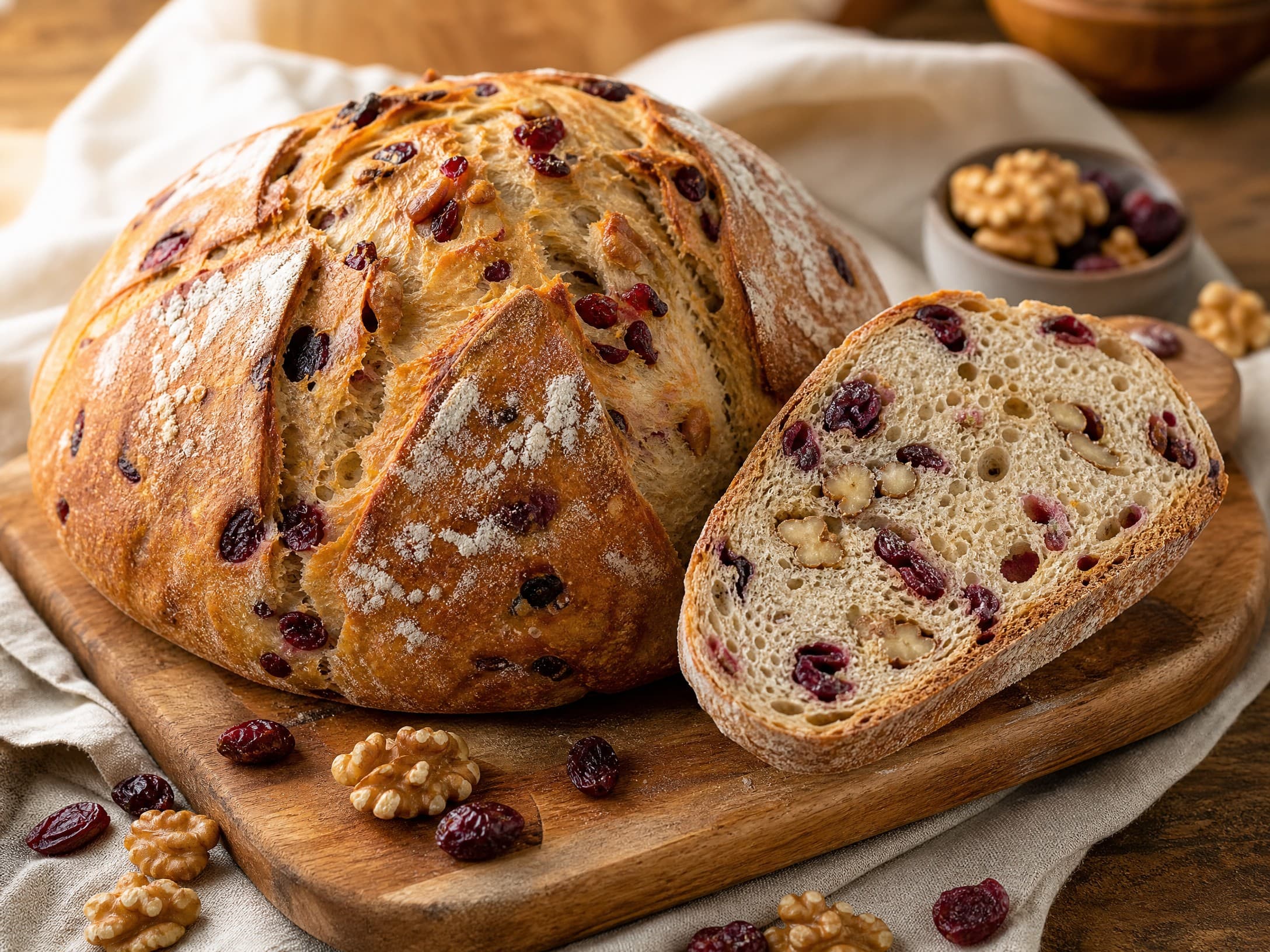
This cranberry sourdough bread recipe is a 20% whole wheat loaf at 75% hydration, with 100 g of soaked dried cranberries and 100 g of toasted walnuts folded in after the first folds — a sweet-tart, nutty bread that teases a bakery counter without asking for a bakery price. The cranberries bring sunshine-bright pockets of acidity, the walnuts bring a deep, roasted counterweight and the whole wheat base keeps it honest and hearty rather than dessert-like. It's an approachable recipe, comfortably within reach of bakers who've made a few loaves and a serious upgrade for a basic sourdough bread recipe you've already mastered.
Why this recipe works
Fruit and nuts are heavy and heavy things sink in bread. This recipe manages them with three quiet defenses: 75% hydration gives the dough enough structure to carry the add-ins, the fruits and nuts go in after the gluten network is already built (not before) and a longer bulk lets the dough rebuild strength around them. The soak and toast are not garnish — plumped cranberries don't steal moisture and toasted walnuts contribute roasted flavor at a fraction of the raw-nut astringency. Each element is a small engineering decision in service of one slice.
The fruit and the nuts
The ratio of 100 g to 100 g is deliberately modest. More cranberries than that and the acidity competes with the sourdough tang; more walnuts and the dough turns greasy and refuses to hold gas. This is the point where the loaf tastes clearly of both without either winning. If you've baked with bakers' percentages before, this is roughly 10% of each on a 1 kg flour base — a ratio worth memorizing for every seeded and fruited loaf you'll ever attempt, because it's the sweet spot for inclusion without collapse.
When to add the add-ins
Timing is the technique: fold twice, then laminate, then add. The first three folds build the gluten structure; the laminating fold spreads the dough into a wide, thin sheet so you can scatter the cranberries and walnuts across the whole surface before folding it up — every crumb, not just the middle, gets pockets of filling. One more gentle fold afterward re-pressurizes the dough's gas. It's slower than dumping everything into the bowl and it's the difference between a loaf that showcases its add-ins and a loaf that buries them.
Swaps and variations
This formula is generously forgiving. Swap the whole wheat for spelt for a softer, more buttery crumb. Use dried cherries or apricots in place of cranberries — cut apricots small and expect a sweeter loaf in need of the walnuts' balance. Orange zest folded into the final mix brightens the whole thing. For a lighter, all-white version simply replace the whole wheat with bread flour and use 760 g of water. The high-hydration guide has more on pushing any of these variations further.
Storage
Fruit-and-nut loaves keep better than plain bread, so this one earns its keep over a week on the counter, cut-side down. For longer storage, slice when fully cool, tuck into a sealed bag and freeze up to 3 months — slices drop straight into the toaster. The cranberries will hold their moisture through freezing better than the crumb around them, which is exactly what you want in January. And when the last slice is gone, the jar of cranberries in the pantry should remind you this is the easiest recipe on the site to justify making again.
Ingredients
Weights in grams are the source of truth; cup measures are approximate.
- 800 g bread flour
- 200 g whole wheat flour
- 750 g water, room temperature (75% hydration)
- 200 g active sourdough starter (100% hydration)
- 20 g fine salt
- 100 g dried cranberries
- 100 g walnuts, toasted
- Hot water, for soaking the cranberries (drained before use)
- 50 g rice flour, for dusting the banneton
Method
Pour hot water over the dried cranberries in a small bowl and soak for 20-30 minutes — they plump up and soften their sharp edge. Drain well and pat dry with a towel before using.
Toast the walnuts on a dry sheet pan at 350°F for 8-10 minutes, until fragrant. Cool completely — warm nuts soften gluten during folding.
In a large bowl, mix the bread flour, whole wheat flour, water and salt until no dry flour remains. Rest, covered, for 30 minutes.
Add the sourdough starter and mix thoroughly with a wet hand. The dough should feel tacky but hold together — 75% hydration is a comfortable, beginner-friendly texture.
Perform 3 sets of stretch-and-folds, 30 minutes apart, covering the bowl between sets. After the third fold you'll have a smooth, elastic dough.
Do a fourth fold and this time laminate: stretch the dough into a wide sheet on a damp work surface and scatter the drained cranberries and toasted walnuts evenly across it.
Fold the dough over the fruit like a letter, then gather it into a ball. Do one final gentle fold 30 minutes later to distribute the add-ins.
Bulk ferment for 4-5 hours at 74-78°F, until the dough has grown 50-70% and feels puffy — fruit weakens gluten slightly, so let it rise a touch longer than a plain dough.
Turn the dough onto a lightly floured surface. Handle it gently so you don't tear the cranberries and shape into a round or batard with a bench scraper.
Seam-side up in a rice-floured banneton. Cover and cold-proof 12-16 hours in the fridge — the long cool ferment deepens the sweet-tart balance.
Preheat a Dutch oven to 475°F for 45 minutes. Turn the dough onto parchment, dust with rice flour and score a single deep slash across the top.
Bake covered at 475°F for 22 minutes, then uncovered at 450°F for 20-25 minutes, until the crust is deep mahogany and the loaf reads 205-208°F inside.
Cool completely on a rack — at least 2 hours — before slicing, so the cranberries set into the crumb instead of tearing it.
Frequently asked questions
Why soak the cranberries?
Dried cranberries are dry and acidic. Added straight into the dough they suck moisture out of the surrounding dough and leave barren pockets around each berry; soaked for 20-30 minutes, they plump up and their edges soften, so the crumb stays even. Drain them well — wet berries are better than wet surfaces, but not by much.
Can I use other nuts?
Absolutely. Pecans are the obvious cousin — toast them the same way and use them 1:1. Pistachios are wonderful with cranberry and hazelnuts bring a deeper roast flavor if you skin them after toasting. Keep the total at 100 g and the size at walnut-scale; powdery or whole-huge add-ins disrupt the crumb unevenly.
Is this bread sweet?
Not like cake. The cranberries give pockets of brightness and the walnuts bring a savory richness that balances them — the loaf eats like a holiday bread rather than a dessert. If you want more sweetness, fold in 30 g of honey at the mixing stage. If you want less, skip the soaking water's sugar by rinsing the berries first.
How should I store this loaf?
Cut-side down on a board for 3-4 days, or wrapped in a cloth bag for up to a week — the fruit and nuts actually slow staling, since sugars and fats draw in air. It also freezes perfectly for 3 months: slice first and toast straight from frozen. The cranberries keep the bread moister longer than a plain loaf.