Sourdough Semolina Bread: Golden, Nutty, Durum Crumb
A sunny sourdough semolina bread: 300 g semolina (durum) flour, 200 g bread flour, 360 g water, 100 g starter and salt, baked into a golden, nutty, open-crumbed loaf with a crisp, sweet crust.
By Maya Ellison · Reviewed by Maya Ellison · Updated August 29, 2026 · 3 min read
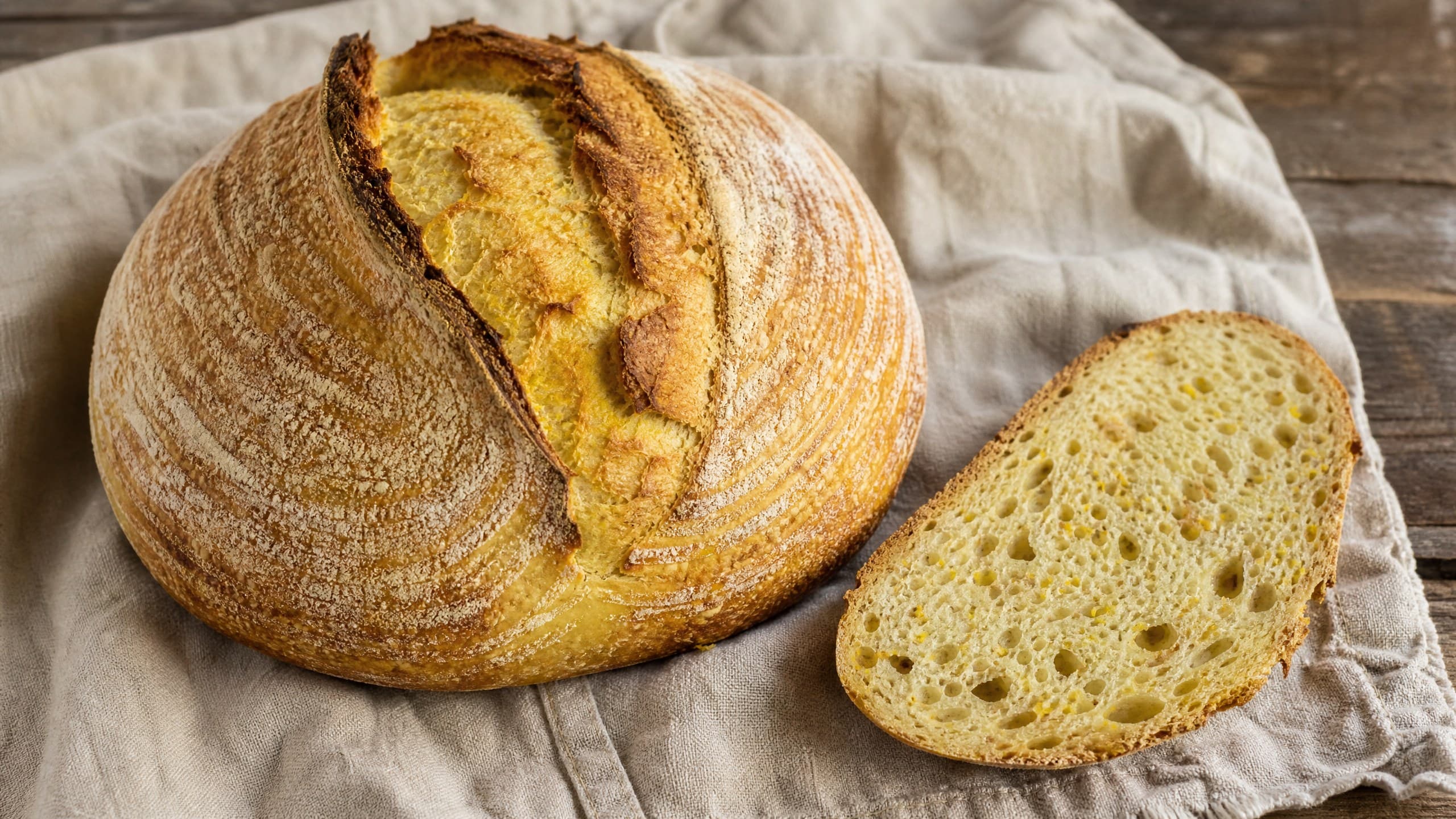
Sourdough semolina bread is the sunny, golden loaf you didn't know your starter could make: 300 g semolina (durum wheat) flour, 200 g bread flour, 360 g water and 100 g starter, baked into a nutty, open-crumbed boule with a sweet, crisp crust. The durum flour gives it a buttery yellow crumb and a gentle speckle that plain wheat bread never shows.
Why this recipe works
Semolina is milled from durum wheat, the hard, golden grain used for pasta. It brings a naturally sweet, nutty flavor and a luminous color, but its gluten is weaker than bread wheat's — which is why we blend it rather than go pure.
| Ingredient | Percentage | Weight (this recipe) |
|---|---|---|
| Semolina flour | 60% | 300 g |
| Bread flour | 40% | 200 g |
| Water | 72% | 360 g |
| Active starter | 20% | 100 g |
| Salt | 2% | 10 g |
That 60/40 split is the balance: enough durum for character, enough bread flour for an open, holdable crumb.
The stages, in order
The autolyse runs long — 45 minutes, not 30 — because coarse semolina drinks water slowly. Rush it and you get stubborn dry spots in the crumb.
The mix feels gritty. That's the semolina, and it's a feature: those tiny golden specks are what make the finished crumb beautiful.
The folds build strength cleanly. Semolina responds well, so three sets over 90 minutes are plenty to stand the loaf up.
Bulk fermentation follows a normal wheat timeline. Watch for puff and doming; the golden dough shows bubbles clearly.
Shaping is satisfying — semolina dough takes tension nicely and holds a sharp batard or round.
Baking goes deep golden, not dark brown. Pull it when it's sunny and crisp; over-baking dulls the color and the sweet crust.
Common mistakes (and the fix)
- Dense, flat loaf: too much semolina or weak starter. Keep the 60/40 blend and bake with a peak-fed starter.
- Dry spots in crumb: short autolyse. Rest the flour and water a full 45 minutes.
- Pale, soft crust: underbaked or oven too cool. Bake to deep golden and check 475°F (245°C) with a thermometer.
- Gummy crumb: sliced warm. Wait the full 2 hours on a rack.
Serving ideas
Semolina bread is gorgeous with olive oil and salt, alongside soup, or as the base for a sharp-cheese sandwich. Its sweetness pairs with both savory and jam. For flour fundamentals, the sourdough bread flour guide covers protein and milling, and the sourdough starter guide gets your jar ready.
Before you bake
This recipe assumes an active sourdough starter. If yours is new or sleepy, the sourdough starter guide brings it to peak first. Use the dough poke test for the proof and the sourdough troubleshooting hub for anything off. Learning the ropes? The beginner's guide to sourdough covers the whole bake.
Ingredients
Weights in grams are the source of truth; cup measures are approximate.
- 300 g semolina flour (about 2 cups), finely milled durum wheat
- 200 g bread flour (about 1 1/2 cups), for gluten strength
- 360 g water at 80-85°F / 27-29°C (about 1 1/2 cups), plus 20 g for the starter
- 100 g active sourdough starter (about 1/3 cup), fed to peak
- 10 g fine sea salt (about 2 teaspoons)
Method
Autolyse: mix the semolina flour, bread flour and 360 g water in a bowl until no dry flour remains. Cover and rest 45 minutes. Semolina hydrates slowly, so give it a longer rest than a plain wheat dough.
Mix: add the active starter and mix in thoroughly, then add the salt and work it until dispersed. The dough will feel a little gritty from the semolina — that's normal and gives the crumb its signature speckle.
Stretch and fold: 30 minutes after mixing, do a set of four stretch-and-folds. Repeat 3 times, 30 minutes apart, over the first 1.5 hours. Semolina builds strength well, so these folds are enough.
Bulk ferment: cover and leave at 74-78°F (23-26°C) until puffy, domed and 60-70% larger, about 4-5 hours. The golden dough should show surface bubbles and rounded edges.
Shape: turn onto a lightly floured surface, preshape into a round, rest 20 minutes, then shape into a tight boule or batard. Semolina dough holds its shape nicely once tensioned.
Proof: place seam-side up in a floured banneton, cover and proof 45-60 minutes at room temperature, or 10-14 hours in the fridge for a deeper flavor and easier scoring.
Score and bake: preheat a Dutch oven to 475°F (245°C), flip onto parchment, score with a single slash, and bake covered 30 minutes, then uncovered at 450°F (230°C) for 12-15 minutes until deep golden.
Cool completely: transfer to a rack and wait at least 2 hours. The sweet semolina crust needs the full cool to set its tender crumb.
Frequently asked questions
What is semolina flour and is it the same as semolina for pasta?
Semolina is coarsely milled durum wheat. The bag sold for pasta is exactly what you want for this bread — fine enough to form a dough, coarse enough to give the crumb its golden color and gentle speckle. Avoid 'semolina flour' labeled 'fine' only if you want a softer crumb.
Why blend semolina with bread flour?
Durum wheat is low in the strong gluten that holds an open loaf together. Blending 300 g semolina with 200 g bread flour gives you the sunny color and nutty flavor while keeping the crumb from collapsing into a dense disk.
Can I make 100% semolina sourdough bread?
You can, but expect a tighter, more fragile crumb that's best baked in a pan rather than free-shaped. The 60/40 blend here is the sweet spot for a hearth loaf with both structure and semolina character.
Why is my semolina loaf gummy inside?
Almost always cut too early. Semolina's tender crumb hides steam, so wait the full 2 hours on a rack before slicing. Underbaking also does it — confirm a hollow sound and deep-golden crust.