Sourdough Pretzels (Soft, Twisted)
Soft sourdough pretzels with an active starter, twisted by hand, dipped in a baking-soda bath and baked with a glossy salted crust.
By Maya Ellison · Reviewed by Maya Ellison · Updated August 29, 2026 · 2 min read
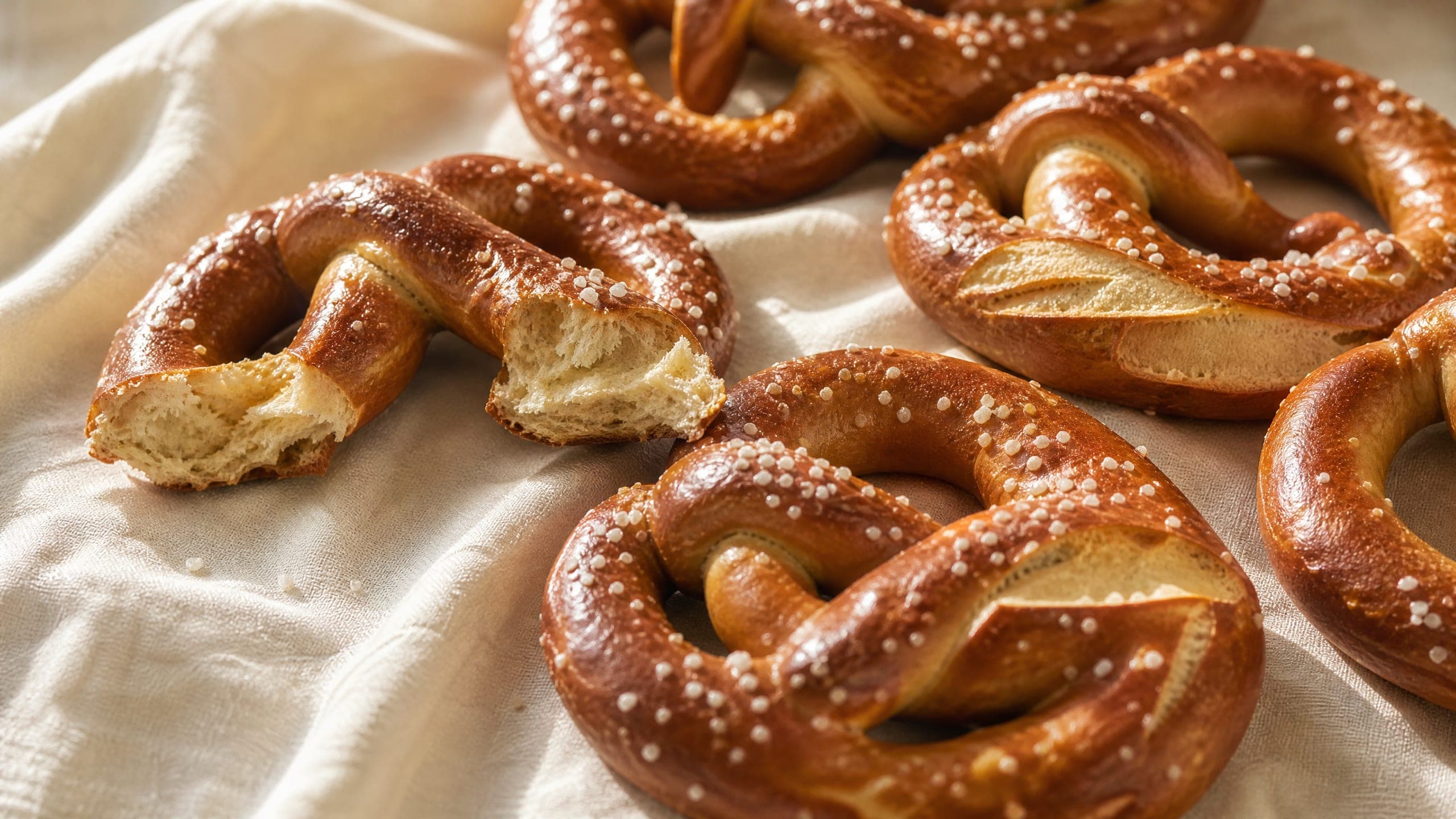
Sourdough pretzels are soft, chewy and deeply browned: an active-starter dough twisted by hand, dipped in a baking-soda bath, and baked under a blanket of coarse salt. The soda bath is what turns a bread twist into a real pretzel — glossy, mahogany, and faintly nutty. They're best eaten warm, pulled apart, with mustard on the side.
Why this recipe works
The dough is a straightforward lean sourdough, but the magic is the alkaline bath. Sodium bicarbonate on the surface raises the pH, which accelerates browning and sets a thin, snappy crust over a tender crumb. A short cold retard deepens the sour note so it reads through the salt.
| Ingredient | Percentage | Weight |
|---|---|---|
| Bread flour | 100% | 500 g |
| Water | 60% | 300 g |
| Active starter | 20% | 100 g |
| Salt | 2% | 10 g |
Hold hydration near 60% so the ropes roll clean and keep their twist.
Twisting them right
Roll each piece into a long, even rope — thin in the middle, slightly thicker at the ends. Make a U, cross the ends over twice, and press them onto the belly of the pretzel. A relaxed dough twists without snapping back; if it fights you, rest it five minutes.
Common mistakes
- Pale, bready crust: weak or skipped soda bath. The bath is the whole point.
- Soapy taste: too much soda or over-concentrated bath. Measure and keep dips short.
- Lost the twist: over-proofed before dipping. Cold-retard to hold the shape.
- Tough crumb: over-baked. Pull at deep brown, not black.
Before you bake
Get your starter to peak first with the sourdough starter guide. The shaping guide helps with clean ropes, and the sourdough troubleshooting hub covers proofing problems. For the base loaf technique, see the sourdough bread recipe.
Ingredients
Weights in grams are the source of truth; cup measures are approximate.
- 500 g bread flour
- 300 g water at 80°F / 27°C
- 100 g active sourdough starter, at peak
- 10 g fine sea salt
- 15 g melted butter (optional, for softer crumb)
- 60 g baking soda, for the bath
- 1 L water, for the bath
- 20 g pretzel salt or flaky salt, for topping
- 1 egg, beaten, for the wash
Method
Mix the flour, water, starter, salt and melted butter into a dough. Knead 8 minutes until smooth and elastic.
Bulk ferment 4-5 hours at 74-76°F with two stretch-and-folds in the first 90 minutes.
Divide into 8 pieces of about 120 g, roll each into a 50 cm rope, and twist into a classic pretzel shape. Rest 15 minutes.
Cold-retard the shaped pretzels 8-12 hours in the fridge, or proof at room temperature 1-2 hours until puffy.
Bring 1 L water to a simmer and stir in the 60 g baking soda carefully — it foams. Dip each pretzel 20-30 seconds, then lift onto a lined tray.
Brush with beaten egg, scatter with pretzel salt, and bake at 425°F (220°C) for 18-20 minutes until deep brown.
Cool 10 minutes, then brush with a little butter if you like a softer top.
Frequently asked questions
Why the baking-soda bath?
The alkaline bath gelatinizes the surface and gives pretzels their signature mahogany crust, chewy bite and that faint lye-pretzel flavor. It's non-negotiable for the look and taste.
Can I use lye instead of baking soda?
Yes, food-grade lye makes a more authentic crust, but baking soda is safe and easy at home. For a stronger effect, bake the soda at 250°F for an hour first to make sodium carbonate.
Why did my pretzels taste soapy?
Too much baking soda or insufficient rinsing after the dip. Use the measured 60 g per liter, keep the dip short, and don't let the bath sit and concentrate.
Can I make these with discard?
Active starter gives the best rise here. For a discard version with a little yeast, check the [sourdough discard recipes](/sourdough-discard-recipes) hub.