Sourdough Discard Focaccia Recipe
Most sourdough discard focaccia recipes need a fed starter and a feeding schedule; this tall, puffy sheet pan version uses 150 g of unfed discard.
By Maya Ellison · Reviewed by Maya Ellison · Updated August 18, 2026 · 3 min read
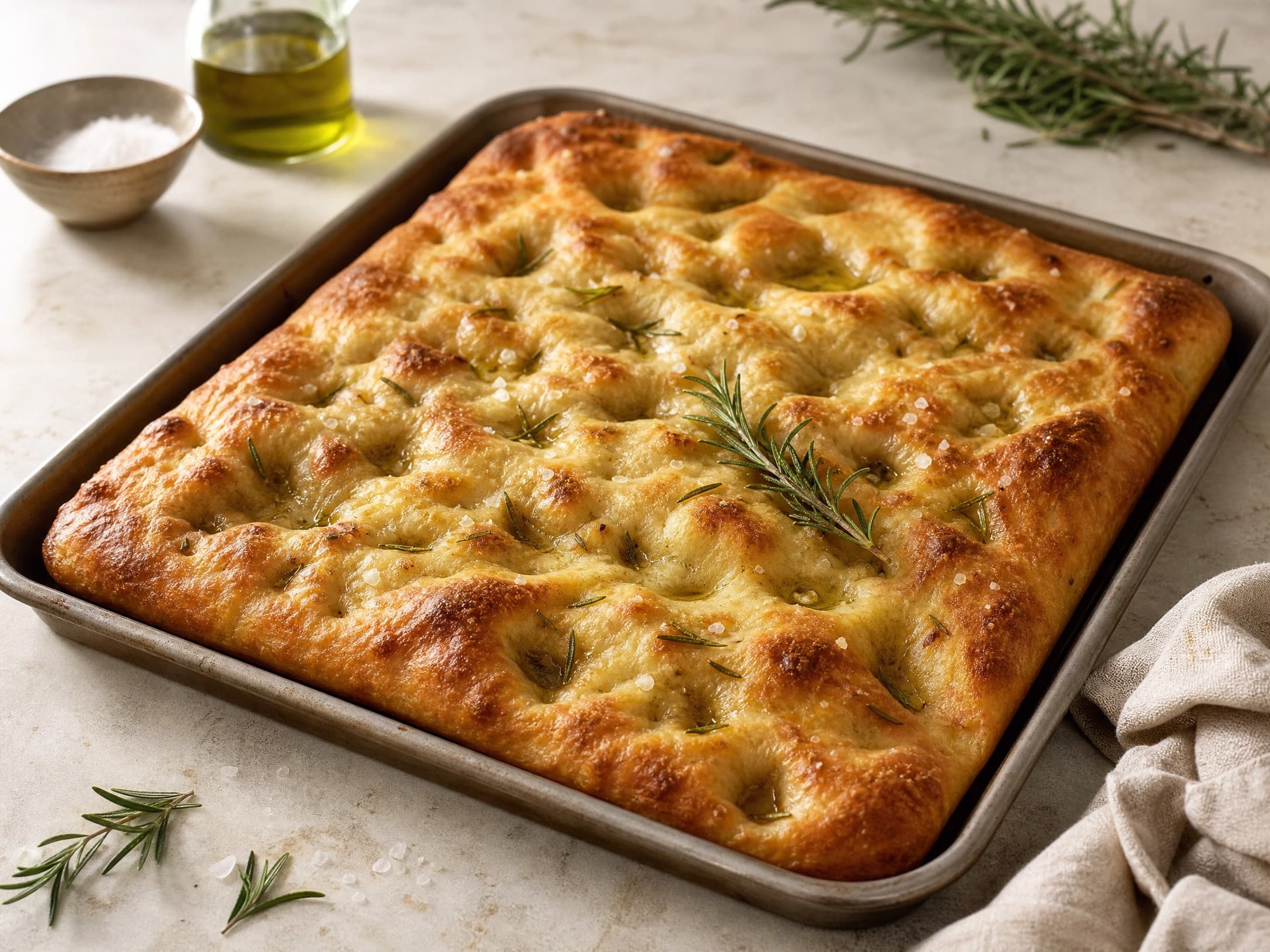
Sourdough discard focaccia recipes don't need a feeding schedule and this one proves it. It's a big, puffy sheet pan focaccia built on 150 g of unfed fridge discard plus a pinch of yeast — an easy focaccia with discard that rises tall, crisps golden and still tastes genuinely sourdough. High hydration does the heavy lifting and a generous hand with olive oil does the rest.
Why this recipe works
Three things make this focaccia big and puffy instead of flat and sad. First, the hydration: 450 g of water to 500 g of flour is 90% and a wet dough is exactly what produces the big, irregular air pockets you're after. Wet dough is harder to handle, so the olive oil on your hands and in the pan does double duty — it keeps the dough manageable and fries the crust as it bakes. Second, the long ferment: over the 4-5 hour bulk, the discard's acids slowly soften the gluten, which is where the flavor comes from. Third, the yeast — and it's a tradeoff worth being honest about. A pinch of yeast makes sourdough discard focaccia recipes reliable in a way that discard alone never quite is. The discard provides the tang and most of the lift; the yeast provides the insurance policy. Use 3 g, about three-quarters of a teaspoon and you get a sourdough crumb with a schedule you can plan a dinner around.
Notes on the discard
Because the yeast is doing the rising, the discard can be anything — young, old, two weeks refrigerated, hooch included. Stir the hooch back in first. What matters is that the discard is roughly 100% hydration, equal parts flour and water, because this recipe is built around that. A thicker starter means a stiffer dough, so add 20 g of water to compensate. If you're new to working with unfed starter, the feeding guide explains why cold, hungry discard is actually perfect for this kind of bake.
The dimple, done right
Dimpling isn't decoration — it's structure. Those craters fill with olive oil and flaky salt and the oil fries the dough inside each pocket as it bakes, which is where the crisp-meets-soft contrast comes from. Press with oiled fingertips all the way to the bottom of the pan. Don't punch gently; commit. The dough should look cratered and messy and that is exactly correct. If the dough springs right back under your fingers, it's underproofed — give it 30 more minutes before you dimple.
Swaps and variations
Whole wheat works: swap in 100 g and add 30 g of water. Rosemary and flaky salt is the classic finish, but try cracked black pepper and grated parmesan, or press halved cherry tomatoes into the top before baking — they roast into jammy pockets. For a milder flavor, cut the bulk ferment back to 3 hours; for a sharper tang, push it to 6. When the dough is doubled, jiggly and holding its bubbles, it's ready, clock or no clock. And if a bake goes wrong, the troubleshooting guide is where I'd look first — flat focaccia is almost always a timing problem and the fixes are in there.
Storage
Focaccia is a same-day bread: it's at its absolute best within a few hours, when the crust is crackly and the crumb is still warm. It keeps for 2 days in an airtight container — the crumb stays soft but the crust goes chewy, so revive it in a 350°F oven for 5 minutes. It also freezes well for up to 2 months: slice first, freeze flat and toast straight from frozen. For more ways to spend your discard jar, the sourdough discard recipes hub has a growing collection.
Ingredients
Weights in grams are the source of truth; cup measures are approximate.
- 500 g bread flour (about 3 1/2 cups)
- 450 g warm water (about 2 cups)
- 150 g sourdough discard (unfed, straight from the fridge)
- 3 g instant yeast (about 3/4 tsp)
- 10 g fine salt (about 1 1/2 tsp)
- 40 g olive oil, in the dough (about 3 tbsp)
- 50 g olive oil, for the pan and topping (about 1/4 cup plus 1 tbsp)
- 2 tsp (8 g) flaky salt, for the top
- 1 tbsp (3 g) fresh rosemary leaves, for the top
Method
In a large bowl, stir the flour, water and sourdough discard together with a wooden spoon until no dry flour remains. Cover and rest 30 minutes — this autolyse softens the dough while the discard's acids start working on the gluten.
Sprinkle the yeast over the dough, then add the fine salt and the 40 g of olive oil. Pinch the ingredients through the dough with your fingers until fully absorbed, about 2 minutes.
Cover and bulk ferment at warm room temperature (75-80°F) for 4-5 hours. For the first 2 hours, do a set of stretch and folds every 30 minutes: grab one side, stretch it up, fold it over and repeat around all four sides.
The dough is ready when it's doubled, jiggly and holds a webbing of bubbles — it should feel like a water balloon.
Pour half the remaining olive oil into a 12 x 17 in (30 x 40 cm) sheet pan and spread it everywhere, including up the sides.
Tip the dough into the pan. Oil your hands and press the dough out toward the corners — it will resist and pull back. Cover, rest 20 minutes, then stretch again. Repeat until it holds the corners of the pan.
Cover and do the final proof for 1-2 hours, until the dough is puffy, nearly doubled and springs back slowly when poked.
About 30 minutes before baking, position a rack in the middle of the oven and heat it to 425°F.
Drizzle the remaining olive oil over the dough, then dimple it hard with oiled fingertips — press all the way to the bottom of the pan so the oil pools in the craters.
Scatter the rosemary and flaky salt over the top.
Bake 22-25 minutes, until the top is deep golden brown and the bottom sounds hollow when you tap it.
Cool in the pan 10 minutes, then slide onto a rack. Drizzle with a last spoonful of olive oil and eat warm — focaccia is best within a few hours of baking.
Frequently asked questions
Do I really need the yeast, or can the discard do all the work?
The discard does most of the work — it supplies the flavor and part of the rise. The 3 g of yeast is insurance: it makes the timing predictable and the rise reliable, which matters when you're planning dinner around sourdough discard focaccia recipes. Skip it if you prefer, but expect a longer, moodier bulk ferment.
Can I use active starter instead of discard?
Yes. Swap the 150 g of discard for 150 g of bubbly active starter and cut the yeast to 2 g — active starter already carries its own yeast population. Everything else stays the same, though the flavor will be noticeably milder. For the full active-starter method, see the [sourdough focaccia bread](/sourdough-focaccia-bread) recipe.
Why is my focaccia flat or dense?
Almost always a proofing problem. Underproofed dough hasn't built enough gas to fill the pan; overproofed dough deflates when you dimple it. Watch the dough, not the clock: it's ready when it's doubled, jiggly and slow to spring back.
Can I refrigerate the dough overnight?
Yes and it's a great make-ahead move. After the stretch and folds, cover the bowl and refrigerate for 12-18 hours. The next day, let it sit at room temperature for 1 hour, then continue from the pan stage. Cold fermentation deepens the sour tang.
Can I use all-purpose flour or whole wheat?
All-purpose works, but bread flour gives the strongest, puffiest crumb. For whole wheat, swap in 100 g and add 30 g more water — whole wheat drinks up hydration, so the dough needs the extra to stay at 90%.