Sourdough Discard Cookie Recipes
Sourdough discard chocolate chip cookies with a faint tang and real chew — brown sugar, a 30-min chill and never overmix.
By Maya Ellison · Reviewed by Maya Ellison · Updated August 18, 2026 · 2 min read
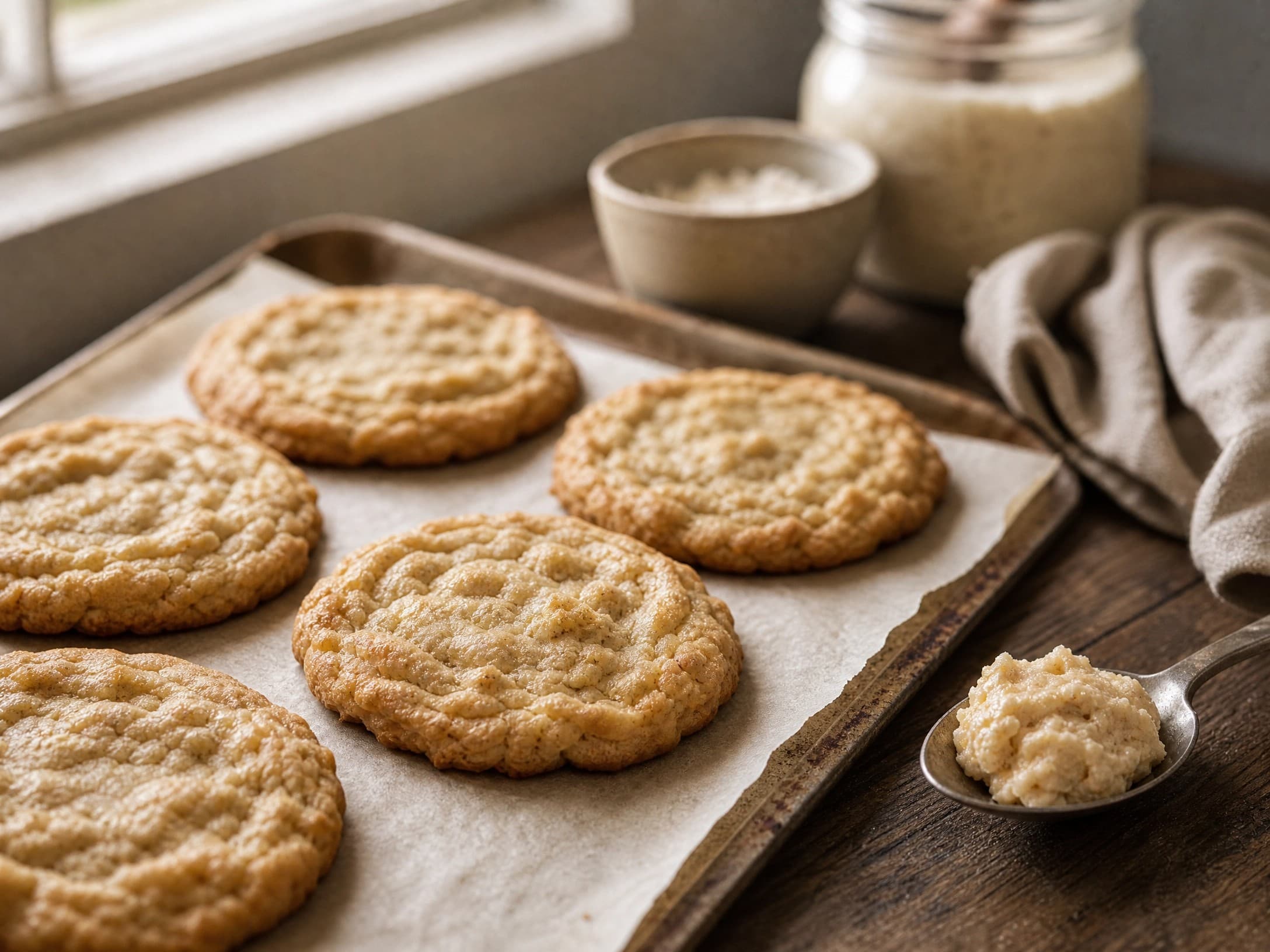
Sourdough discard cookie recipes can be gimmicky — chocolate chip cookies don't need a reason to exist — but this version earns its place on the counter. The discard adds a faint tang that plays against the dark brown sugar and more importantly it forces the good habits that make a great cookie: a real chill, a gentle mix and a soft-center bake. The result is a chewy chocolate chip cookie with a quiet sourdough finish, made from 120 g of unfed discard in about 45 minutes. Serve them barely warm — the tang reads clearest when the chocolate is still soft.
Why this recipe works
Three decisions matter more than the discard itself. Brown sugar instead of white: it holds moisture and brings acidity, which gives the cookie its chew. A 30-minute minimum chill (or up to 3 days): cold dough spreads less, so the cookie bakes up thick instead of flat. And folding the flour in until the dough is still a little shaggy: overmixing builds gluten and gluten turns cookies into cake.
The discard contributes more than just the tang. Its natural acids slow browning just enough to keep the centers soft and the fermentation adds a honeyed, slightly malty depth you'll taste on the finish — like a very subtle version of an old-fashioned molasses cookie.
Notes on the discard
Use any unfed discard, straight from the fridge. Old, dark discard is fine and actually brings more tang; discard that smells boozy is fine too — that's just hooch and the baking soda handles the acid. If your discard is watery, the dough will be a little softer; don't add flour to compensate, the chill fixes it. If you're new to the feeding-and-discarding rhythm that produces this jar, the feeding guide explains the whole cycle.
Swaps and variations
Replace up to half the flour with whole wheat for a nuttier, slightly chewier cookie. Use dark chocolate chunks instead of chips, fold in 100 g of toasted walnuts, or press flaky salt into the tops before baking — that one move makes the cookies look like they came from a bakery. Coconut sugar works in place of brown sugar, though the cookies spread a touch more. For a coffee-house version, whisk 10 g of instant espresso powder into the flour.
Storage
Cookies keep 4 days in an airtight container, getting softer and chewier as they sit — which is no bad thing. For longer, freeze the raw scooped dough balls on a sheet, then bag them: bake straight from frozen and add 2 minutes. That's the trick to fresh cookies on demand and it's how you use a little discard at a time without committing to a full batch. More ways to use your jar live on the sourdough discard recipes hub.
Ingredients
Weights in grams are the source of truth; cup measures are approximate.
- 120 g sourdough discard (unfed, straight from the fridge)
- 170 g all-purpose flour (about 1 1/3 cups)
- 90 g unsalted butter, softened
- 100 g dark brown sugar (about 1/2 cup, packed)
- 50 g granulated sugar (about 1/4 cup)
- 1 large egg (about 50 g)
- 1 tsp (5 g) vanilla extract
- 1 tsp (5 g) baking soda
- 1/2 tsp (3 g) fine salt
- 150 g chocolate chips or chopped dark chocolate (about 1 cup)
Method
In a stand mixer or large bowl, beat the softened butter, brown sugar and granulated sugar until light and fluffy, about 2-3 minutes.
Beat in the egg, vanilla and sourdough discard until completely smooth — the mixture may look slightly curdled; that's normal.
Whisk the flour, baking soda and salt together in a separate bowl.
Add the dry ingredients to the wet and fold with a spatula just until no dry flour remains — stop while the dough is still a little shaggy.
Fold in the chocolate chips until evenly distributed.
Cover the dough and refrigerate for at least 30 minutes, or up to 3 days — longer chilling means more chew.
Preheat the oven to 350°F (175°C) and line two baking sheets with parchment paper.
Scoop 2-tablespoon balls of dough and space them 2 inches apart on the sheets.
Bake 10-12 minutes, until the edges are set and golden but the centers still look soft and slightly underdone.
Let the cookies rest on the hot sheet for 5-10 minutes — they set up as they cool — then transfer to a wire rack to finish.
Frequently asked questions
Do I really need to chill the dough for 30 minutes?
Yes — it's the difference between a thick, chewy cookie and a flat puddle. Cold butter melts slowly in the oven, so the dough spreads less and bakes up denser and chewier. Overnight chilling is even better; the discard also ferments slightly, deepening the tang.
Why does this recipe call for brown sugar instead of white?
Brown sugar holds onto moisture and carries more acid, which gives the cookie its chew and a deeper, caramel-like flavor. Use dark brown sugar for maximum chew; if you only have light brown, the cookies will be just a touch crisper.
Can I use an active starter instead of sourdough discard?
You can, but an active starter makes the dough softer and the flavor less interesting — the point here is the faint tang. Use unfed discard straight from the fridge as written and if your discard is very watery, just expect a slightly softer dough that benefits from a full hour of chill.
Why did my cookies spread into thin puddles?
Three usual culprits: the dough wasn't chilled, the butter was too soft, or the flour was under-measured. Weigh the flour if you can, chill the full 30 minutes and don't beat the wet ingredients beyond smooth — overmixing builds gluten and produces a cakey, not chewy, texture.
How should I store leftover cookies?
Cookies keep 4 days in an airtight container at room temperature, getting slightly softer and chewier as they sit. For a longer option, freeze the raw scooped dough balls on a sheet, then bag them — bake straight from frozen and add 2 minutes to the bake time.