Sourdough Discard Cinnamon Rolls
This cinnamon rolls discard recipe makes soft, enriched cinnamon rolls from unfed fridge discard, cold-proofed overnight with a little yeast.
By Maya Ellison · Reviewed by Maya Ellison · Updated August 18, 2026 · 3 min read
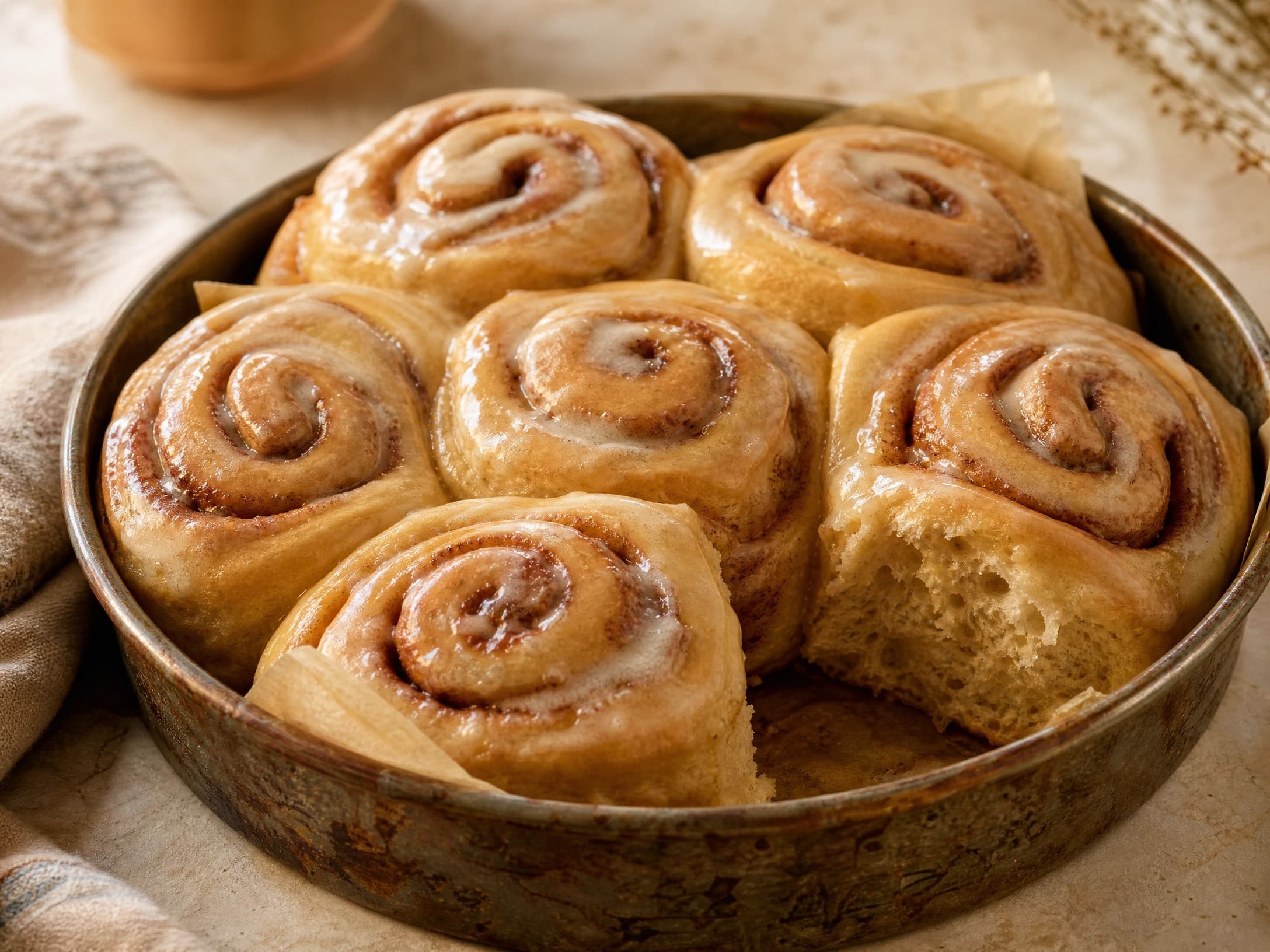
This cinnamon rolls discard recipe makes soft, enriched cinnamon rolls from 200 g of unfed fridge discard and a little yeast — proofed overnight in the fridge for deep flavor, with a same-day option right in the steps. It's the easy cinnamon rolls with discard that I actually make: the discard brings the tang, the yeast brings the reliable, puffy rise and the brown sugar, cinnamon and cream cheese glaze do the rest.
Why this recipe works
Enriched doughs — doughs with butter, milk and sugar — are slow and moody with discard alone. The fats coat the gluten and slow fermentation and sourdough-only cinnamon rolls are famous for needing 12-24 hours and still coming out dense. Adding 7 g of instant yeast doesn't take the sourdough out; it takes the gamble out. The discard still ferments overnight, still produces the tang, still softens the crumb — the yeast just makes sure the rolls actually rise. In practice that means a dough that doubles in a predictable couple of hours, rolls that don't tear when you shape them and a bake you can commit to the night before.
Overnight vs same-day
The overnight option is the better roll: 8-12 hours in the fridge after shaping deepens the tang, tightens the crumb and leaves you 30 minutes of work on the morning you serve them. The same-day path skips the fridge — proof the shaped rolls at warm room temperature for 60-90 minutes until puffy, then bake. Both paths share the same doneness test: deep golden brown and an internal temperature of 190°F. If you want to understand the cold-proofing logic better, the feeding guide covers how temperature shapes sourdough flavor.
Notes on the discard
Use the discard cold and unfed, straight from the jar. Because the yeast is doing the heavy lifting, the discard can be old, hoochy, or days past its peak — stir the hooch in and go. What matters is hydration: this recipe assumes a 100% hydration starter, so if yours is stiffer or sloppier, adjust the milk by 20 g in the opposite direction. A room-temperature active starter also works if that's what you have; cut the yeast to 5 g since the starter brings its own yeast population.
Swaps and variations
The brown sugar and cinnamon filling is the classic, but this dough is forgiving enough to be a canvas. Rub the zest of one orange into the sugar for citrus rolls, or spread a thin layer of jam under the filling with 30 g of toasted nuts. The cream cheese glaze is non-negotiable in my kitchen, but the plain powdered-sugar version in the FAQ works in a pinch. And if the rolls come out dense, don't blame the recipe first — the troubleshooting guide walks through the usual suspects: underproofing, over-proofing and ovens that run hot.
Storage
Rolls are best warm from the oven with the glaze still melting down the sides. Leftovers keep 3 days in an airtight container — reheat in a 300°F oven for 8 minutes and consider re-glazing since the first coat gets absorbed. Unbaked rolls freeze beautifully: freeze after shaping, then bake from frozen in a 350°F oven for 35-40 minutes. For more discard recipes that behave, the sourdough discard recipes hub is the full collection.
Ingredients
Weights in grams are the source of truth; cup measures are approximate.
- 450 g bread flour (about 3 1/2 cups)
- 200 g sourdough discard (unfed, straight from the fridge)
- 150 g whole milk, warm (about 2/3 cup)
- 100 g unsalted butter, softened, plus 60 g for the filling
- 50 g granulated sugar (about 1/4 cup)
- 7 g instant yeast (about 2 1/4 tsp)
- 6 g fine salt (about 1 tsp)
- 100 g light brown sugar, packed (about 1/2 cup)
- 15 g ground cinnamon (about 2 tbsp)
- 100 g cream cheese, softened
- 50 g powdered sugar (about 1/2 cup)
- 15 g heavy cream or milk, for the glaze
Method
Warm the milk to about 105°F. In a large bowl, stir the warm milk, discard, granulated sugar and yeast together and let it sit 5 minutes — the discard is cold from the fridge, so the warm milk helps the yeast wake up.
Add the bread flour and salt. Mix with a wooden spoon, then turn out onto a lightly floured surface and knead 8-10 minutes, adding the 100 g of softened butter a tablespoon at a time once the dough comes together.
Knead until the dough is soft, smooth and slightly tacky — it should pass the windowpane test: stretch a small piece thin enough to see light through without tearing.
First rise: cover the bowl and let the dough double at warm room temperature (75-80°F), about 2 hours.
Roll the dough into a 12 x 18 in (30 x 45 cm) rectangle. Spread the 60 g of filling butter across it, leaving a 1/2 in border, then sprinkle with the brown sugar and cinnamon in an even layer.
Roll tightly from the long side into a log, pinching the seam. Slice into 12 even rolls using a sharp knife or dental floss.
Arrange the rolls in a buttered 9 x 13 in (23 x 33 cm) pan. Overnight option: cover and refrigerate 8-12 hours; next morning, let the pan sit at room temperature 45-60 minutes before baking. Same-day option: cover and proof at warm room temperature 60-90 minutes, until puffy and doubled.
Heat the oven to 350°F. Bake the rolls 25-30 minutes, until deep golden brown and the center reads 190°F on an instant-read thermometer.
While the rolls bake, beat the cream cheese, powdered sugar and cream together until smooth and spreadable.
Cool the rolls in the pan 10 minutes, then spread the glaze over the warm rolls. Serve warm.
Frequently asked questions
Do I need the yeast, or can I make cinnamon rolls with just discard?
You can make them with discard alone — a classic sourdough roll — but it's slow and moody: expect a 12-24 hour ferment and a dough that's easy to underproof. The 7 g of yeast here is the reliability knob. The discard still supplies the tang and most of the flavor; the yeast supplies the lift and the schedule. For the pure active-starter version (no yeast), see the [sourdough cinnamon rolls](/sourdough-cinnamon-rolls).
Can I skip the overnight cold proof?
Yes — the same-day option is right in the steps: after shaping, proof at warm room temperature for 60-90 minutes instead. The rolls will be slightly less tangy and slightly less fluffy. Overnight is better for flavor and for mornings when you don't want to wake up early.
My rolls came out dense and hard. What went wrong?
Usually an underproofed second rise or an oven that runs hot. The rolls need to be puffy — nearly doubled and slow to spring back — before baking. And 350°F, not hotter; a hot oven sets the outside before the inside gets a chance to rise.
Can I freeze the unbaked rolls?
Yes and it works beautifully. After shaping, freeze the rolls on a tray, then transfer to a bag. To bake, thaw overnight in the fridge, let them proof at room temperature until puffy and bake as written.
Can I swap the cream cheese glaze?
For a classic powdered-sugar glaze, beat 100 g of powdered sugar with 30 g of milk and 1/2 tsp of vanilla. For a lighter finish, brush the warm rolls with melted butter and dust with cinnamon sugar before serving.