Sourdough Brown Bread Recipe
What is brown sourdough bread? This is a 50% whole wheat loaf at 78% hydration — the honest brown loaf, with an optional molasses version.
By Maya Ellison · Reviewed by Maya Ellison · Updated August 18, 2026 · 3 min read
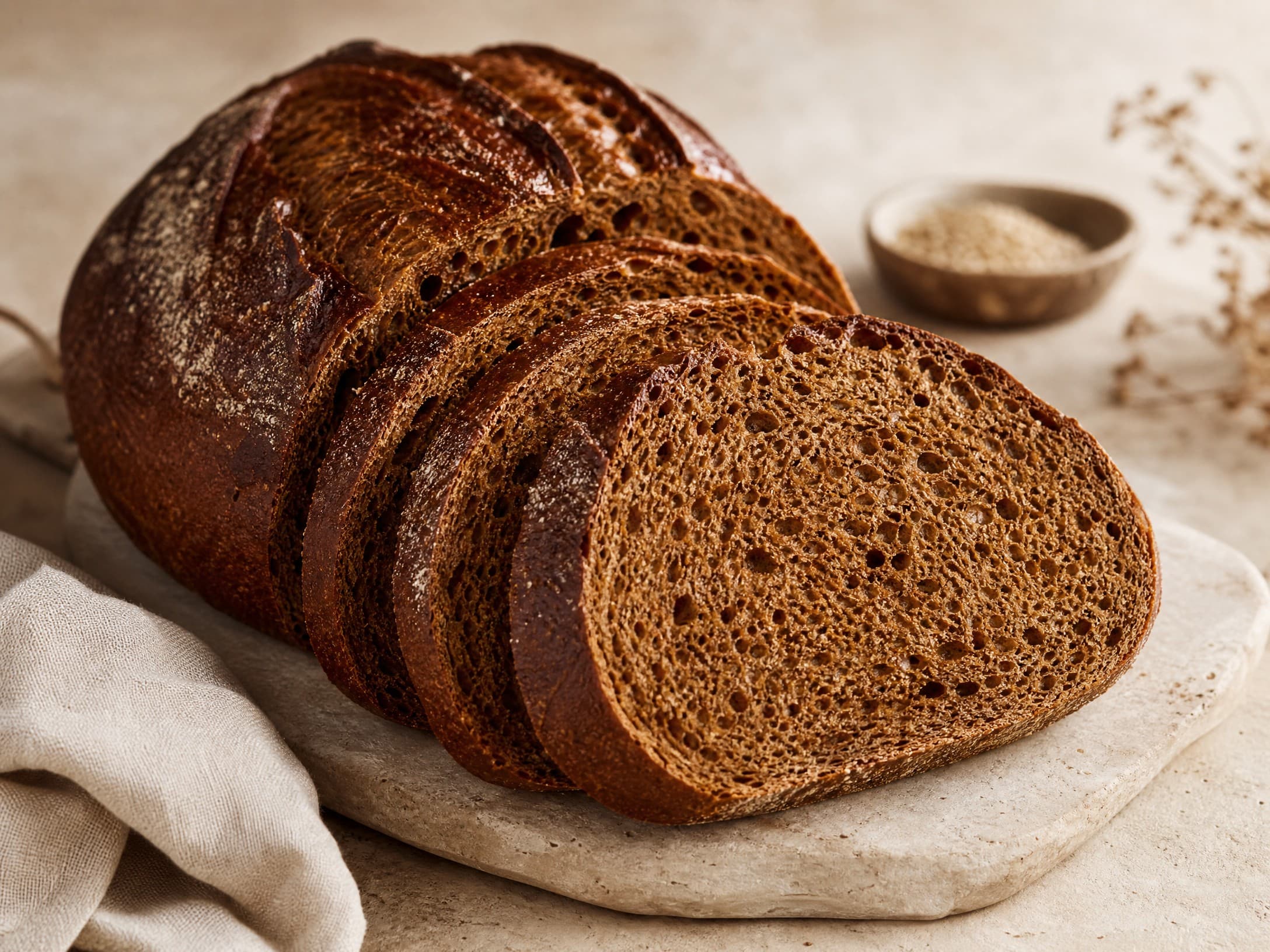
Brown sourdough can mean two genuinely different things and this recipe honors both. In the sourdough world, brown bread usually means a whole-grain loaf — darker than white, nuttier than commercial — and that's the straightforward version: a 50% whole wheat loaf at 78% hydration, mixing 500 g of bread flour with 500 g of whole wheat in a single, approachable bake. But in New England, "brown bread" means a molasses-sweetened steamed bread and plenty of people searching for a brown sourdough bread recipe mean that. So this recipe does both honestly: a 50/50 loaf with an optional 30 g of molasses folded into the dough, giving you a dark, softly sweet brown bread that still rises, still slices and still tastes like proper sourdough. One recipe, two traditions, zero ambiguity.
What "brown bread" actually means
The naming matters because it changes the recipe entirely. Boston brown bread is a steamed loaf of cornmeal, rye and wheat sweetened with molasses — delicious and nothing like a sourdough bake. A "brown" sourdough loaf, though, is simply bread made with a significant share of whole grain, the way every European bakery treats the word: brown means darker flour, more flavor, more substance. This recipe sits deliberately in the middle — 50% whole wheat is enough to earn the "brown" label and its character, while 50% bread flour keeps the structure friendly for bakers who aren't gluttons for punishment. The molasses option lets the curious taste the other tradition without a separate recipe.
Why this recipe works
The 50/50 balance is the whole game. At 78% hydration, the dough is soft enough for a comfortable crumb but firm enough to shape cleanly — no slippery batter wrestling here, which makes this one of the friendliest whole-grain bakes on the site. The 45-minute autolyse softens the bran (see the autolyse guide for why that matters), the four folds build a gluten network the bran keeps denting and the long cold proof deepens the nutty flavor into something the plain yeast version of this loaf never had. This is the recipe to graduate to from your basic sourdough bread recipe: more character, same comfortable pace.
The molasses version
Add the molasses at mixing, not before. Mixed in early it feeds the fermentation and partially ferments away, leaving less sweetness than promised — added after the autolyse with the salt and starter, it stays present as a warm, dark note. Use a standard dark molasses at 30 g; blackstrap is too intense and will skew the loaf bitter. The molasses version bakes a shade darker and keeps a day longer, since the sugar and the acid both slow staling. It also smells like autumn while baking, which is not a feature you can quantify but is absolutely a feature.
Swaps and variations
Crank the whole wheat to 70% if you want a deeper brown — add 20 g of water and expect a longer bulk. Dial it to 30% for a milder introduction and a taller rise. For a seeded brown loaf, fold 80 g of toasted sunflower seeds in at the final fold. If you bake in an open tin rather than a Dutch oven, add a pan of water to the oven floor for the first 20 minutes to keep the crust from setting early. Every variation keeps the autolyse, because the autolyse is what makes the bran behave.
Storage
Brown bread has a real shelf-life advantage: the whole wheat's higher fat and fiber content keep it moist well past a white loaf's prime. Cut-side down on a board for 4-5 days, or in a cloth bag for up to a week; it toasts heroically and holds butter without shredding. Freeze sliced for up to 3 months and toast straight from frozen. The molasses version, with its extra sugar and moisture, keeps a full day longer than its unsweetened twin — one more reason to try it.
Ingredients
Weights in grams are the source of truth; cup measures are approximate.
- 500 g bread flour
- 500 g whole wheat flour
- 780 g water, room temperature (78% hydration)
- 200 g active sourdough starter (100% hydration)
- 20 g fine salt
- 30 g molasses (optional — for the dark, sweeter Boston-style version)
- 15 g olive oil (optional — softens the crumb slightly)
- 50 g rice flour, for dusting the banneton
- 1 tbsp (8 g) coarse cornmeal or rye flour, for the baking surface (optional)
Method
In a large bowl, combine both flours and the water. Mix until no dry flour remains, cover and rest for 45 minutes — the autolyse softens the whole wheat's bran.
Add the starter and salt, then mix with a wet hand for 2-3 minutes until the dough is smooth and cohesive.
Add the olive oil now if you're using it and the molasses if you're making the dark version. Mix until fully incorporated — the dough will turn a deep caramel color.
Rest 30 minutes, covered, then begin folding: 4 sets of stretch-and-folds, spaced 30 minutes apart.
Continue bulk fermentation for a total of 4-5 hours at 74-78°F, until the dough has grown about 60% and looks puffy. Whole wheat takes longer than white — don't rush it.
Turn the dough onto a lightly floured surface and shape into a round or batard with a bench scraper. Handle it gently — this dough is soft and worth more respect than force.
Seam-side up in a rice-floured banneton. Cover and cold-proof for 12-16 hours in the fridge.
Preheat a Dutch oven to 475°F for 45 minutes with an empty rack below it.
Turn the cold dough onto parchment, dust lightly with flour and score one clean slash, 1/2 inch deep.
Bake covered at 475°F for 25 minutes, then uncovered at 450°F for 22-25 minutes, until the crust is a deep chestnut brown and the center reads 205-208°F.
Cool on a rack for at least 2 hours before slicing. The crumb is still setting at the 1-hour mark — patience pays in slices that don't crumble.
Frequently asked questions
Does 'brown bread' mean whole wheat?
Usually, yes — but not always. In sourdough circles, brown bread almost always means a whole-grain loaf, darker than white and lighter than rye. In New England, it means a sweet molasses-and-cornmeal steamed bread that isn't sourdough at all. This recipe is the first kind with an optional nod to the second: 50% whole wheat, no steaming required.
Can I make the molasses version?
Yes — add 30 g of molasses at the mixing stage and you get a darker, deeper loaf with a subtle caramel note that reads more 'brown bread' than any wheat percentage ever will. Use dark molasses, not blackstrap (which turns bitter at these amounts) and expect the dough to be slightly stickier — the sugar softens it.
Why is my brown loaf denser than my white loaves?
The whole wheat. Bran slices gluten strands as they form, so 50% whole wheat dough needs longer bulk and gentler handling than a white-only dough. Give it the full 4-5 hours, keep the autolyse and don't rush the cold proof. The crumb will never match a white boule — that's the tradeoff for the flavor and nutrition.
What does brown bread taste like?
Nuttier and deeper than white, with a mildly earthy finish that mellows over the first day. The 50/50 blend keeps it approachable — this is the loaf for people who 'don't like whole wheat,' because the bread flour carries the structure while the whole wheat carries the character. At 78% hydration it stays moist and tender rather than crumbly.