Sourdough Bagels (Real Boil + Bake)
Chewy sourdough bagels leavened with an active starter, cold-retarded for tang, boiled in a barley-malt bath and baked into a shiny, dense ring.
By Maya Ellison · Reviewed by Maya Ellison · Updated August 29, 2026 · 2 min read
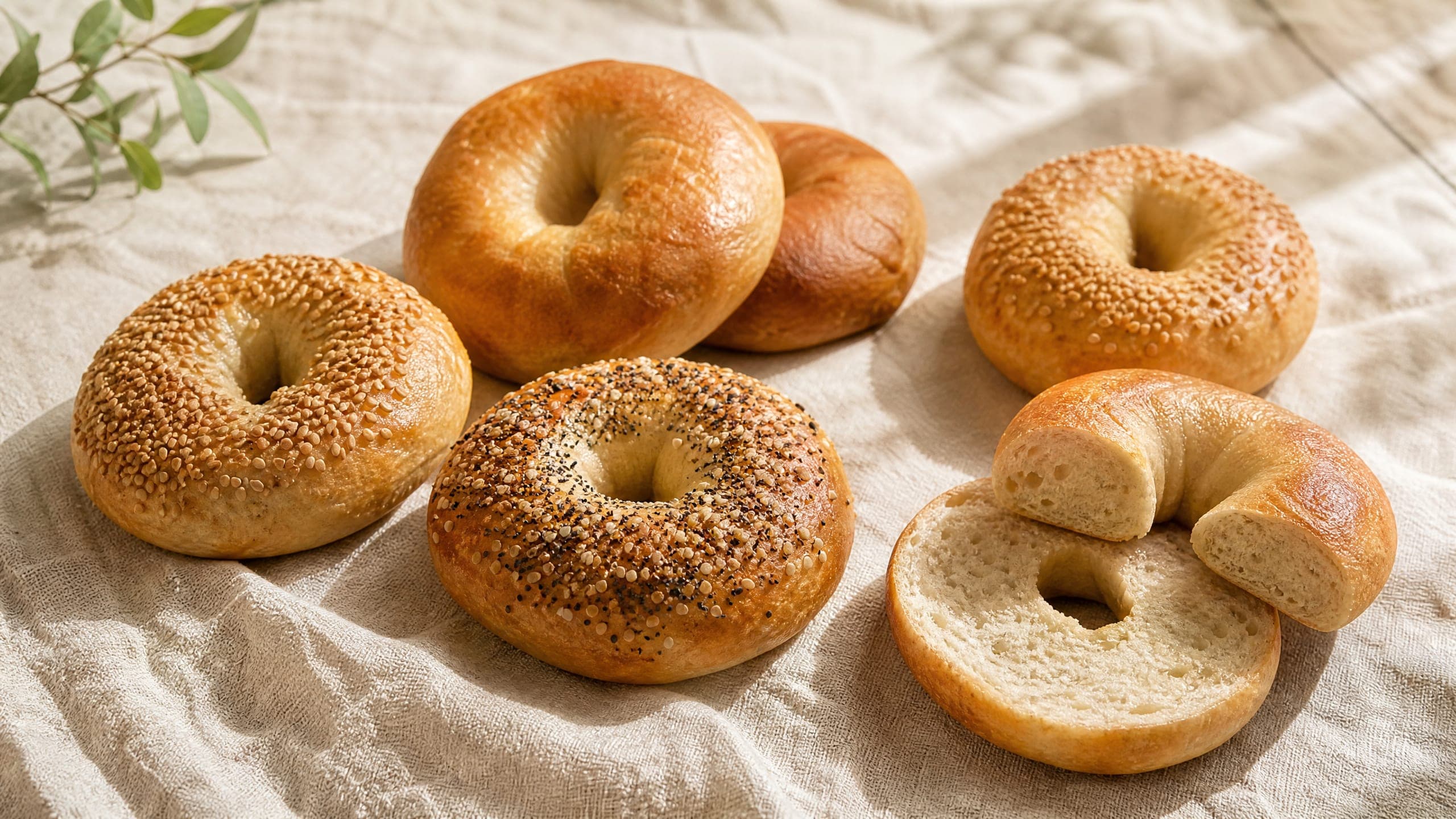
Sourdough bagels are the real deal: an active starter does the leavening, a long cold retard builds the tang, and a barley-malt boil sets the shiny, chewy shell before a hot bake. No commercial yeast, no shortcuts — just a stiff dough, patience, and a pot of boiling water. They come out dense, glossy, and honestly better than most bagel-shop rings.
Why this recipe works
Bagels are the opposite of a slack, high-hydration loaf. A stiff dough (around 56% hydration) plus a full knead builds the tight gluten network that gives the chew. The boil is the other half: hot water gelatinizes the surface starch, locking moisture in and forming that lacquered crust. The fridge does the rest.
| Ingredient | Percentage | Weight |
|---|---|---|
| Bread flour | 100% | 500 g |
| Water | 56% | 280 g |
| Active starter | 20% | 100 g |
| Salt | 2% | 10 g |
Keep the dough stiff and the cold retard long for the best bite.
Building the chew
Knead hard — 8-10 minutes — until the dough is smooth and springs back. This is not a no-knead bread. Shape tight ropes or stretched rings so the bagels hold their hole through the proof and boil. A sloppy shape relaxes into a flat disc in the water.
Common mistakes
- Bready, not chewy: dough too wet or under-kneaded. Stiff dough and a full knead are mandatory.
- Pale and soft: oven too cool or under-baked. Bake to a deep mahogany.
- Hole closes up: over-proofed before boiling. Cold-retard keeps the shape; boil straight from the fridge.
- Bland: skipped the malt boil or the long retard. Both carry the flavor.
Before you bake
You need a vigorous, peak starter — the sourdough starter guide gets it there. The dough poke test helps judge the bulk, and the sourdough troubleshooting hub covers anything that goes sideways. For the everyday loaf behind all this, see the sourdough bread recipe.
Ingredients
Weights in grams are the source of truth; cup measures are approximate.
- 500 g bread flour (12.5-13% protein)
- 280 g water at 80°F / 27°C
- 100 g active sourdough starter, at peak
- 10 g fine sea salt
- 15 g barley malt syrup (optional, in the dough)
- 40 g barley malt syrup, for the boiling water
- 30 g everything seasoning, sesame or flaky salt, for topping
- 15 g cornmeal, for the pan
Method
Mix the bread flour, water, starter, salt and malt syrup into a stiff dough. Knead 8-10 minutes until smooth and springy — bagels need full gluten development for their chew.
Cover and bulk ferment 3-4 hours at 74-76°F with one stretch-and-fold at the 90-minute mark.
Divide into 8 pieces of about 105 g. Roll each into a rope and pinch the ends, or poke a hole through a ball and stretch it to a 3 cm opening.
Arrange on a cornmeal-dusted tray, cover, and cold-retard in the fridge 12-24 hours. This is where the sour tang and tight crumb come from.
Boil a wide pot of water with the 40 g malt syrup. Drop the cold bagels in 45-60 seconds per side, then lift out onto a rack.
While wet, press the tops into your topping. Bake at 450°F (230°C) for 22-25 minutes, rotating once, until deep mahogany and glossy.
Cool on a rack at least 30 minutes so the crumb sets before slicing.
Frequently asked questions
Why a long cold retard instead of a quick proof?
The cold ferment slows the yeast while bacteria keep working, deepening the sour note and tightening the crumb so the bagel bakes dense rather than bready. Twelve hours is the floor; 24 is better.
Can I skip the barley malt syrup?
You can boil in plain water, but malt gives the classic shine, color and that faint malty sweetness. Honey is the closest swap in the boil.
Why are my bagels pale and soft?
Usually under-baked or the oven was too cool. Bagels want a hot oven and a deep, almost dark crust — pull them at golden-brown and they'll be doughy inside.
Do these use discard?
No — this is an active-starter recipe for a true sourdough bagel. For a discard version with a little yeast, see the [sourdough discard bagels](/sourdough-discard-bagels).