Best Home Grain Mill for Sourdough (Mockmill 200 Review)
How to choose a home grain mill for sourdough: stone-burr grinding, fresh flour and the Mockmill 200 — plus why home-milled flour changes your bread.
By Maya Ellison · Reviewed by Maya Ellison · Updated August 29, 2026 · 3 min read
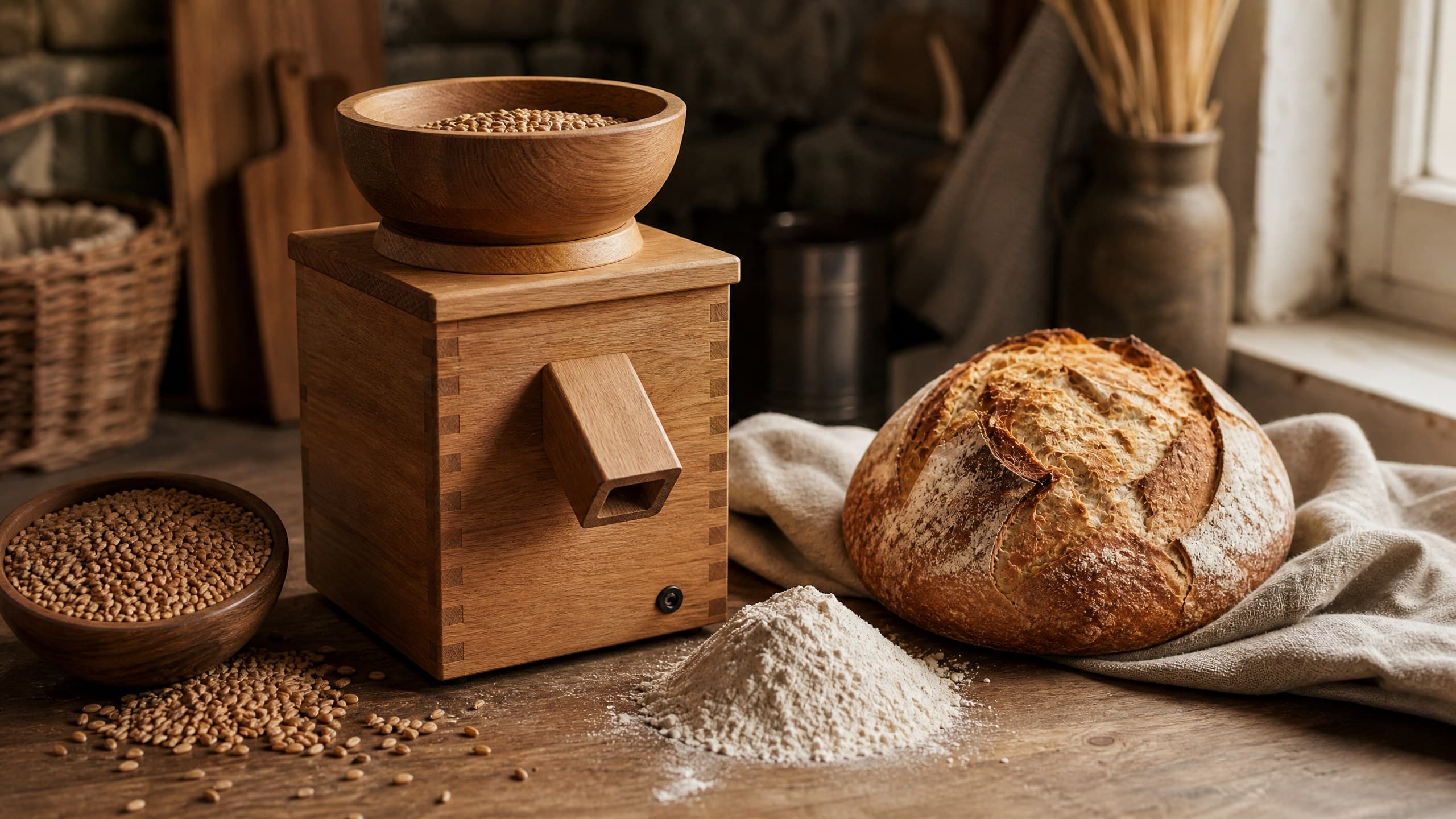
Quick answer
A home grain mill for sourdough is the deepest quality lever most bakers never pull: fresher flour than any bakery can ship. The moment wheat is milled, the clock starts — the germ's oils begin to oxidize and the live, sweet flavor fades within weeks. Bagged flour at the store is often months old before you open it. A stone-burr mill like the Mockmill 200 puts fresh-milled flour back within arm's reach, and the difference in the loaf is immediate.
Why fresh-milled flour changes the bread
Sourdough is a flavor-first bread, and flour is most of that flavor. Freshly milled wheat carries the germ's oils, a gentle sweetness, and an aroma that bagged flour lost weeks ago. Bake with it within a day or two and the crumb tastes rounder and more complex; the same recipe with old flour tastes flat by comparison. You also control the grain — hard red for structure, soft white for tenderness, or a blend — and the grind, from coarse for rustic to fine for pan loaves.
The honest take: milling is a commitment, not a shortcut. The flour is perishable, the gear takes counter space, and your first few loaves need tuning. But if flour quality is what you care about, nothing else comes close.
What to look for in a home grain mill
- Stone burrs. They grind cool, preserving the germ's oils and flavor — the right choice for bread.
- Enough throughput. ~200 g per minute (the Mockmill 200's rate) covers a loaf or two per session without a long wait.
- Adjustable grind. Coarse to fine in steps, so you can match the flour to the loaf.
- A form that fits your kitchen. Standalone or mixer-attached; pick what your counter and existing gear allow.
- Durable burrs. Corundum-ceramic or similar stone that stays sharp through many kilos of grain.
- Easy loading and cleanup. You'll mill often, so filling and brushing out should be quick.
Mill types compared
| Type | Good for | Flavor retention | Cons |
|---|---|---|---|
| Stone-burr (e.g. Mockmill 200) | Bread, fresh flour daily | High — cool grind | Counter space, perishable flour |
| Steel-burr electric | Fine pastry flour, volume | Medium — runs hot | Can scorch flavor, less aromatic |
| Manual hand mill | Occasional, off-grid | High | Slow, arm work for a loaf |
Mockmill 200 — our take
Two honest caveats. Freshly milled flour is perishable; you're signing up to mill often, not to stock a pantry. And the first loaves need a little more water and a slightly longer autolyse while you learn the flour's behavior — blend with sifted flour early if the crumb feels too sharp. The mill changes the flour, not the fermentation; your starter and bulk still do the real work.
Buy on AmazonReady to bake with your fresh flour? The classic sourdough bread recipe shows the mix, and the beginner's guide to sourdough walks the first bake. A kitchen scale keeps your fresh-milled grams exact, and a bread slicer makes the finished loaf worth showing off.
Frequently asked questions
Why mill my own flour for sourdough?
Because flour starts degrading the moment it's milled. The germ's oils go rancid and the flavor fades within weeks, so supermarket flour is often months old and flat. Milling at home gives you flour at its peak — sweeter, more aromatic, and with live character that lifts a sourdough loaf. You also control the grind and the grain.
What is the Mockmill 200 and who is it for?
The Mockmill 200 is a stone-burr grain mill that attaches to a standard mixer or stands alone, grinding around 200 g of flour per minute. It's aimed at serious home bakers who want fresh flour without a bulky industrial unit. If you bake a loaf or two a week and care about flour quality, it fits; if you rarely bake, the counter space is hard to justify.
Stone burr vs steel burr — which for bread?
Stone burrs grind at lower temperature, preserving the oils and flavor in the germ, which is exactly what you want for bread flour. Steel burrs run hotter and are better for fine, uniform pastry flour but can scorch flavor. For sourdough, stone-burr is the standard choice.
Can I use freshly milled flour the same as store flour?
Mostly, with two notes. Fresh whole-grain flour is thirstier and the bran is sharper, so your first loaves may need a touch more water and a slightly longer autolyse. Many bakers blend fresh milled with sifted or white flour to soften the crumb. Expect a learning curve of a few bakes, not a failed loaf.
How long does home-milled flour stay good?
Use it within days, not weeks. The germ oils that make it taste great also go rancid quickly once exposed to air. The practical routine is to mill what you'll bake in the next day or two, not to fill a jar for the month. That's the real trade-off versus buying a big bag of commercial flour.