Best Bread Slicer for Even Sourdough Slices
How to choose a manual bread slicer for even sourdough slices: guide-style frames, adjustable thickness and crumb-friendly cutting — plus our pick.
By Maya Ellison · Reviewed by Maya Ellison · Updated August 29, 2026 · 3 min read
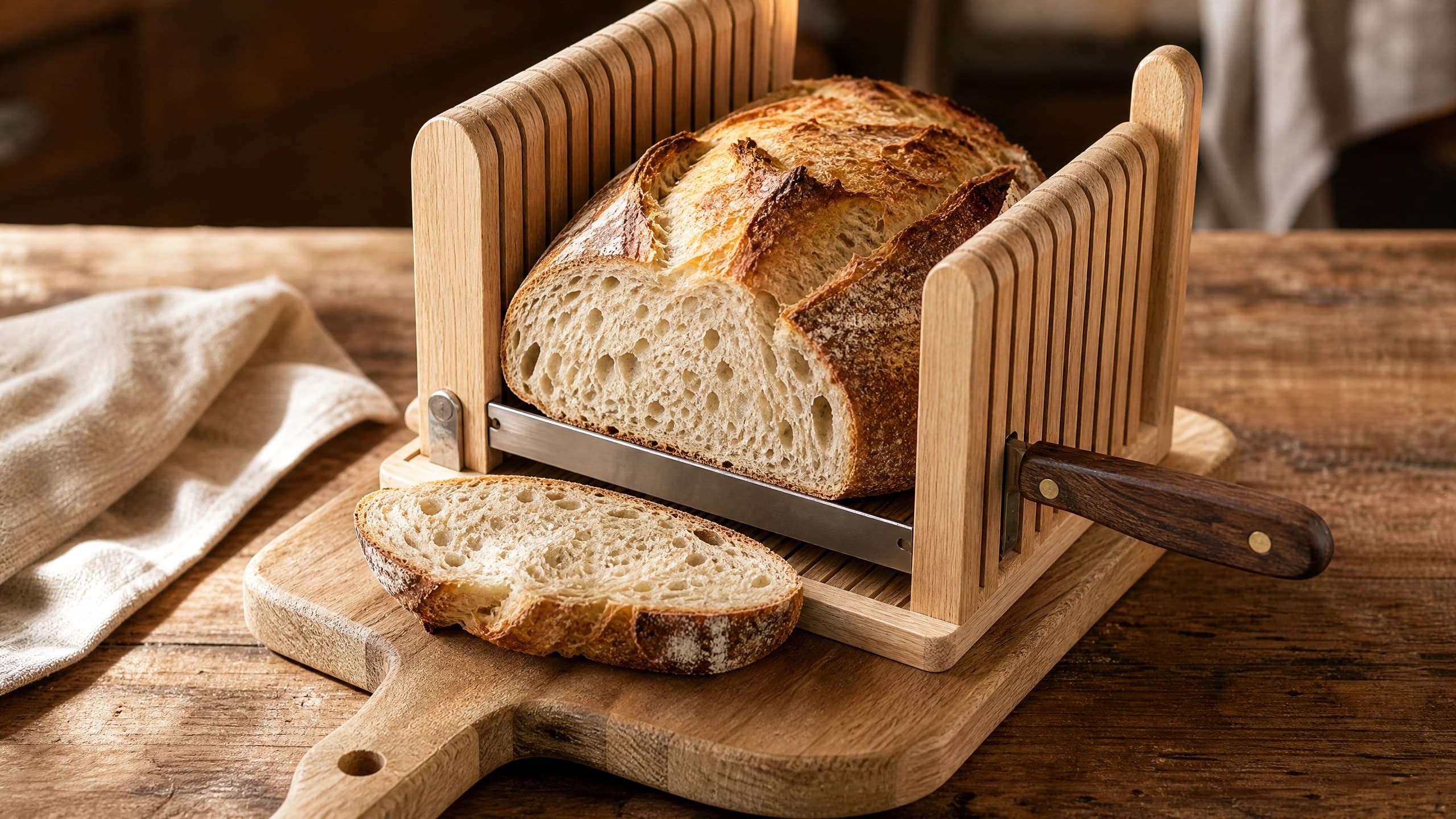
Quick answer
A bread slicer for even sourdough slices solves the oldest problem in the home bakery: you bake a beautiful boule, then hack it into wedges of wildly different thickness. A guide-style manual bread slicer holds the loaf still and sets the cut, so every slice is the same — toast that fits the toaster, sandwiches that stack, and a crumb that stays intact instead of compressed by a wandering knife.
Why even slices actually matter
Sourdough crust is hard and the crumb is open and irregular, so free-hand cuts drift: thin at the heel, thick in the middle, torn at the tip. Uneven slices toast badly, sandwich poorly, and waste a loaf's best middle. A slicer guide removes the human variable. It also keeps your hand away from a long serrated blade — the safest way to cut a crusty loaf is with the loaf locked in a guide.
The honest take: you can absolutely slice free-hand with a sharp serrated knife, and many bakers do. A manual slicer is for when you want repeatability, safety, and slices that actually match — not a gadget you'll use once.
What to look for in a manual bread slicer
- Guide-style frame, not a board with a groove. A frame that cradles the loaf and shows the cut line gives even slices; a simple groove just steadies the knife.
- Adjustable thickness. Movable guides or multiple slots let you go thin for toast, thick for sandwiches. Fixed is fine if your use never changes.
- Stable, non-slip base. The slicer must stay put while you saw through a hard crust. Rubber feet or a heavy base matter more than looks.
- Room for a full boule or batard. Check the channel length against your largest loaf; a too-short guide wastes the ends.
- Crumb-friendly cutting. A sharp serrated knife through the slots, with the loaf held gently, keeps the open crumb from collapsing.
- Easy cleanup. Crumbs collect fast; a design you can brush or wipe in seconds gets used daily.
Slicer styles compared
| Style | Good for | Evenness | Cons |
|---|---|---|---|
| Guide-frame manual slicer | Everyday even slices | High | Needs counter space, one loaf at a time |
| Cutting board with slot | Steadier free-hand cuts | Medium | Less consistent thickness |
| Powered electric slicer | High volume | High | Bulky, crumbs a delicate crumb, pricey |
| Pure free-hand + serrated knife | Minimal gear | Low | Uneven, knuckle risk |
Our recommendation
Two honest caveats. A slicer won't fix a dull knife; pair it with a sharp serrated blade or you'll crush the crumb regardless of the guide. And if you bake one loaf a month, free-hand cutting is perfectly respectable — the slicer pays off when slicing is a regular habit, not a rare event.
Buy on AmazonFresh loaf cooling on the counter? The beginner's guide to sourdough covers the full bake, and our classic sourdough bread recipe is the loaf worth slicing evenly. A kitchen scale gets the bake right so the slicer only has to make it pretty.
Frequently asked questions
Why use a guide-style slicer instead of just a bread knife?
A good serrated knife cuts sourdough, but keeping every slice the same thickness freehand is hard, especially through a tough crust. A guide frame holds the loaf and sets the cut depth so each slice comes out even. It's also safer — the guide keeps your knuckles away from the blade.
What does adjustable thickness actually do?
It sets how thick each slice is, usually with a movable guide or a set of slots. Thin for toast, thick for sandwiches or avocado bread. If you eat the same way often, a fixed guide is fine; if your uses vary, an adjustable one earns its place.
Will a manual slicer crush a soft, freshly baked loaf?
It can if the loaf is still warm and the crumb is fragile. Let the bread cool fully and set its crust — ideally a few hours or overnight — before slicing. A guide-style slicer with a gentle hold and a sharp serrated knife through the slots keeps the crumb intact.
Wooden or plastic bread slicer?
Wooden guides look good on the counter and stay put; they're easy to wipe but can stain. Plastic is lighter and dishwasher-friendly but can slide. Either works — the real test is a stable base and slots that match your usual slice thickness.
Do I need a powered bread slicer?
Almost never at home. Powered slicers are fast for high volume but take counter space, need cleaning, and can pulverize a delicate sourdough crumb. A manual guide plus a sharp serrated knife gives you control and clean slices for a fraction of the cost.