Homemade Pasta Without a Machine: Rolling, Cutting and Shaping by Hand
Make homemade pasta with just a rolling pin and a knife — no machine needed. Hand-roll thin sheets, cut ribbons, and shape pappardelle and hand-cut pasta on a floured bench.
By Maya Ellison · Reviewed by Maya Ellison · Updated August 21, 2026 · 2 min read
Quick answer
Homemade pasta without a machine — a phrase that lands somewhere between a challenge and a cozy morning, and the good news is the whole skill fits in two hands and a rolling pin. Roll the dough thin, cut it by hand and the reward is ribbons as soft and honest as any machine makes. This is the pin-only path up the same fresh-pasta skill tree as the master dough — same ratios, no attachments.
Break the dough into working pieces
Rolled pasta dough is best managed a small piece at a time. Cut the ball into four, keep the rest wrapped tight so they don't skin over, and work one at a time. Otherwise — rolling the whole slab at once is how beginners end up with a sheet one side thick as a slab, the other thin as vellum.
Roll thin, turn often
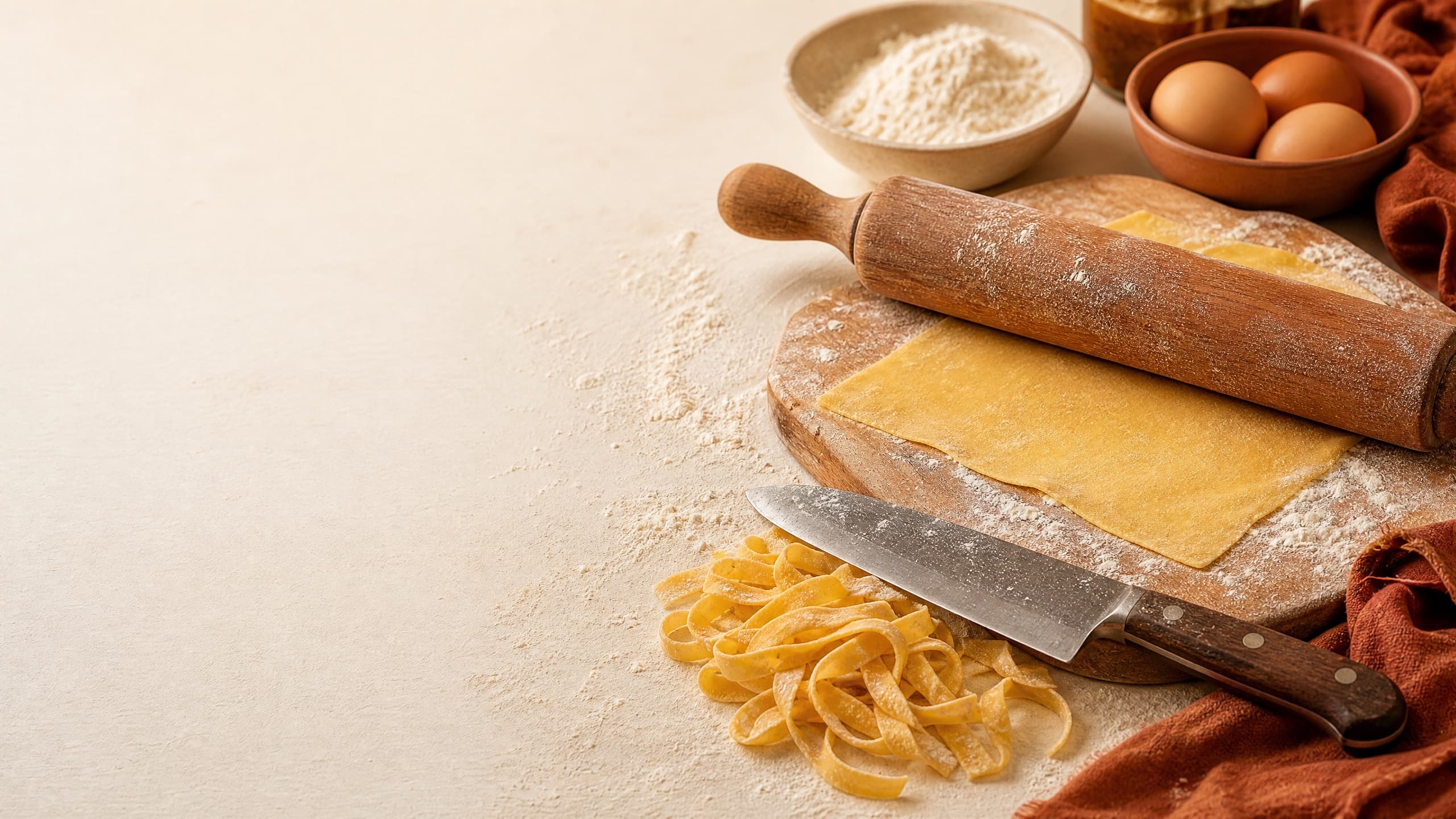
Flatten one piece into a thick oval, then roll from the center outward, giving the dough a quarter turn between passes. The quarter-turn is the whole hand-rolling trick: it keeps the sheet roughly round and even instead of a rectangle stretched sideways. Between passes, let the dough briefly relax or it fights back and shrinks.
Drying and cutting by hand
A dusted, semi-dried sheet is far easier to cut than a fresh, sticky one. Let the sheet rest 5-10 minutes, or until it feels like leather, then fold it over into accordion folds and slice straight across with a sharp knife, shaking out the ribbons as you go. For the wide, ruffled pappardelle, keep the strokes long and even.
Cooking and beyond
Hand-cut ribbons are delicate and fast — 2-4 minutes in generously salted water, or drop them straight in frozen. Gather under a silky alfredo and you have a bowl that tastes like a plane ticket. The same hand skill carries further, too: pici rolled between the palms, pinched tortellini, folded ravioli.
Frequently asked questions
How thin does hand-rolled pasta need to be?
Thin enough to almost see through — about 1-2 mm for regular noodles, a touch thicker for pappardelle. Rolling in stages, resting between passes, is what makes the sheet even without a machine.
Why add flour and rest the sheet before cutting?
A slightly dried, flour-dusted sheet cuts cleanly and won't clump together on the bench. Rushing it is why hand-cut pasta sticks into a clump the moment the water hits it.
Do I need special equipment to cut the noodles?
No — a sharp, long chef's knife or a classic zigzag pastry cutter is all you need. Confident, even strokes give straight, beautiful ribbons.