Homemade Ravioli: The Beginner's Complete Guide
Homemade ravioli, step by step — thin fresh pasta sheets, a simple filling, and a fork-pressed seal. The beginner's guide to shaping, freezing and cooking ravioli at home.
By Maya Ellison · Reviewed by Maya Ellison · Updated August 21, 2026 · 1 min read
Quick answer
Rolling a very thin sheet, dotting it with a soft filling, pressing a second sheet over the top and boiling the pillows a dozen minutes later — that's homemade ravioli, and it's one of the most deeply satisfying afternoons in the kitchen. This guide walks the exact path, from the dough to the boil, and it pairs with the sourdough pasta family if you want the tang in the sheet.
Roll the sheets especially thin
Filled pasta has two layers of dough under every bite, so the sheets want to be thinner than party noodles — nearly translucent, rolled through the widest, then eased up to about setting 5-6. A thin, cold, rested sheet presses and crimps cleanly instead of lumping around the filling.
Dot, press, stamp
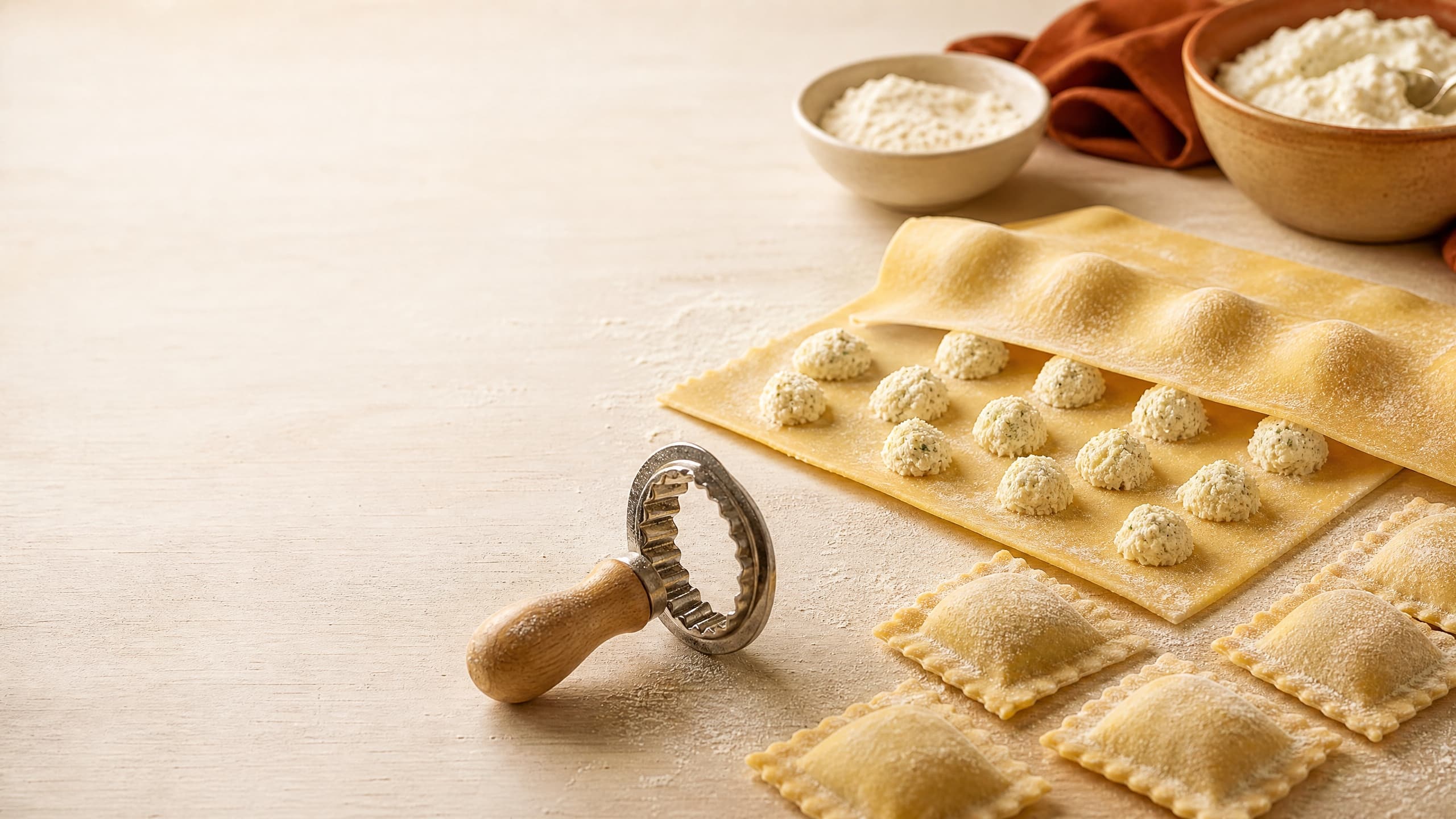
Lay a floured sheet on the bench, then dot the filling evenly in small teaspoons over a wide area. Press the second sheet over the top, coaxing the air out around each mound so the two crumb sheets seal tightly. Stamp with a cutter, crimp each edge lightly with fork tines and the ravioli are ready for their rest — or their tray.
The filling and the fret
Ricotta, a beaten yolk and grated Parmesan is the beginner's dream filling — soft, forgiving and endlessly pair-able. Semolina-dust, a 10-minute semi-dry on the bench, and the ravioli are ready to boil 3-4 minutes in salted water, or freeze flat on a tray for a batch of pillows whenever you want them. A spoon of butter and sage or an authentic no-cream alfredo is the classic finish — and a ravioli in the right sauce is the whole reward.
Frequently asked questions
What's the best dough for homemade ravioli?
The master pasta dough, rolled especially thin for filled shapes. Too thick under a filling turns dumpling-like; too thin and the single may tear. Setting 5-6 on the roller is the sweet spot.
Why press out all the air around the filling?
Trapped air swells and bursts in the hot pot, sinking the ravioli and leaking the filling. Firm sealing against each muffin is the difference between plump pillows and cracked ones.
Do I have to freeze them before boiling?
No — a short 10-minute semi-dry rest is enough to keep them from sticking. Freezing is for making a big batch ahead; they boil straight from frozen in a few extra minutes.
What fillings work best?
Ricotta-based fillings are the beginner playground, because they're mild, forgiving and hold their shape. Mushroom and ground meat come later, once the seal feels natural.