Best Bread Machine for Sourdough
How to choose a bread machine for sourdough: why a long customizable dough cycle and independent bake setting matter, plus pan size and what presets to ignore.
By Maya Ellison · Reviewed by Maya Ellison · Updated August 29, 2026 · 4 min read
Quick answer
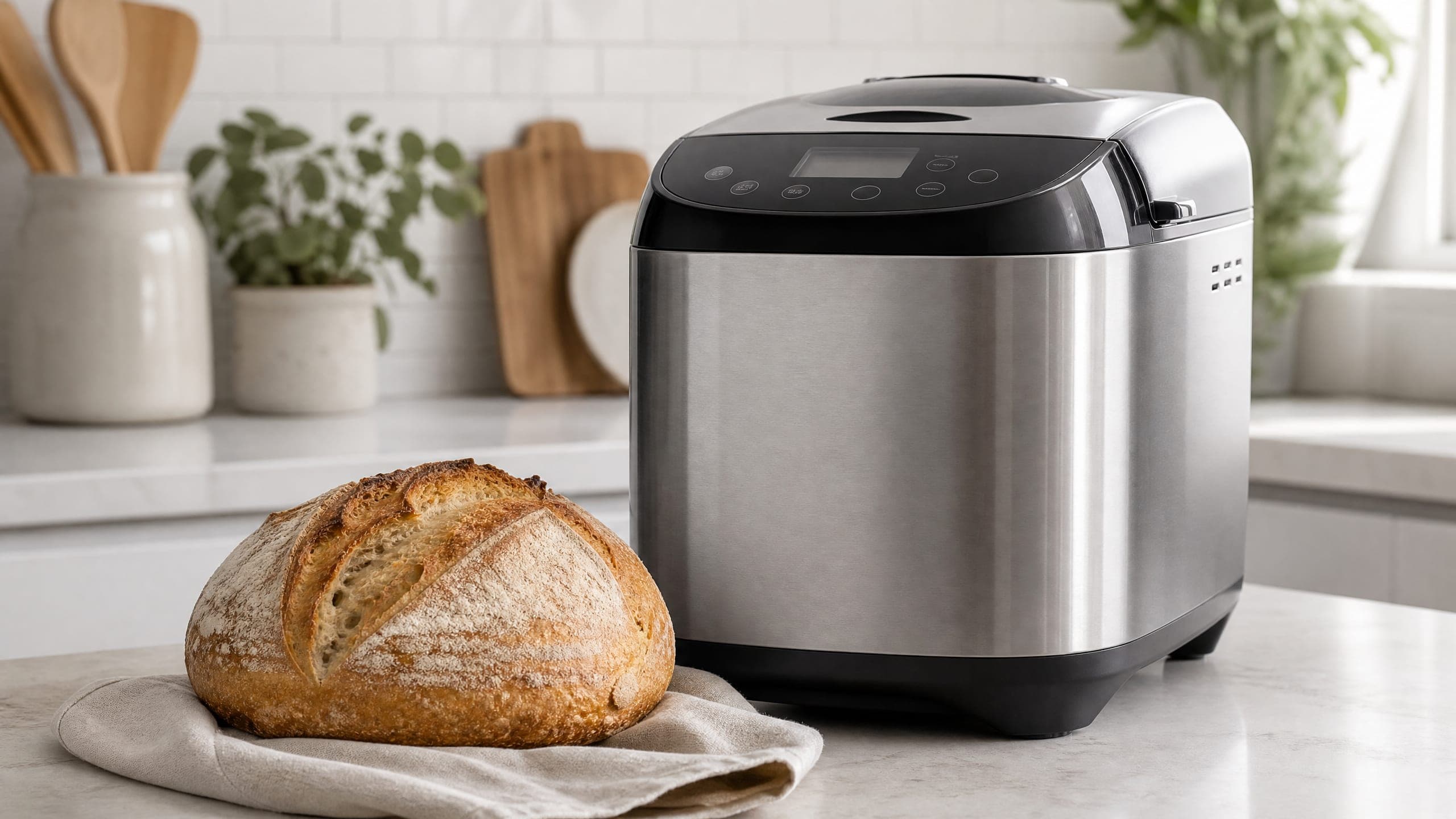
A bread machine for sourdough is a different animal from a bread machine for yeast loaves. Most machines are built around fast, yeast-driven programs that rush through a rise in an hour — but sourdough moves on the clock of a living starter, often needing many hours of gentle fermentation. The machines that handle sourdough well are the ones that let you control time: a long, adjustable dough cycle plus a separate bake setting, so the starter does the work and the machine just keeps the environment steady.
Why the cycle matters more than the presets
Sourdough fermentation is slow by design. A preset labeled 'basic' or 'French' assumes commercial yeast and a quick rise, which will under-proof a starter loaf and leave you with a dense, sour brick. What you actually need is a machine that lets the dough sit for hours at a warm, stable temperature while the starter multiplies and acids develop. That long dough phase is the whole game; the bake is almost an afterthought the machine can also handle. Our sourdough bread machine guide goes deeper on programming the cycles.
What to look for in a bread machine for sourdough
- A long, customizable dough cycle. You want control over rise time, not a fixed 60-minute program.
- An independent bake setting. So you can ferment with the starter, then brown the loaf on its own schedule.
- A 2-lb (about 1 kg flour) pan. Fits a standard family loaf with room to rise.
- A viewing window. Lets you watch fermentation and crust without opening the lid and losing heat.
- A delay timer. Handy for having a baked loaf ready, though with sourdough the long natural rise usually matters more than the timer.
- Even, reliable heating. Consistent bottom and side heat prevents pale, gummy centers.
Custom vs preset cycles compared
| Feature | Why it helps sourdough | What to avoid |
|---|---|---|
| Customizable dough cycle | Lets the starter ferment for hours | Fixed short yeast presets |
| Separate bake setting | Bake after natural proof | All-in-one yeast programs |
| 2-lb pan | Room for a full loaf | Tiny 1-lb pans for big batches |
| Viewing window | Monitor rise and crust | Constant lid opening |
| Delay timer | Schedule finishing | Relying on it instead of starter timing |
Customizable cycles
Pros: you control fermentation length to match your starter's pace. Cons: takes a little learning to program the first time.
Viewing window and dispenser
Pros: a window lets you check without heat loss; some machines add a nut/seed dispenser. Cons: a window can slightly weaken insulation, and dispensers are irrelevant for plain sourdough.
What NOT to rely on
Do not lean on yeast-only presets, and do not expect a 'sourdough' button on a cheap machine to mean anything useful — often it is just a slightly longer yeast cycle. The machine cannot substitute for a healthy, peaked starter; if your culture is sluggish, no program will save the loaf. Build the fermentation on a strong starter first, then let the machine hold the environment. The sourdough starter guide covers getting that culture reliably active.
Our recommendation
A bread machine is a convenience, not a replacement for a living culture. Pair it with a reliable sourdough starter and the sourdough bread machine guide for cycle settings that actually fit a starter loaf.
Buy on AmazonWant the full method? The sourdough bread machine guide explains programming the cycles, and the sourdough starter guide keeps your culture bake-ready.
Frequently asked questions
Which bread machine cycle do I use for sourdough?
Use the dough cycle, not a yeast bread preset. A good machine lets you run a long, customizable dough program — mix, then a multi-hour rise driven by your starter rather than commercial yeast — and then switch to a separate bake phase. Avoid any cycle that assumes a fast yeast rise.
Can a bread machine actually bake sourdough?
Yes, if it has an independent bake setting. You let the machine mix and hold the dough through a long starter fermentation, then use its bake cycle to brown the loaf. The crumb will be a little more uniform than a Dutch-oven bake, but it is real sourdough made with a living starter.
How much starter should I use in a bread machine?
Roughly 100–150 g of active, recently fed starter in a standard 2-lb loaf built on about 500 g of flour works well, but follow your machine and recipe. The key is a mature, bubbly starter at peak, since the machine's gentle heat alone will not power fermentation the way yeast would.
Is a bread machine worth it for sourdough?
It is worth it if you want repeatable mixing and hands-off proofing, especially in a cold kitchen. It will not replace the crust and open crumb of a Dutch-oven bake, but it removes much of the timing guesswork. Pair it with a solid starter method rather than a yeast-only preset.