Sourdough Bread Machine Method (Hands-Off Loaf)
How to make sourdough in a bread machine using an active starter instead of yeast: which cycle to run, how much starter to use, and how to fix a dense loaf.
By Maya Ellison · Reviewed by Maya Ellison · Updated August 29, 2026 · 3 min read
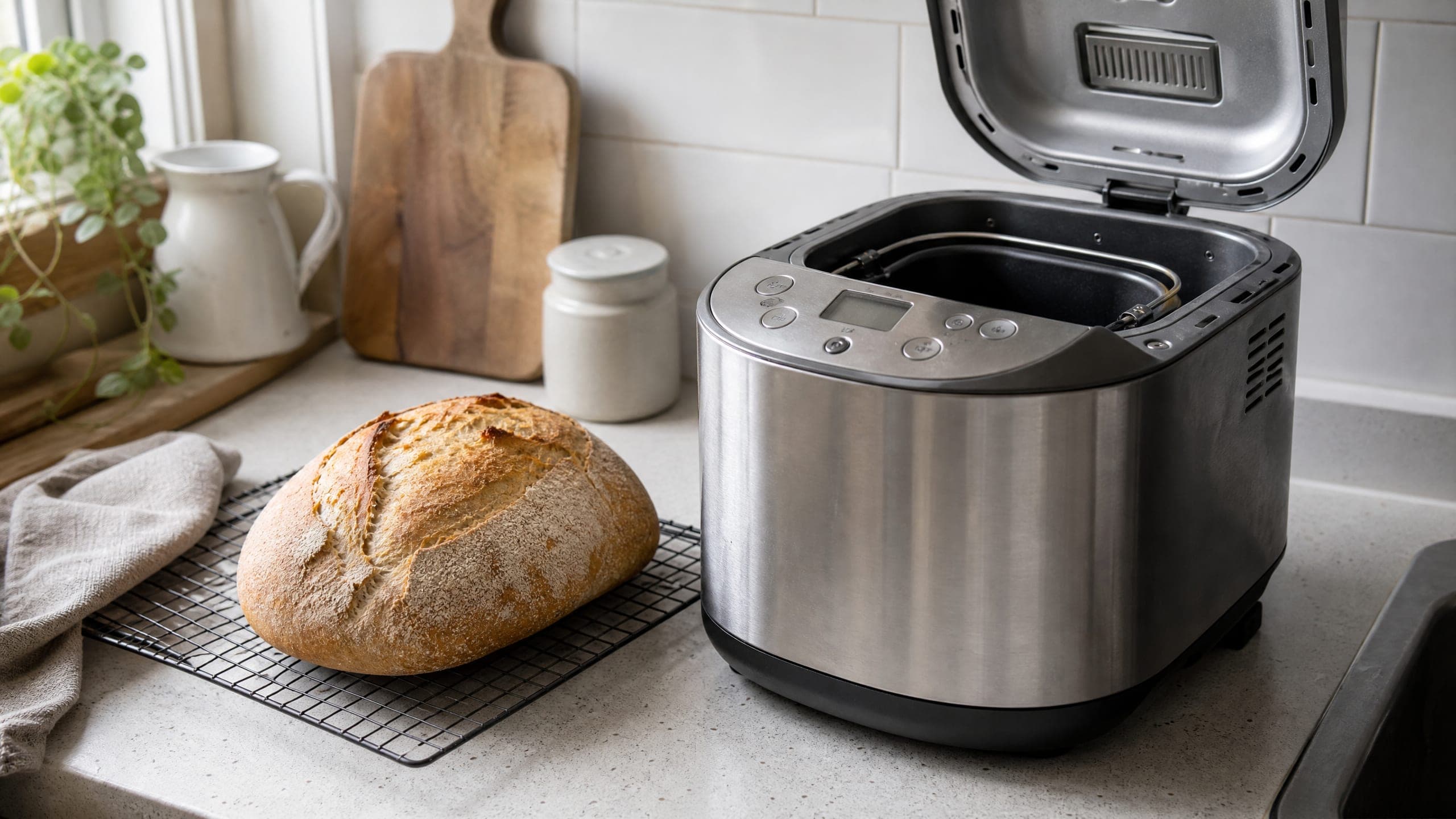
Quick answer
A bread machine sounds like the opposite of everything sourdough stands for — no long folds, no cold proof, no scorching Dutch oven. But it works, and it is the most hands-off way to get a real sourdough loaf on the table. The trick is simple: the machine handles the knead and the bake, while you supply a mature starter instead of yeast and give the dough the long ferment the machine's clock won't provide on its own.
Can you use a bread machine for sourdough?
Yes — with one hard rule: use an active starter, not yeast. A bread machine is built around short, fast cycles timed for commercial yeast. Wild sourdough is slower, so the machine can't run a normal preset and expect lift. Instead you use the machine as a kneader and oven, and you control the fermentation window yourself.
Choosing the cycle
There is no sourdough button, so build your own:
- Knead: run the dough cycle to mix and develop the dough.
- Ferment: let the dough rise inside the machine for several hours. Many machines finish the dough cycle too soon, so either extend it, pause it, or move the dough to the fridge overnight and return it to the machine to warm before baking.
- Bake: run a basic or artisan bake cycle. If your machine can't chain them, start the bake manually once the dough has clearly risen.
How much starter, and hydration
Use 150-200g of active starter for a standard 1.5 lb loaf, which replaces part of the recipe's flour and water. Keep hydration moderate, around 65-70%, because the machine's paddle develops less strength than stretch-and-folds — a wetter dough just slumps into a dense pan loaf. A mature starter also means you don't need the long prefetch a Dutch-oven loaf gets; the machine's heat does the rest.
Why a mature starter matters here
A bread machine's timers are fixed, so the dough has to rise within the window the machine gives it. A starter at peak — bubbly, domed, and floating in water — will. A cold or sleepy starter won't, and no amount of machine time fixes that. Feed your starter the night before and confirm it's active before you load the pan. If you need to build one, the sourdough starter guide covers getting it there.
Troubleshooting a dense loaf
- Under-active starter: feed to peak and retry; a pinch of yeast can rescue a weak starter in a pinch.
- Too short a ferment: give the dough a full several-hour rise, longer than a yeast loaf.
- Too wet: drop hydration to 65-70% so the paddle can hold structure.
- Too much starter: over ~30% the dough gets slack and sour; pull back toward 20-25%.
This method is the lazy cousin of the full sourdough bread recipe — same flavor, far less effort, and a reliable loaf when you'd rather let the machine do the work.
Frequently asked questions
Does bread machine sourdough need yeast?
No. A mature, active sourdough starter does the leavening. The catch is that a bread machine's timers are short, so the starter must be at peak activity — a sluggish or cold starter won't lift the dough in the machine's fixed windows and you'll get a brick. If your starter is weak, a tiny pinch of yeast can back it up, but it isn't required with a healthy starter.
Which cycle should I use?
There is no sourdough preset, so use the manual approach: run the dough cycle to knead, pause or let it finish, then give the dough a long ferment inside the machine (or overnight in the fridge), and finally run a basic or artisan bake cycle. Some machines let you string dough + bake; otherwise start the bake manually once the dough has risen.
How much starter do I add?
About 150-200g of active starter for a standard 1.5 lb loaf, replacing part of the flour and water in the recipe. That's roughly a 20-30% starter proportion, enough to lift the dough within the machine's timeline without making it too sour or slack.
Why is my bread machine sourdough dense?
Almost always an under-active starter, too short a ferment, or too much starter thinning the dough. Make sure the starter floats in water at peak, give the dough a full several-hour rise (longer than a yeast loaf would need), and keep hydration moderate — around 65-70% — since the machine's paddle can't develop strength the way hand-stretch-and-folds do.
Can a bread machine actually bake sourdough?
Yes. It bakes a perfectly good, if pan-shaped, loaf. You lose the open crumb and blistered crust of a Dutch-oven boule, but you gain a near hands-off process. It's a solid everyday method, and pairs well with a bread machine considered on the site's gear page if you want the convenience without babysitting the proof.