Best Sourdough Starter Jar
How to choose a sourdough starter jar: glass vs plastic, size, wide mouth, measurement marks, and the right lid for happy counter fermentation.
By Maya Ellison · Reviewed by Maya Ellison · Updated August 29, 2026 · 3 min read
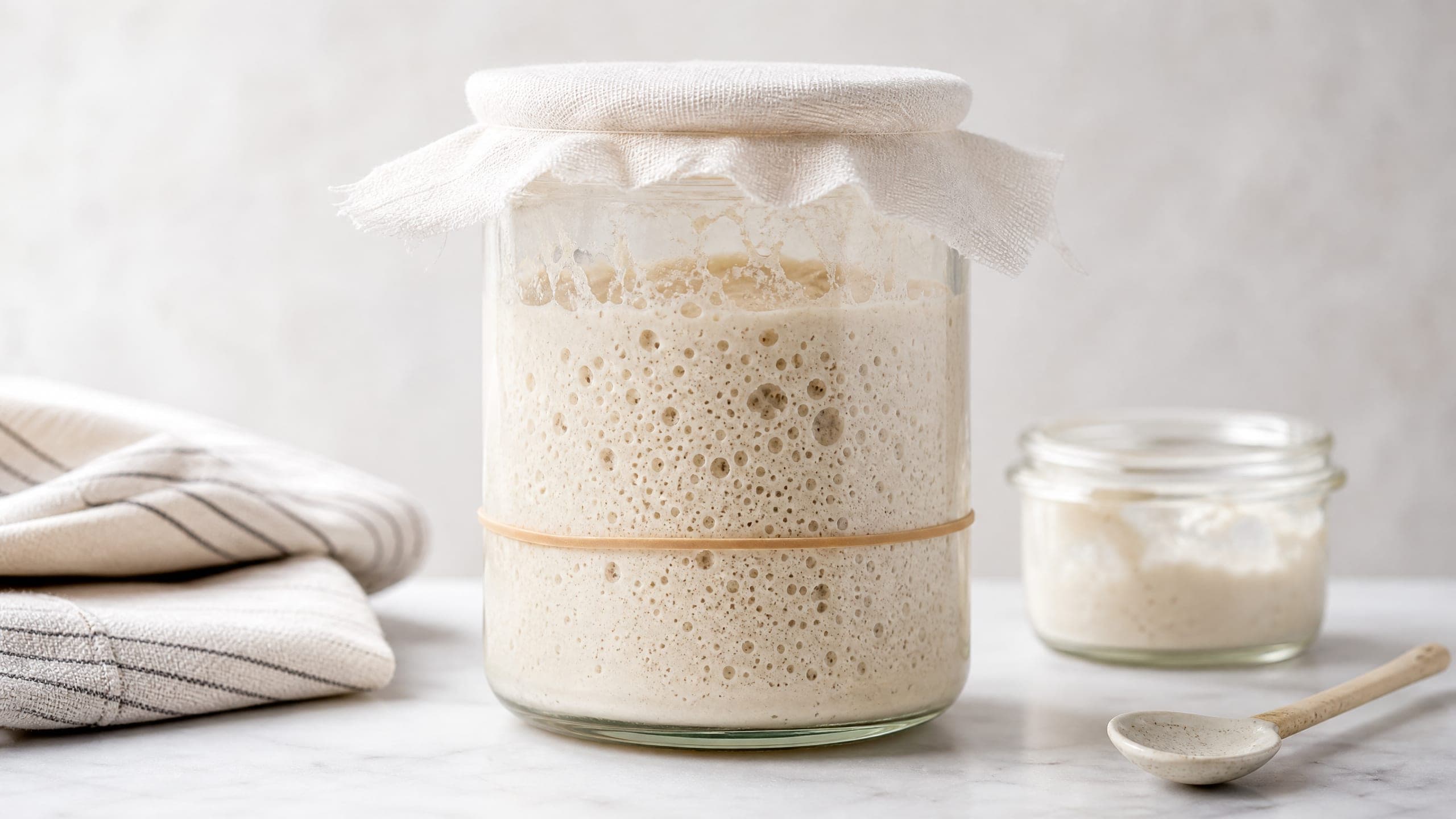
Quick answer
A sourdough starter jar is the small, unglamorous vessel that holds your living culture on the counter — and the right one makes daily feeding far less messy. You want to see the starter rise and fall, judge when it has peaked, and scrape it out cleanly, all without fighting a narrow neck or a sealed lid that traps gas. The best sourdough starter jar is clear, straight-sided, and sized with headroom for a vigorous double.
Why a dedicated sourdough starter jar works
A starter is alive, and its behavior is written on the side of the jar. The rise and fall tell you when it is at peak and ready to bake, the clear wall lets you watch for separation and hooch, and a wide mouth means you can clean every smear instead of leaving old culture to spoil the next batch. A good jar turns an invisible process into something you can read at a glance, which is exactly what a beginner needs. Our sourdough starter guide walks through the feeding rhythm these jars support.
What to look for in a sourdough starter jar
- Clear glass, straight sides. You can watch the rise line and the marks stay readable; straight walls make scraping and cleaning simple.
- Around 1 liter (1 quart) in size. Enough headroom for a double without overflow, small enough to read at a glance.
- Wide mouth. Easier to feed, stir, and clean than a narrow-neck bottle.
- Measurement marks. Graduated lines let you track volume and skip a separate measuring cup.
- A loose lid, cloth, or vented cover. The culture must breathe; a tight seal traps gas and can pressurize.
- Dishwasher-safe glass. Daily use means frequent washing, so easy cleanup matters.
Glass vs plastic vs other materials
| Material | Clarity | Cleaning | Odor hold | Best use |
|---|---|---|---|---|
| Glass (straight-sided) | Excellent | Easy, dishwasher-safe | None | Everyday starter, recommended |
| Plastic | Poor, clouds | Scratches trap residue | Can hold smells | Backup or travel only |
| Weck / clip jars | Excellent | Easy, wide mouth | None | Counter display, gifting |
| Ceramic crock | Opaque | Hard to see rise | None | Decorative, not for reading rise |
Glass jars
Pros: clear, non-porous, dishwasher-safe, no smell. Cons: breakable if dropped; avoid a fully sealed metal lid.
Weck and clip-top jars
Pros: pretty on the counter, wide mouth, glass clarity. Cons: the rubber gasket and clip need occasional checks; still cover loosely, not airtight.
Plastic
Pros: light and unbreakable. Cons: scratches hold old starter and odors, and it clouds so you lose sight of the rise. Use only as a spare.
Our recommendation
One honest note: no jar makes a starter active on its own. The jar just makes the daily rhythm easier to see and keep clean, which is half the battle when you are learning the sourdough starter process.
Buy on AmazonStarting out? Our sourdough starter guide explains feeding and peak timing, and the beginner's guide to sourdough shows where the jar fits into your first bakes.
Frequently asked questions
What size jar should I use for a sourdough starter?
A 1-liter (about 1-quart) jar is the sweet spot for a home starter. A mature starter roughly doubles, so you want a jar at least three to four times the volume of your daily feeding so it has room to climb without overflowing. Smaller jars overflow during a vigorous rise; much larger jars make it hard to see what's happening.
Is glass or plastic better for a sourdough starter jar?
Glass is better for most bakers. It is non-porous, odor-free, easy to see through, and dishwasher-safe, so you can watch the rise and spot hooch or discoloration. Plastic can scratch, hold smells, and cloud over time. Glass also handles the mild acidity of a starter without worry.
Does the lid matter on a sourdough starter jar?
Yes — the lid must let gas escape. A screw-on metal lid tightened down traps carbon dioxide and can build pressure or suffocate the culture. Use a loose cap, a cloth secured with a rubber band, or a purpose-made lid with a small vent. The starter needs to breathe, not be sealed airtight.
Can I use a regular canning jar for my sourdough starter?
Yes, a standard canning jar works well and is a common choice. Wide-mouth versions are easiest to clean and to scrape starter out of. Just don't screw the metal lid on tight; cover with the flat lid loosely, a cloth, or a vented lid instead.