Sourdough Discard Hamburger Buns
Sourdough discard hamburger buns — soft, sturdy, lightly tangy buns that hold a burger without falling apart, baked golden in under a day.
By Maya Ellison · Reviewed by Maya Ellison · Updated August 29, 2026 · 2 min read
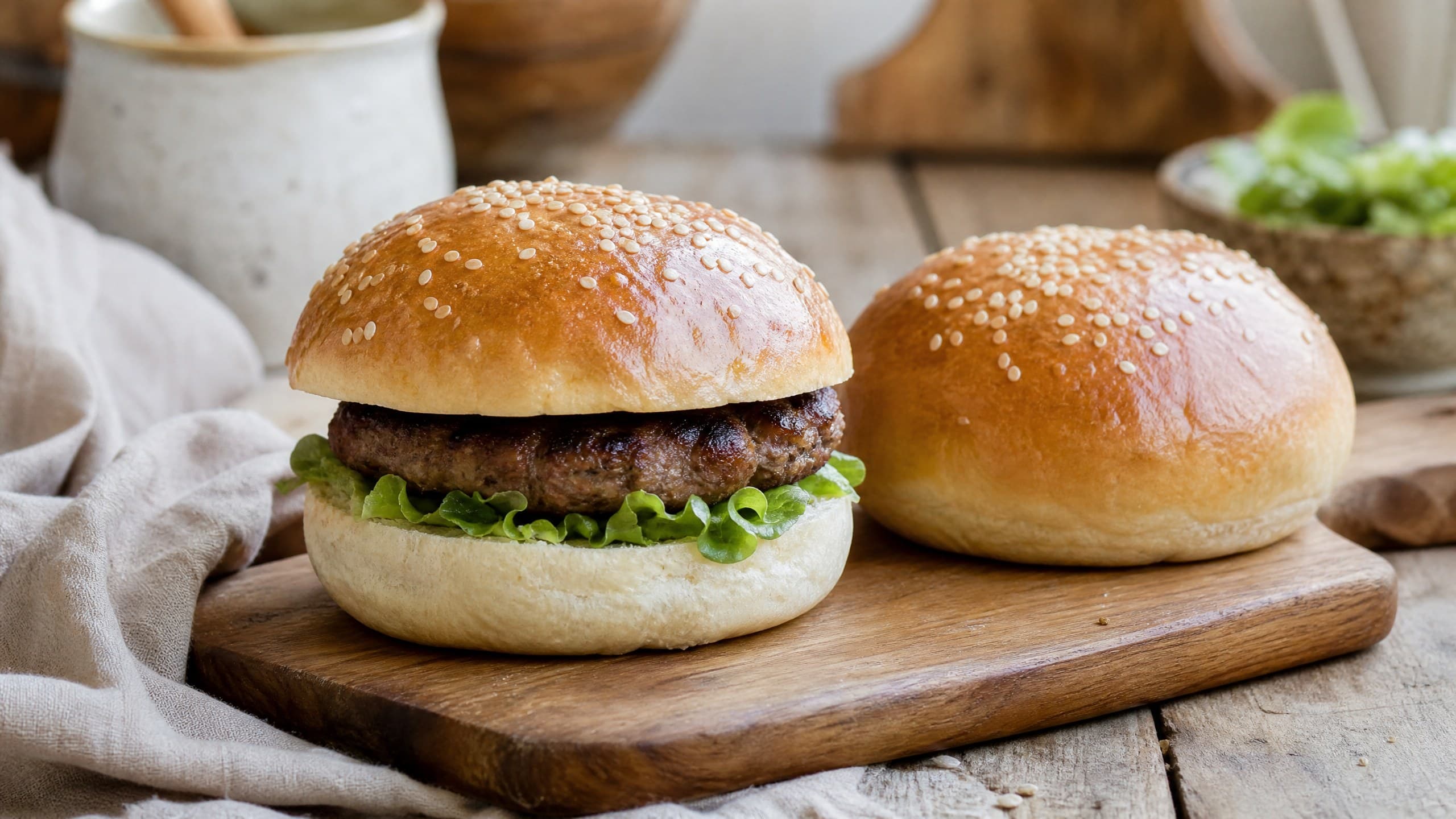
Sourdough hamburger buns are the upgrade your backyard burgers are missing: soft enough to bite through cleanly, sturdy enough to hold a stacked patty and its juices, and just tangy enough to taste like something made on purpose. This recipe uses discard for flavor and a little yeast for a same-day rise, with milk powder and butter enriched in for that classic soft bun chew. They take about 4 hours and turn out golden, rounded, and built to cradle a burger without falling apart.
Why this recipe works
A good burger bun walks a line: too crusty and it fights the burger, too soft and it dissolves. The enriched dough — butter, egg, milk powder — gives you a tender but resilient crumb, while the discard adds a quiet sour note that cuts through rich meat and cheese. Kneading to a smooth, elastic windowpane is what keeps the crumb even, and an egg wash is what delivers that glossy, diner-style top instead of a matte homemade look.
Shaping and proofing
Tight balls are the whole game here. Pull the surface taut and tuck the seam underneath so each bun bakes up round instead of spreading into a flat disc. Proof until puffed and just starting to touch their neighbors — over-proofed buns relax and bake flat. A light hand with the egg wash matters too; brush gently so you don't knock the air back out after all that rising.
Serving and storage
Cool completely before slicing or you'll shred the crumb — a wire rack and 30 minutes of patience pays off. These freeze cleanly for up to 3 months, and a few minutes in a warm oven brings them back to soft better than any microwave. For more ways to spend a jar of discard, the sourdough discard recipes hub has the full lineup, and the sourdough starter guide covers keeping your jar lively.
Ingredients
Weights in grams are the source of truth; cup measures are approximate.
- 150 g sourdough discard (unfed, straight from the fridge)
- 500 g bread flour (about 4 cups)
- 50 g milk powder (about 1/3 cup)
- 270 g warm water (about 1 cup plus 1 tablespoon)
- 4 g instant yeast (about 1 1/4 teaspoons)
- 9 g fine salt (about 1 1/2 teaspoons)
- 30 g sugar (about 2 tablespoons)
- 40 g soft butter (about 3 tablespoons)
- 1 egg (about 50 g), for the dough
- 1 egg (about 50 g) plus 5 g water, beaten, for the egg wash
- 10 g sesame seeds, for topping
Method
In a large bowl, whisk the bread flour, milk powder, sugar and salt together.
Warm the water to about 38°C (100°F), stir in the instant yeast, then add the sourdough discard, soft butter and the egg, mixing until the discard is broken up.
Pour the liquid into the dry ingredients and mix into a soft, slightly tacky dough.
Knead for 8-10 minutes, in the bowl or on the bench, until smooth and elastic — the milk powder and butter make this a soft, enriched dough that comes together nicely.
Cover and let the dough rise 1 1/2-2 hours at room temperature, until doubled.
Divide into 8 pieces (about 110 g each) and shape each into a tight ball by pulling the surface down and tucking underneath.
Place the balls on a parchment-lined tray spacing them about 5 cm (2 inches) apart, cover, and proof 1-1 1/2 hours until puffed and touching slightly.
Brush the tops gently with the egg wash, being careful not to deflate them, and sprinkle with sesame seeds.
Bake at 190°C (375°F) for 16-18 minutes until golden brown, rotating the pan halfway for even color.
Cool on a wire rack at least 30 minutes before slicing — a warm bun shreds, a cooled one slices clean.
Frequently asked questions
Why add milk powder and butter to a discard bun?
This is an enriched bun, and the milk powder plus butter are what make it soft, sturdy and burger-worthy rather than rustic and crusty. They tenderize the crumb and help the bun hold up to juices without turning to paste. If you skip them you'll get a perfectly good dinner-roll bun, just less like a classic burger bun.
Can I make these with discard only, no commercial yeast?
Yes, but plan for a long cold ferment — 8-12 hours in the fridge after shaping — and accept a more sour, denser bun. The yeast here is a same-day shortcut. The discard still does the flavoring work either way, so the tang survives even in the fast version.
How do I keep the buns from spreading into flat discs?
Shape each piece into a genuinely tight ball by tucking the seam underneath and giving it a little tension on the bench, and don't over-proof — once they've spread and look relaxed rather than springy, they're ready. A slightly firmer dough (add a tablespoon of flour if yours is slack) also helps them hold their height.
Why did my buns come out pale and bland?
Pale usually means under-baked or no egg wash; the wash is what gives that glossy, golden fast-food look. Bland means the salt or sugar was short — check your scale. Bake to a deep golden, not just 'lightly browned,' and you'll get both the color and the flavor.
What's the best way to store homemade hamburger buns?
Room temperature in a closed bag for 2-3 days, or freeze for up to 3 months and thaw at room temperature. To serve, a quick 3-4 minute warm in a 150°C (300°F) oven revives the softness better than the microwave, which makes them tough.