Sourdough Gingerbread Loaf Cake
A moist sourdough gingerbread loaf cake made with starter or discard, molasses and warm spices, topped with vanilla cream cheese frosting. An easy ginger sourdough quick bread for the holidays.
By Maya Ellison · Reviewed by Maya Ellison · Updated August 29, 2026 · 3 min read
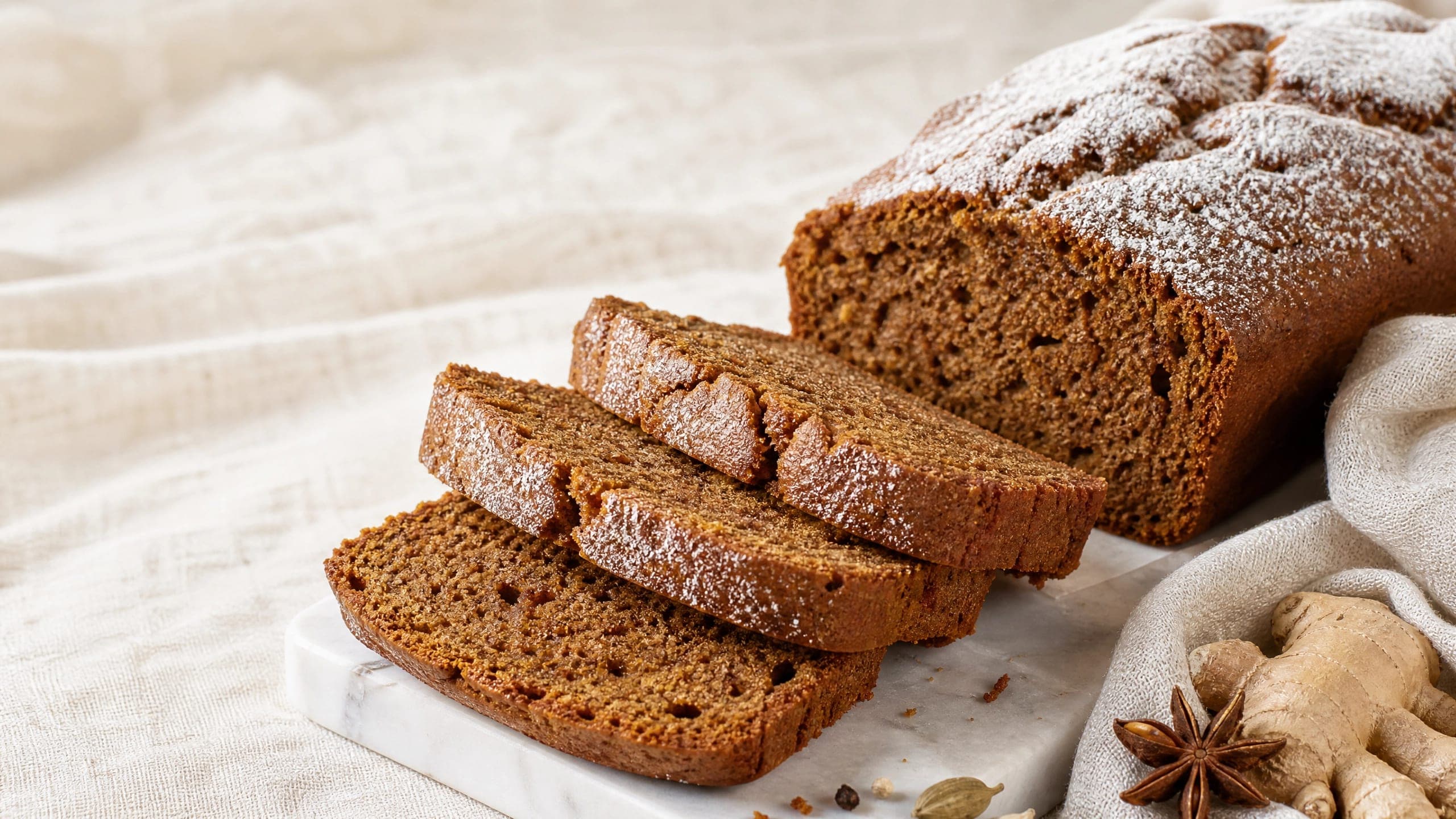
Sourdough gingerbread — the moist, dark, spiced loaf cake of molasses and warm ginger, cinnamon and cloves — folds a scoop of starter or discard in for a gentle tang that balances the sweetness. This easy ginger sourdough quick bread uses baking soda (not the starter) for the lift, so unfed discard works perfectly and quietly empties your jar. Bake it as a loaf or a cake, frost it with vanilla cream cheese and pecans, and it's ready for Christmas Eve, hot cocoa or eggnog. It smells like December and slices like a dream.
Why this recipe works
Gingerbread is a quick bread, so the starter is flavor, not leavener. Molasses brings moisture, color and a bittersweet depth, and its acidity meets the baking soda for lift and a tender crumb. The sourdough's tang keeps the molasses from reading one-note sweet.
| Ingredient | Weight |
|---|---|
| All-purpose flour | 250 g |
| Starter/discard | 100 g |
| Molasses | 120 g |
| Milk + butter | 160 g |
The molasses and starter together keep the loaf genuinely moist.
Mixing and baking
Whisk the wet fully so the molasses and starter blend, then fold in the dry just until no streaks remain. Overmixing makes it tough, so stop early.
Bake at 350°F and check at 40 minutes with a skewer. It's done at about 200°F center and a clean pick.
Common mistakes
- Dry, crumbly loaf: overbaked or light on molasses. Bake to temp and weigh the molasses.
- Bitter taste: blackstrap molasses or too much. Use unsulfured and stick to 120 g.
- Sunken middle: cut hot or underbaked. Cool fully and bake through.
- Tough crumb: overmixed. Fold gently and stop at combined.
Long-fermented overnight version
Want the tang deeper and a softer crumb? Mix the batter with everything except the baking soda, cover it and rest it in the fridge for up to 12 hours, then stir the baking soda through and bake as usual. The overnight "ginger sourdough" ferment gives the starter time to work flavor into the crumb before the soda provides the lift on bake day.
Frosting and toppings
An optional vanilla cream cheese frosting — cream cheese, butter, powdered sugar and a little vanilla, whipped until light — turns this into a proper gingerbread loaf cake. Spread it over the cooled loaf and top with chopped pecans, or skip it and serve the loaf warm, toasted and buttered with a drizzle of molasses.
How to store and freeze
Keep the unfrosted loaf in an airtight container or cake tin for about 3 days; the molasses keeps it genuinely moist, so it doesn't dry out quickly. Once frosted, store it in the fridge and bring it back to room temperature for about 20 minutes before serving. The loaf freezes well for up to 3 months — wrap the cooled, unfrosted loaf in parchment then foil, thaw at room temperature and add the frosting after.
Before you bake
Got discard to spend? The sourdough discard recipes page collects more like this. Keep a jar ready with the sourdough starter guide, and the sourdough bread recipe is where the whole journey starts.
Ingredients
Weights in grams are the source of truth; cup measures are approximate.
- 250 g all-purpose flour
- 100 g sourdough starter or discard, unfed is fine
- 120 g molasses
- 80 g brown sugar, packed
- 100 g whole milk
- 60 g melted butter
- 1 large egg (about 50 g)
- 6 g baking soda
- 4 g fine sea salt
- 6 g ground ginger
- 4 g ground cinnamon
- 2 g ground cloves
- Unsweetened applesauce, to swap for some of the milk (extra moist)
- For the vanilla cream cheese frosting (optional): cream cheese, butter, powdered sugar, vanilla and chopped pecans
Method
Heat the oven to 350°F (175°C) and grease a 9 x 5 in loaf pan, lining the base with parchment.
Whisk the molasses, brown sugar, starter or discard, milk, melted butter and egg until smooth.
In a second bowl, whisk the flour, baking soda, salt, ginger, cinnamon and cloves. Fold the dry into the wet just until combined.
Scrape into the pan and smooth the top. Bake 40-45 minutes until a skewer comes out clean and the center reads about 200°F.
Cool in the pan 15 minutes, then lift onto a rack and cool fully before slicing.
Optional long ferment: mix everything except the baking soda, rest the batter in the fridge up to 12 hours, then stir the baking soda through and bake.
Optional frosting: whisk cream cheese, butter, powdered sugar and vanilla until light, spread over the cooled loaf and top with pecans.
Frequently asked questions
Can I use discard instead of active starter?
Yes, and it's ideal here — the baking soda lifts the loaf while the discard adds a gentle tang that pairs with the molasses. Active starter works too, a touch milder.
Why molasses and not just sugar?
Molasses gives gingerbread its deep color, moisture and bittersweet mineral flavor. It also reacts with the baking soda for a little extra lift, so the loaf stays moist.
Why is my gingerbread dry?
Overbaked or too little molasses/butter. Bake to 200°F center and measure the molasses by weight, not a guess.
Can I make it as a cake instead of a loaf?
Yes. Bake in a greased 8 x 8 in pan for 25-30 minutes, or as a layer cake in two 20 cm rounds for about 20 minutes. The batter is the same.
Why make the long-fermented overnight version?
Resting the batter in the fridge lets the sourdough develop a deeper tang and a softer, more tender crumb. Add the baking soda only right before baking so the lift still works.
Can I frost it?
Yes — a whipped vanilla cream cheese frosting (cream cheese, butter, powdered sugar, vanilla) with chopped pecans turns it into a proper gingerbread loaf cake. Or serve it plain, toasted and buttered.
How should I store or freeze it?
Unfrosted, keep it in an airtight container for about 3 days; the molasses keeps it moist. It freezes well for up to 3 months wrapped in parchment then foil, thaw at room temperature and add the frosting after.
Can I use applesauce for more moisture?
Yes — swapping some of the milk for unsweetened applesauce keeps the crumb extra moist and adds a gentle apple note. It's a common trick for a softer quick bread.