Sourdough Discard English Muffins
Sourdough discard english muffins with a soft, open crumb and craggy nooks — griddled on the stovetop, no special rings required.
By Maya Ellison · Reviewed by Maya Ellison · Updated August 29, 2026 · 2 min read
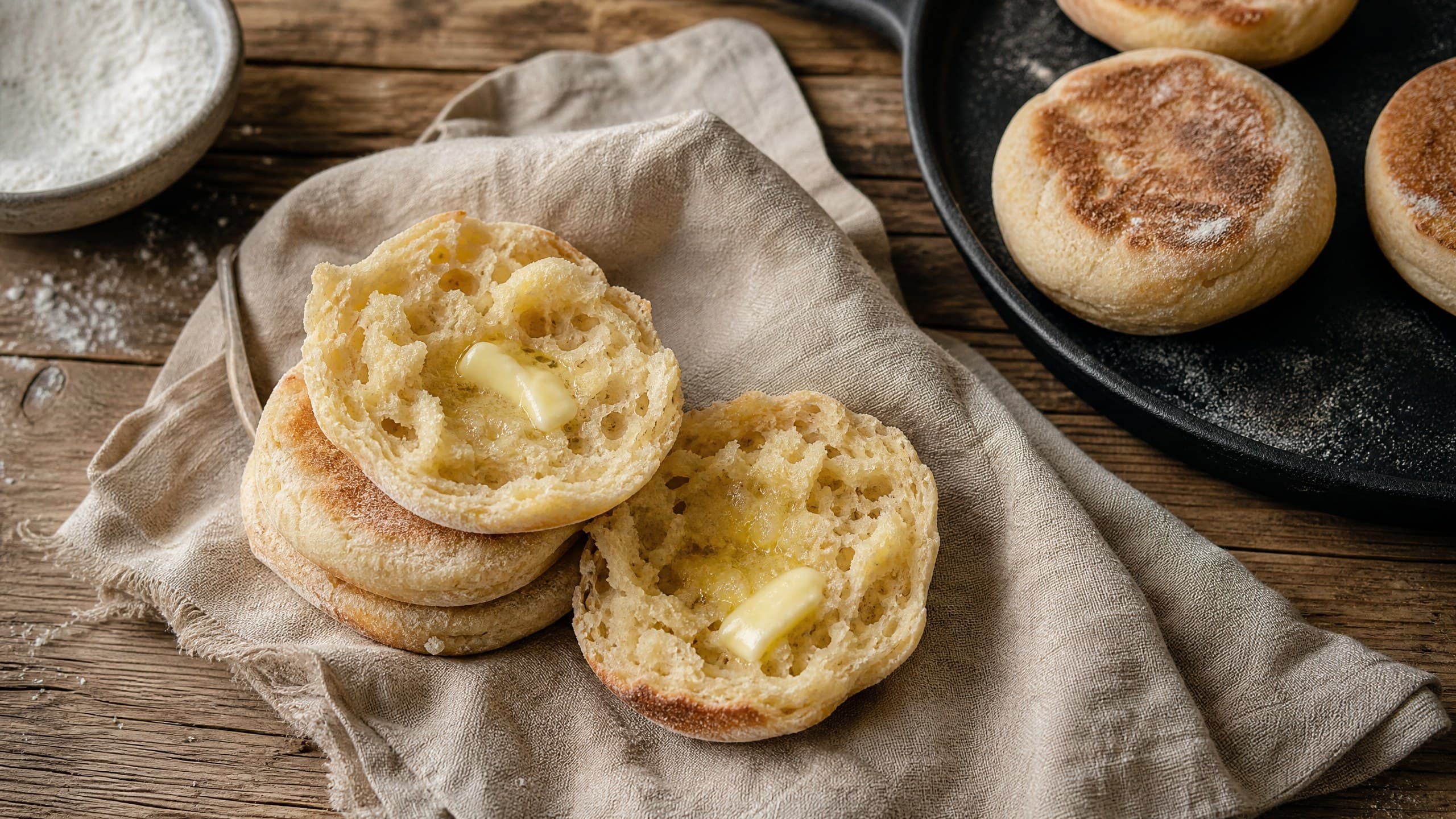
Sourdough english muffins are one of the best things you can do with a jar of discard: soft, open crumb, craggy nooks built for butter and jam, and a gentle tang that store-bought versions only fake with vinegar. This recipe uses discard for flavor and a little yeast for a same-day rise, then griddles them on the stovetop so you don't even need the oven. They take about 4 hours start to finish and most of that is hands-off rising — and you don't need special rings to get a proper round.
Why this recipe works
The secret is a soft, almost-too-wet dough. English muffins get their signature holes from a slack batter-like dough that traps big pockets of gas; if you treat it like sandwich bread and knead it firm, you'll get a tight, bready crumb instead. The discard adds both acid and flavor, which also helps tenderize the crumb, while the touch of yeast keeps the whole thing fast and reliable. Two flours — bread for chew, whole wheat for nuttiness — give these more character than the pale supermarket kind.
The griddle, not the oven
English muffins are cooked like pancakes, not baked like rolls. A low, steady griddle (around 150°C / 300°F) sets the outside to a deep golden while the inside finishes cooking through, and the cornmeal dusting gives that recognizable crunch and keeps them from sticking. Resist the urge to crank the heat: a hot pan burns the cornmeal and leaves you with a raw middle. Flip once, give each side 5-7 minutes, and trust the color.
Splitting and serving
The right way to open an english muffin is with a fork, not a knife. Pierce around the equator and pull apart so you tear the crumb into all those little nooks that catch melted butter. Toast the cut sides and you've got the foundation for eggs benedict, breakfast sandwiches, or just a very good piece of toast. If the batch isn't quite right, the sourdough discard recipes hub has more ways to use the jar and the troubleshooting guide covers the usual culprits.
Ingredients
Weights in grams are the source of truth; cup measures are approximate.
- 200 g sourdough discard (unfed, straight from the fridge)
- 350 g bread flour (about 2 3/4 cups)
- 100 g whole wheat flour (about 3/4 cup)
- 240 g warm milk (about 1 cup)
- 4 g instant yeast (about 1 1/4 teaspoons)
- 8 g fine salt (about 1 1/2 teaspoons)
- 15 g honey or sugar (about 1 tablespoon)
- 30 g cornmeal or rice flour, for dusting the bench and tops
Method
In a large bowl, whisk the bread flour, whole wheat flour, salt and instant yeast together.
Warm the milk to about 38°C (100°F), stir in the honey, then add the sourdough discard and mix until the discard is fully loosened.
Pour the liquid into the dry ingredients and stir into a very soft, sticky dough — this is wetter than most bread doughs and that softness is what makes the open crumb.
Cover and let the dough rest and rise for 2-3 hours at room temperature, until roughly doubled and dotted with bubbles.
Dust a bench generously with cornmeal, tip the dough out gently without knocking all the air out, and dust the top with more cornmeal.
Pat the dough to about 2 cm (3/4 inch) thick and cut rounds with a 8-9 cm (3 1/2 inch) cutter, keeping the cutter well dusted so it doesn't drag.
Set the rounds on a cornmeal-dusted tray, dust the tops, and proof 30-45 minutes until puffy and slightly spread.
Heat a griddle or heavy skillet to low (about 150°C / 300°F), lay the muffins in cornmeal-side down, and cook 5-7 minutes per side until deeply golden and set through.
Cool on a wire rack at least 20 minutes, then split with a fork around the equator to keep the craggy nooks intact.
Frequently asked questions
Do I need english muffin rings to make these?
No. The dough is soft but holds its shape well once dusted in cornmeal, and most home cooks get perfectly round muffins without rings. If you want tighter edges, a 9 cm (3 1/2 inch) pastry cutter or a cleaned tuna can with both ends removed works as a stand-in, but it isn't required.
Why are my english muffins dense instead of open and holey?
Usually the dough was too dry or it was handled too roughly. These rely on a very soft, sticky dough and a gentle hand — kneading out the bubbles gives you a tight crumb. Add a tablespoon of milk only if the dough is unworkably stiff, keep it wet, and tip it out rather than punching it down.
Can I make these with discard only and no commercial yeast?
You can, but expect a longer rise and a more sour muffin. The small amount of yeast here is a deliberate shortcut for a same-day breakfast; the discard still provides the tang and the open structure. For a fully wild version, let the first rise run 5-8 hours or overnight in the fridge.
How should I store sourdough english muffins?
Keep them in a loosely closed bag at room temperature for 2-3 days — they're best toasted. They freeze well for up to 3 months; split them before freezing and toast straight from frozen. The fork-split, griddled surface is built for toasting, so don't skip that step.