Sourdough Discard Waffle Recipe
Crispy sourdough discard waffle recipes two ways: overnight-fermented batter for the crispest waffles, or a same-day soda version.
By Maya Ellison · Reviewed by Maya Ellison · Updated August 18, 2026 · 3 min read
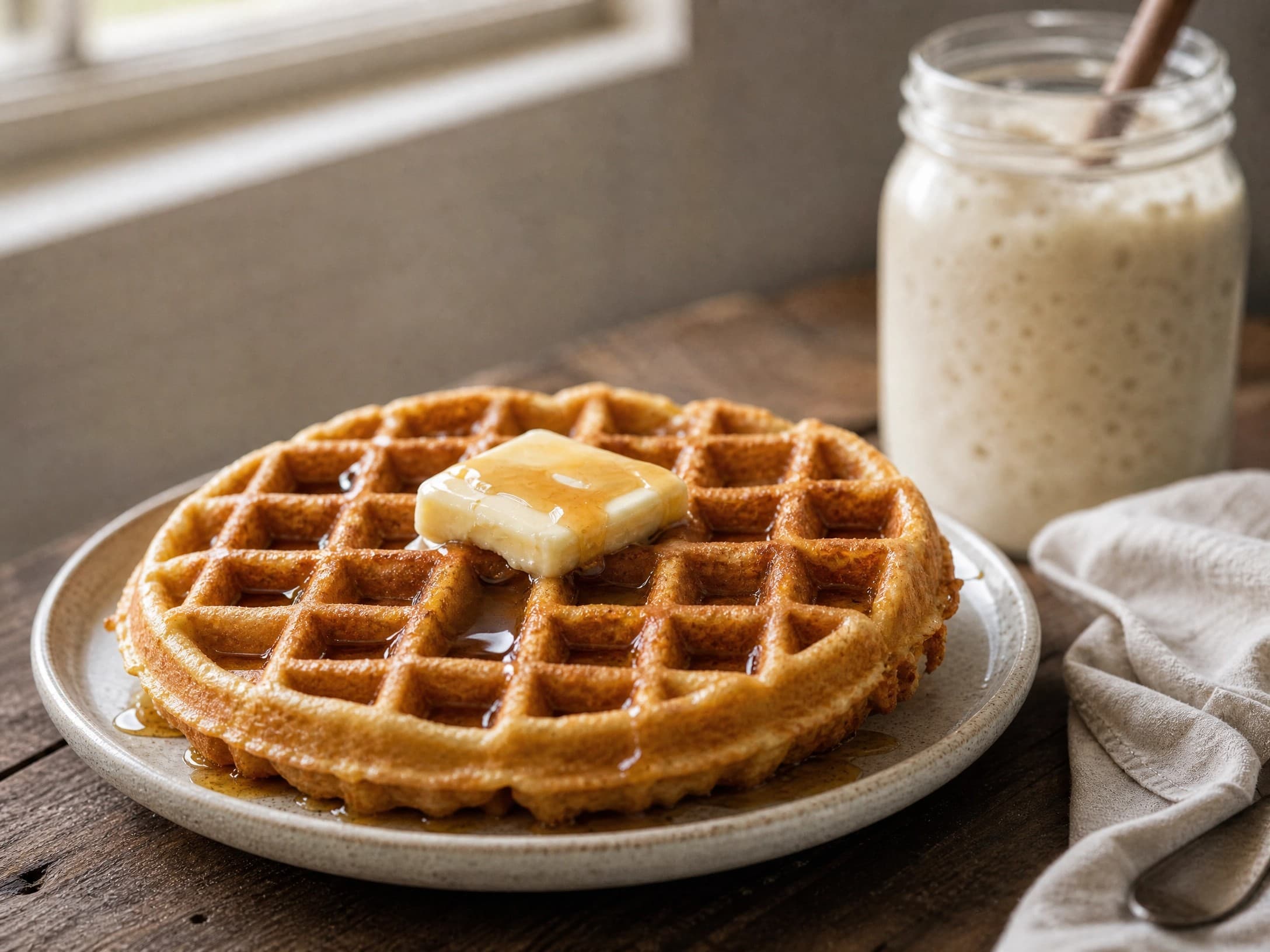
Sourdough discard waffle recipes usually promise the same thing: crisp outside, tender inside. This one delivers and the secret is the rest. The batter — discard, flour, milk, egg, butter — sits in the fridge for 8-24 hours and during that time the discard ferments the flour and the gluten relaxes. The payoff is crispy sourdough waffles with a shattering crust and a custardy center, plus a mellow tang you'll only notice when you stop to think about it. Made from 150 g of unfed discard, straight from the fridge.
Sourdough discard waffles: overnight vs same-day
This recipe gives you both, because the overnight version isn't always possible.
Overnight (the best version). Mix the batter, cover it and refrigerate for 8-24 hours. The long fermentation produces sugars that caramelize on the hot iron and relaxes the batter into something thin enough to crisp properly. Cook the batter straight from the fridge — the cold batter hitting a hot iron is exactly what you want.
Same-day. Mix the batter and rest it 1 hour at room temperature, then fold in the baking soda just before cooking. The soda reacts with the acid in the discard for a quick lift — the overnight version doesn't need it, because fermentation provides the rise. The same-day waffles are very good; the overnight ones are better.
Why this recipe works
Two habits separate crisp waffles from soft ones. Cook on medium-high — most irons run too cool on the standard setting and a hot iron creates the crust before the inside overcooks. And never stack the finished waffles; they steam themselves soft on a plate. Keep them on a wire rack in a 200°F (95°C) oven and they'll hold their crunch for 20 minutes.
Notes on the discard
Any discard works; a young, mild discard keeps the waffles sweet, while an older one brings a deeper sour note. If yours is very tangy and you don't love it, add 10 g more sugar. Discard that has been sitting for weeks is perfect here and this is one of the gentlest ways to use a tired jar — it doesn't need to be bubbly at all. If you're still learning how your starter behaves, the starter guide covers the basics.
Swaps
Replace half the flour with whole wheat for heartier, slightly less crisp waffles. Buttermilk instead of whole milk adds tang. Swap 1 tablespoon of the flour for cornstarch and the crispness sharpens further. Melted coconut oil works in place of butter and a pinch of cinnamon in the dry mix is never a mistake.
Storage
Waffles freeze beautifully: cool completely on a rack, then freeze flat in a zip-top bag for up to 2 months. Toast them straight from frozen — they come back almost as crisp as fresh. They also keep 2 days in the fridge; re-crisp in the toaster, never the microwave. For more ways to spend your discard, the sourdough discard recipes hub has pancakes, crackers and more.
Ingredients
Weights in grams are the source of truth; cup measures are approximate.
- 150 g sourdough discard (unfed, straight from the fridge)
- 180 g all-purpose flour (about 1 1/2 cups)
- 250 g whole milk (about 1 cup)
- 2 large eggs (about 100 g)
- 60 g unsalted butter, melted and cooled slightly
- 15 g sugar (about 1 tablespoon)
- 1/2 tsp (3 g) fine salt
- 1/2 tsp (3 g) baking soda (for the same-day version only)
- 1 tsp (5 g) vanilla extract (optional)
Method
In a large bowl, whisk the flour, sugar and salt together.
In a separate bowl, whisk the eggs, milk and melted butter, then whisk in the sourdough discard until smooth.
Pour the wet mixture into the dry and whisk until smooth — a few small lumps are fine, but waffle batter likes it smoother than pancake batter.
Overnight option: cover the bowl and refrigerate for 8-24 hours — the discard ferments the flour and that long hydration is what makes the waffles crisp.
Same-day option: leave the batter at room temperature for 1 hour, then fold in the baking soda right before cooking.
Preheat your waffle iron until the indicator light says ready, set to medium-high for the crispiest results.
Pour enough batter to cover the grid — about 1/2 cup (120 ml) for a standard iron — and cook until golden brown and the steam stops, about 4-5 minutes.
Transfer each waffle to a wire rack set in a 200°F (95°C) oven to keep warm — don't stack them, or they steam themselves soft.
Serve immediately with butter and maple syrup.
Frequently asked questions
Which version is better — overnight or same-day?
The overnight batter. The 8-24 hour ferment is what produces the sugars and relaxed gluten that make the waffles genuinely crisp and it costs nothing but a bit of planning. The same-day version with baking soda is very good — better than boxed mix — but it won't have quite the same shatter.
Can I add the baking soda to the overnight batter too?
You can, but it's unnecessary — the fermentation provides all the rise the overnight batter needs and the soda just makes it taste faintly metallic. Add it only to the same-day version, right before cooking, after the batter has rested.
Why do my waffles always come out soft and pale?
Either the iron is too cool or the waffles are stacking on a plate. Crank the iron to medium-high and let it fully reheat between batches and keep finished waffles on a wire rack in a 200°F (95°C) oven instead of piling them up. Pale, soft waffles are almost always a temperature problem, not a batter problem.
Can I make these waffles gluten-free?
Yes — swap the all-purpose flour for a 1:1 gluten-free flour blend. The batter thickens more, so add 30 g more milk. Expect slightly less crispness and a more delicate texture, but the overnight rest still does its job.
How long does the batter keep in the fridge?
The covered batter keeps up to 2 days. The flavor deepens and the crispness actually improves for the first 24 hours, so you can mix one batch and eat waffles two mornings in a row. If it smells too sour for you, stir in an extra 5-10 g of sugar.