Sourdough Discard Bread Recipe
Sourdough discard bread recipes without the days-long wait: a yeast-assisted no-knead loaf that rises overnight and bakes in a Dutch oven.
By Maya Ellison · Reviewed by Maya Ellison · Updated August 18, 2026 · 2 min read
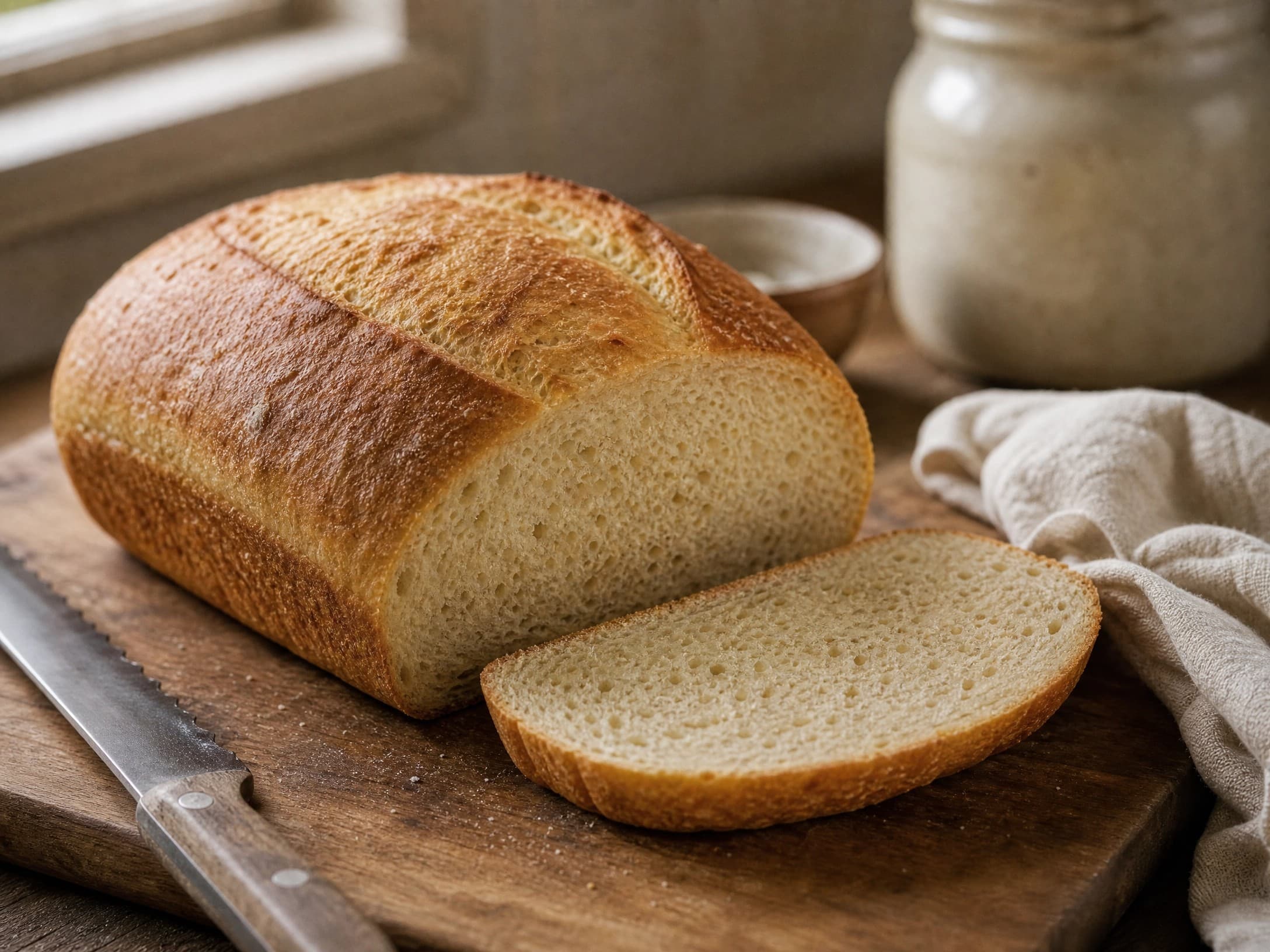
Sourdough discard bread recipes can look intimidating, because most of them assume days of fermentation and a starter at peak activity. This one is the honest fast path: a yeast-assisted, no-knead loaf that uses 200 g of discard for flavor and a pinch of commercial yeast for reliable rise. In about 14 hours — most of it unattended — you get a crusty, crackling loaf that tastes like sourdough. One thing up front: this is quick sourdough bread with discard, not the same loaf as a traditional ferment. It's faster, the tang is milder and the crumb is slightly more open — but the difference is much smaller than the effort saved.
Why the yeast and why it's honest
A discard-only loaf is a slow, tricky project. Unfed discard has little leavening power left, so a no-yeast bread needs a bubbly active starter, a long ferment and careful timing — that's the traditional recipe and it's a different article entirely. Here, 2 g of instant yeast does the heavy lifting while the discard contributes acidity, flavor and a hint of sourdough character to the crumb. That combination is why this recipe works for a weeknight or a Sunday morning: it never demands anything from you.
Why this recipe works
The no-knead method means time, not effort, builds the gluten. The 30-minute rest hydrates the flour, one round of folding strengthens the dough and the 12-18 hour rise develops flavor the same way slow ferments always do. You need nothing fancier than a bowl, a spatula and a pot you already own — no mixer, no proofing basket, no special tools. The Dutch oven supplies the other half of the magic: trapped steam keeps the crust supple while it rises, then bakes into a shatteringly crisp shell.
Notes on the discard
Stale discard is ideal here — old, dark, even slightly hoochy discard carries the most flavor and the yeast doesn't care. Stir the hooch right in. If your discard is thick and stiff, add 20-30 g more water; if it's thin and watery, cut the water back by the same amount. Room temperature matters for the rise: at 65-70°F (18-21°C) expect the full 18 hours, in a warmer kitchen check the dough at 10-12 hours.
Storage
This bread keeps 3 days in a paper bag at room temperature and it actually slices better on day two, when the crumb has set. If the crust softens after a day in the bag, re-crisp the whole loaf in a 400°F (200°C) oven for 5 minutes before serving. Freeze slices flat for up to 3 months and toast them straight from frozen. When you're ready for the slow, traditional route — no yeast at all — the sourdough bread recipe is where to go and the sourdough discard recipes hub covers the rest of the jar.
Ingredients
Weights in grams are the source of truth; cup measures are approximate.
- 200 g sourdough discard (unfed, straight from the fridge)
- 350 g bread flour (about 2 3/4 cups)
- 180 g warm water (about 3/4 cup, below 110°F)
- 2 g instant yeast (about 3/4 teaspoon)
- 8 g fine salt (about 1 1/2 teaspoons)
- 30 g extra bread flour, for dusting (about 1/4 cup)
- 25 g rice flour or cornmeal, for the parchment
- 1 ice cube (about 30 g), for extra steam in the Dutch oven (optional)
- 10 g olive oil, for greasing the bowl (optional)
Method
In a large bowl, whisk the bread flour and salt together.
Stir the instant yeast into the warm water and let it sit 5 minutes, until it starts to foam — the water must stay below 110°F (43°C).
Add the sourdough discard and the yeast water to the flour and mix with a spatula into a shaggy, sticky dough — no kneading required.
Cover the bowl and let the dough rest 30 minutes so the flour hydrates fully.
Do one set of folds: pull the edges of the dough over the center, turn the bowl and repeat a few times. Cover again.
Leave the dough at cool room temperature (65-70°F) for 12-18 hours, until it has doubled, domed and looks bubbly on the surface.
Turn the dough out onto a floured surface and shape it into a round by folding the edges into the center and flipping it seam-side down.
Set the dough on a square of parchment dusted with rice flour or cornmeal, cover it loosely and rest it 30-60 minutes while the oven heats.
Place a Dutch oven with its lid in the oven and preheat to 475°F (245°C) for a full 30 minutes.
Slash the loaf with a lame or sharp knife, then lower it into the hot pot on the parchment, adding the ice cube beside it for extra steam.
Bake covered for 25 minutes, then uncover and bake 20-25 minutes more, until the crust is deep brown and the bottom sounds hollow when tapped.
Cool the loaf completely on a wire rack — at least 1 hour — before slicing.
Frequently asked questions
How is this different from traditional sourdough bread?
This is faster and more forgiving: a tiny amount of commercial yeast guarantees the rise, so you skip the active starter, the feeding schedule and the long cold ferment. The tradeoff is real — the flavor is milder and the crumb is a little more open — but it's a genuinely great loaf for a fraction of the effort. For the full no-yeast experience, see the traditional sourdough bread recipe.
Can I leave out the commercial yeast entirely?
Not in this recipe — without it, the unfed discard can't lift a loaf on its own and you'd be back to a traditional sourdough process with an active starter. If you want a purely discard-driven bread, you're looking at the slow route, not this one.
Why does the rise take 12-18 hours?
Time does the work that kneading would: the long, cool rise builds the gluten network and develops flavor while the tiny yeast population multiplies slowly. It's also what keeps the bread from tasting like commercial sandwich bread — patience is the only real ingredient here.
Can I use all-purpose flour instead of bread flour?
Yes — swap 1:1 and expect a slightly shorter, softer loaf. All-purpose has less protein, so the crumb is a touch denser and the crust a little less dramatic. Bread flour is preferred but not essential.
My loaf came out gummy in the middle. What went wrong?
Three usual suspects: the water was too hot and killed the yeast (keep it below 110°F/43°C), the loaf was under-proofed because the kitchen was cold, or it was sliced too early. A fully baked loaf should register about 205°F (96°C) in the center and it must cool completely before the knife touches it.